 S3V
NO
S3V
NO
S3V
NO
S3V
NO
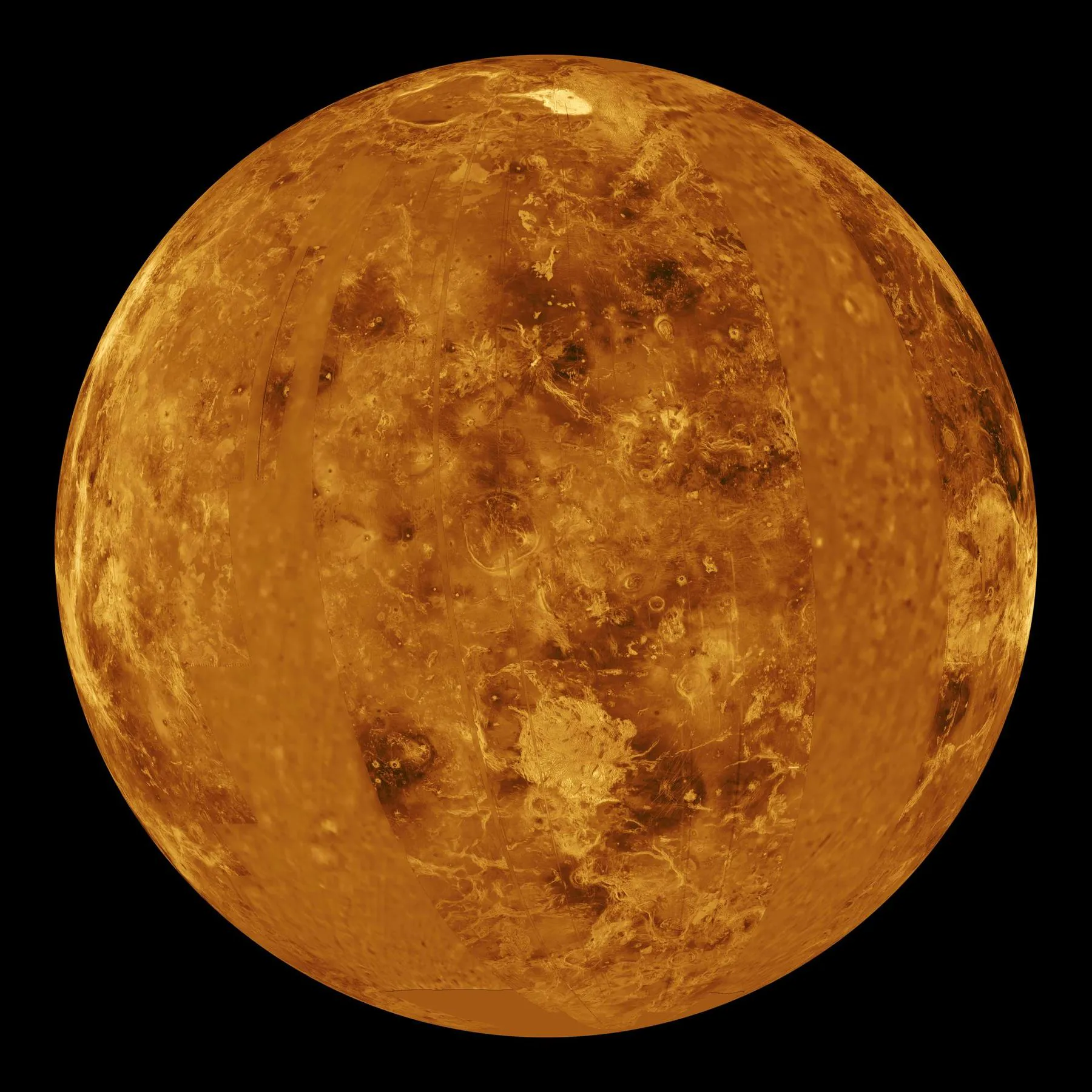
The same size as Earth, made of the same rock, formed in the same neighbourhood - and the hottest place in the Solar System. Venus is what happens when a greenhouse never stops.
Hot enough to melt lead, and almost identical from the equator to the poles, day or night.
The same crush you would feel 900 metres down in Earth's ocean.
Venus turns backwards, and slower than it orbits. The day is longer than the year.
Nearly the whole atmosphere. The rest is mostly nitrogen, with clouds of sulfuric acid.
Venus is 95 percent of Earth's diameter and 82 percent of its mass. It has the same rocky composition, roughly the same amount of carbon, and it sits close enough to the Sun that early on it may well have had liquid water oceans for a billion years or more.
Then something went wrong, and nothing about it went wrong quickly.
As the young Sun brightened, the oceans evaporated. Water vapour is itself a greenhouse gas, so more heat trapped more vapour, which trapped more heat. The water eventually broke apart in the upper atmosphere and the hydrogen escaped to space, leaving the carbon dioxide that had been locked in rock with nowhere to go.
The result is a surface at 464 degrees - hotter than Mercury, which sits twice as close to the Sun.
Venus rotates retrograde: on Venus the Sun rises in the west. It also rotates so slowly that one turn takes 243 Earth days while one orbit takes 225. Nobody is certain why. A giant early impact and tidal drag from the thick atmosphere are both on the table.
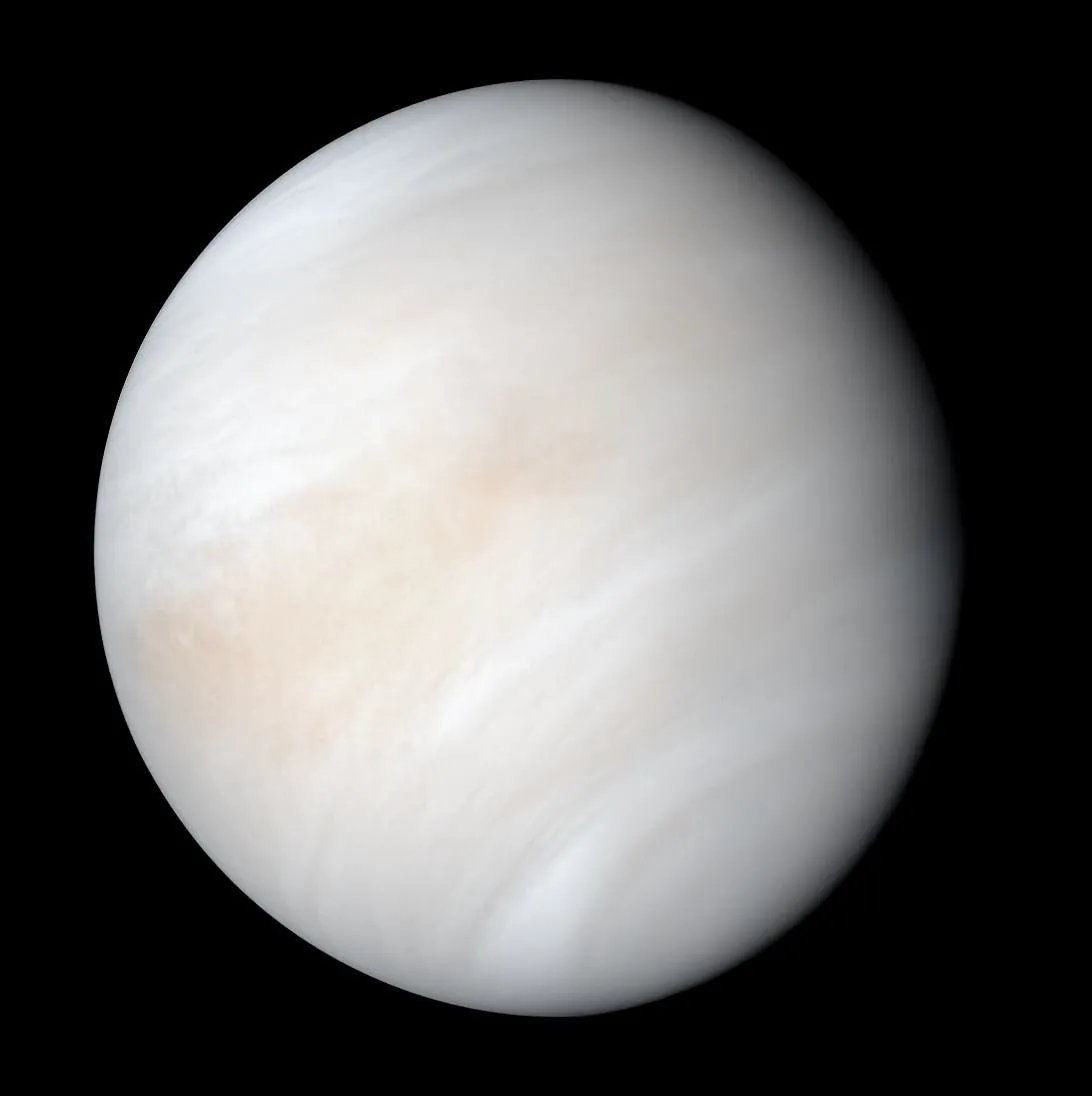
Falling through the atmosphere of Venus is a journey through five different worlds. Only the last one kills you immediately.
Thin enough that day and night split violently: around 100 degrees on the sunlit side, down to minus 170 on the night side. There is no magnetic field to shield it, so the solar wind strips gas away directly.
The white surface you see from Earth. Sulfuric acid droplets, and winds of 360 km/h that carry the whole cloud deck around the planet in four days - sixty times faster than the planet itself turns. Super-rotation, and still not fully explained.
Pressure equal to sea level on Earth, temperature between 30 and 70 degrees. Breathable air is a lifting gas here, so a balloon filled with it floats. Every serious crewed Venus concept lives at this altitude and never goes lower.
Clear, and getting dense. Light that reaches this far is a dim orange. The air begins to behave less like a gas and more like a fluid.
92 bar, 464 degrees, carbon dioxide so compressed it is technically a supercritical fluid. Winds move at walking pace but hit like a slow current of water. No lander has lasted longer than 127 minutes.
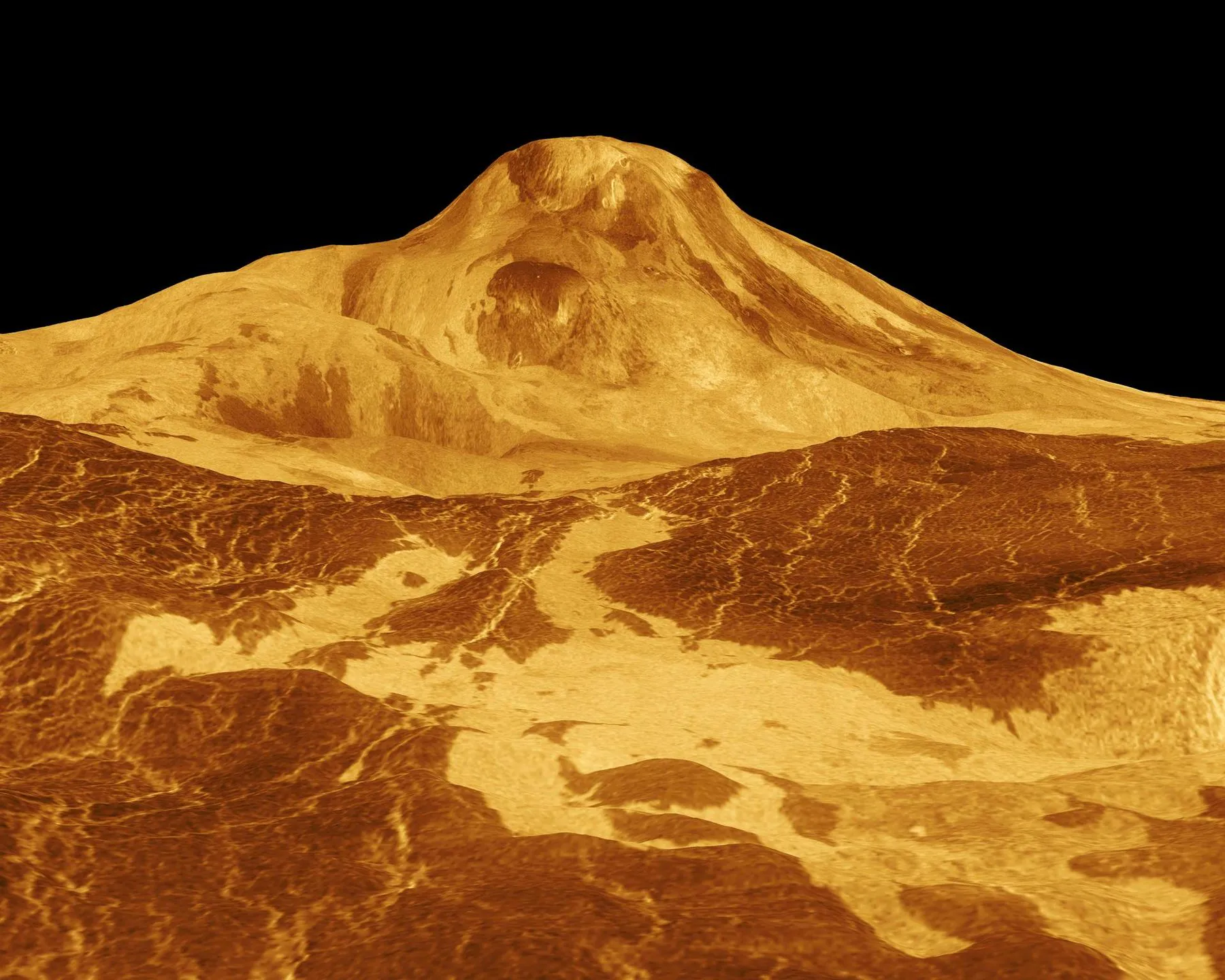
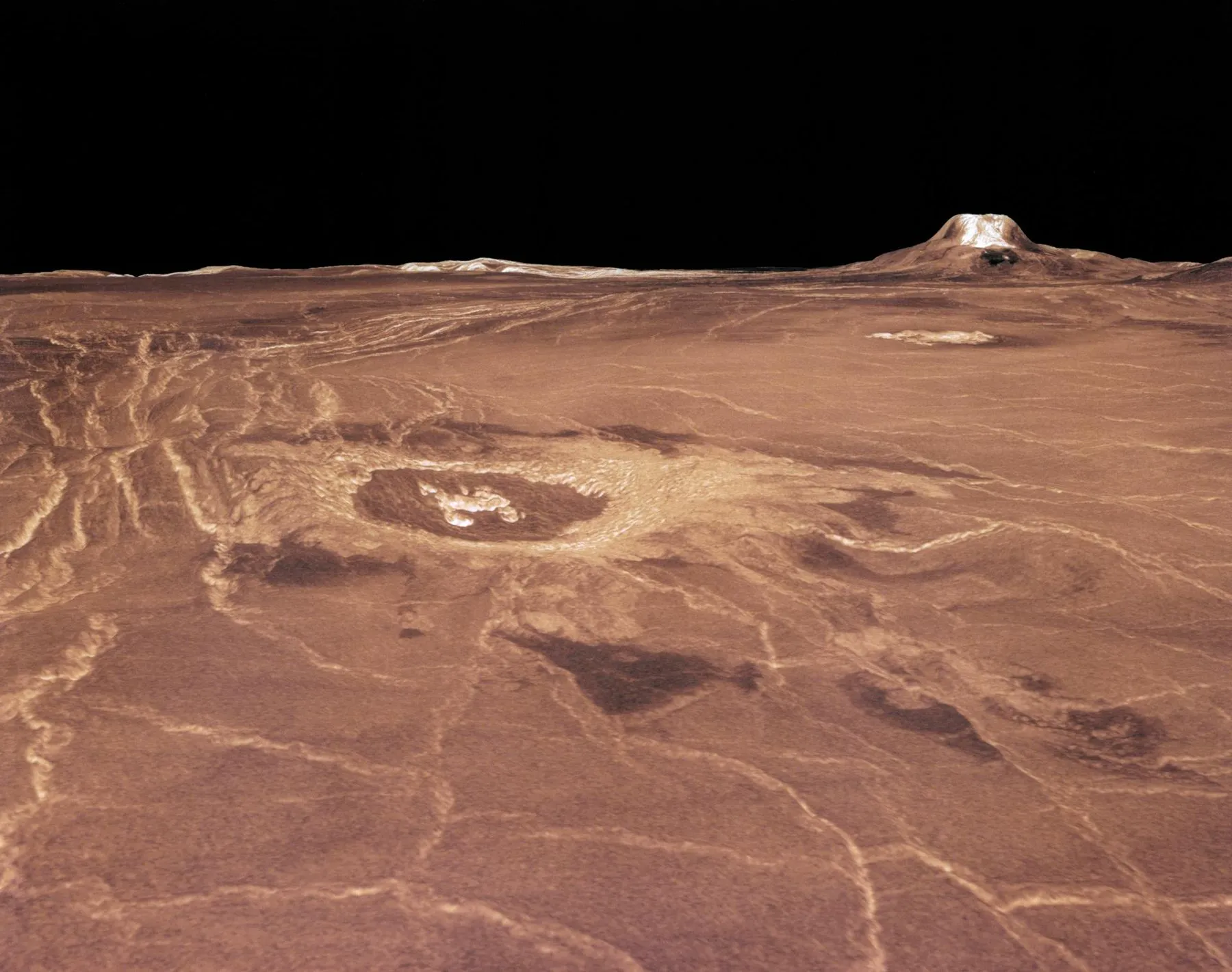
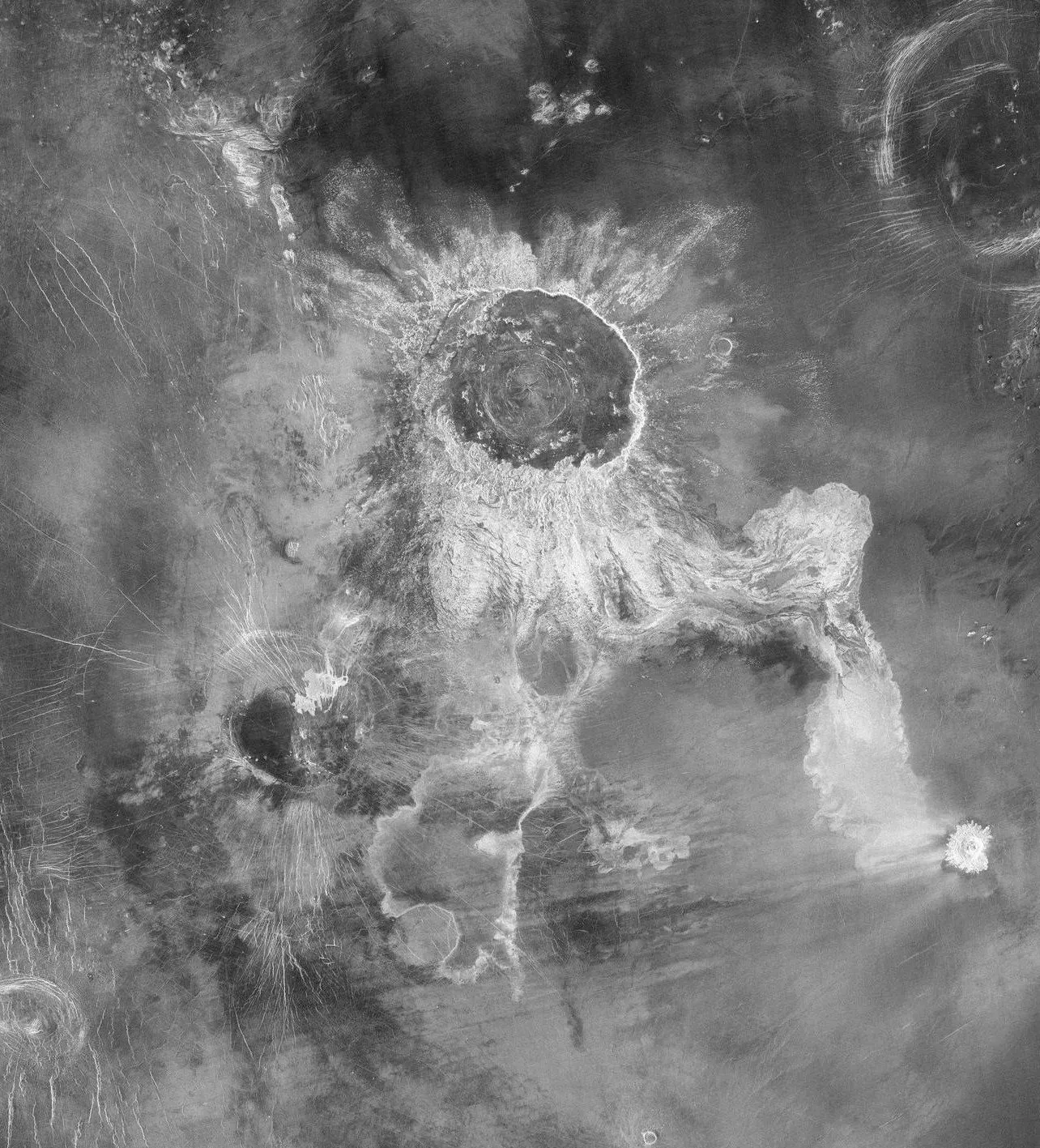
The clouds are opaque, so everything below was mapped by radar. Magellan bounced signals off 98 percent of the planet between 1990 and 1994.
More spacecraft have been sent to Venus than to any other planet. Almost all of them stopped working within hours.
The first successful flyby of another planet. It found no magnetic field and a surface far hotter than anyone expected.
The first soft landing on another planet. It transmitted for 23 minutes before the heat took it, and the signal was so weak the temperature reading was only recovered from tape months later.
Sent back the first colour photographs of the surface, and survived 127 minutes - a record that still stands.
Four years in orbit, radar-mapping 98 percent of the surface at a resolution good enough to see individual lava flows. Nearly every image on this page is its work.
Eight years of European orbital science. It found hot spots that look like volcanism happening now, not a billion years ago.
NASA returns: one probe falling through the whole atmosphere sampling as it goes, one orbiter remapping the surface at ten times Magellan's detail.