 S3V
NO
S3V
NO
S3V
NO
S3V
NO
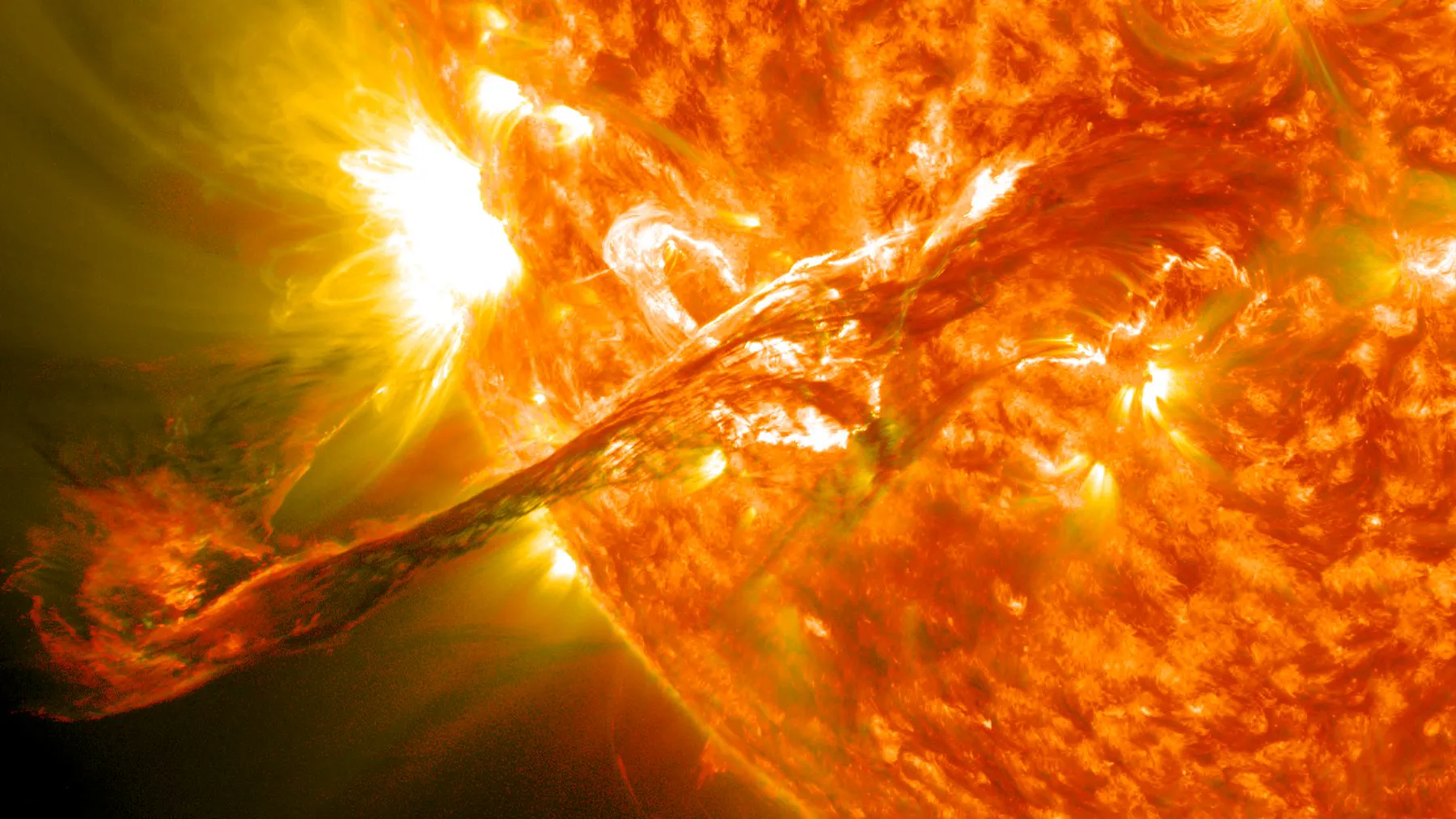
Everything else in this catalogue is a rounding error. The Sun is 99.86 percent of the mass of the Solar System; the eight planets, every moon, every asteroid and every comet share what is left.
Every diagram of the Solar System you have ever seen lies about this, because the honest version does not fit on a page.
About 1.3 million Earths would fit inside by volume. Even Jupiter, which outweighs every other planet combined, is a tenth of the width. The Sun is not the biggest object in the neighbourhood; it is the only object in the neighbourhood, and the rest of us are debris that did not fall in.
There is no surface. The Sun is gas the whole way down, and the sharp edge you see is just the depth at which it stops being opaque.
| Layer | Where | Temperature | What is going on |
|---|---|---|---|
| Core | Inner 25% of the radius | 15,000,000 °C | Fusion. About 600 million tonnes of hydrogen a second, four million tonnes of which leaves as energy. |
| Radiative zone | 25 to 70% | 7,000,000 °C | Photons bounce outward at random. A single one can take a hundred thousand years to cross it. |
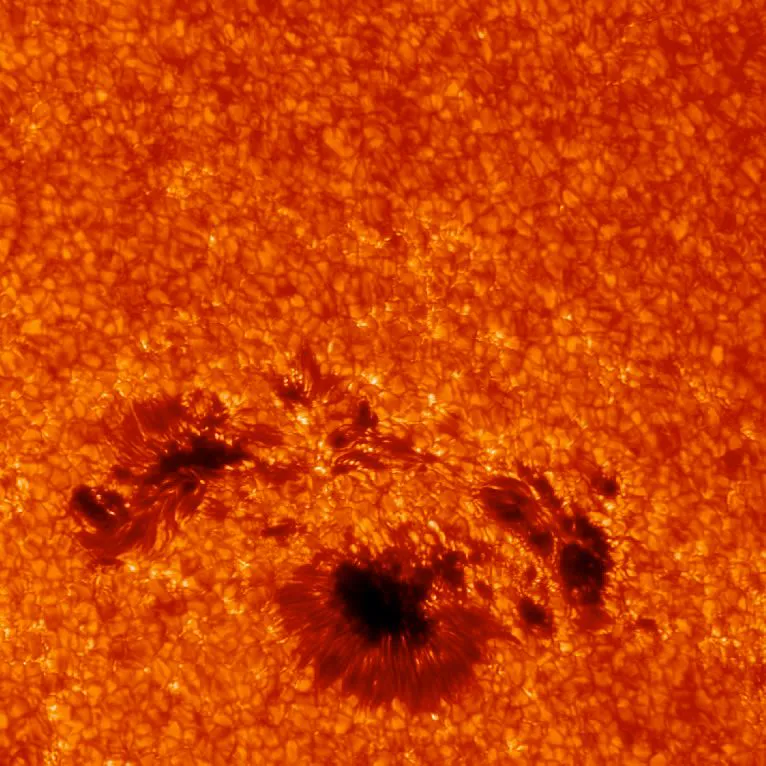
| Convective zone | 70 to 100% | 2,000,000 °C | Plasma boils like a pot. The granulation on the visible face is the top of those cells. |
| Photosphere | The visible edge | 5,500 °C | Where the gas turns transparent. Sunspots are cooler patches held down by magnetic fields. |
| Chromosphere | +2,000 km | 20,000 °C | A thin red rim you only see during a total eclipse. |
| Corona | Millions of km out | 1,000,000 °C | Hotter than the surface underneath it by a factor of two hundred. Nobody has fully explained why. |
Swipe the table sideways for temperatures.
The Sun runs an eleven-year cycle of magnetic activity, and at the peak of it the field gets tangled enough to snap. What comes off can reach Earth in under a day.
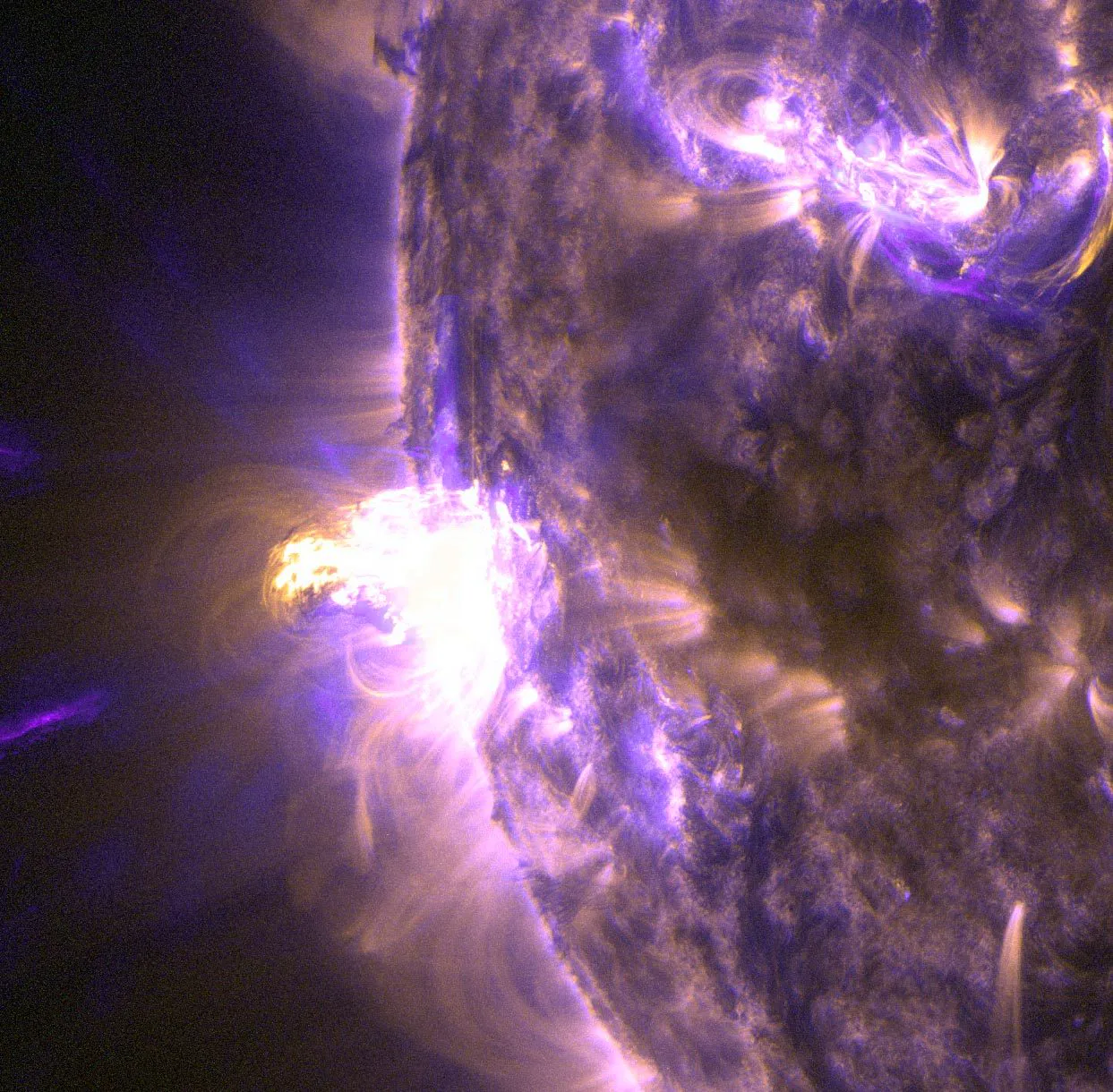
You cannot land on it, orbit it closely for long, or bring a sample home. Everything we know comes from staring at it, and from a handful of spacecraft flying closer than anything has any right to.
The first sustained solar observatory with people operating it, taking X-ray images of the corona by hand from orbit.
Parked at the balance point a million and a half kilometres sunward of Earth, and still working three decades later. Its coronagraph has also turned up several thousand comets, entirely as a side effect.
A full-disc image every three quarters of a second, in ten wavelengths at once. Most of the pictures on this page are its work.
The first spacecraft to fly through the corona, in 2021. At closest approach it was 6.1 million km from the surface, moving at about 690,000 km/h, which makes it the fastest object humans have ever built.
Tilted out of the plane the planets orbit in, so that for the first time there are photographs of the Sun's poles.