 S3V
NO
S3V
NO
S3V
NO
S3V
NO
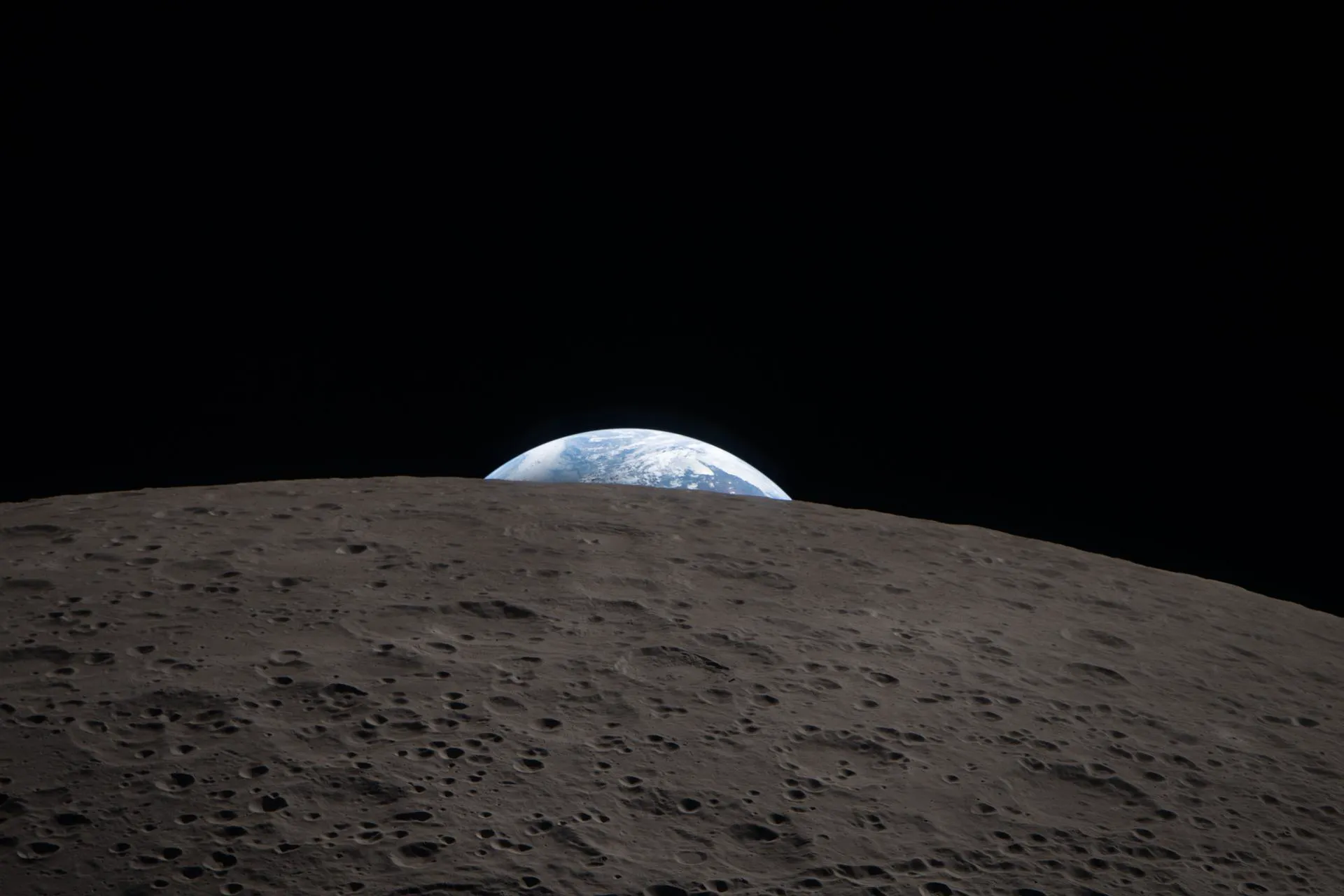
Four people spent seven hours at the windows of a spacecraft 6,545 km above the far side of the Moon, taking photographs. Nobody had done that since December 1972.
art002e021278 - Earthset from behind the far side. The Apollo 8 photograph, taken again fifty-eight years later.
Artemis II was a test flight. No landing, no lunar orbit - one long loop out to the Moon and back, flown on a trajectory that returns to Earth on its own if every engine stops working.
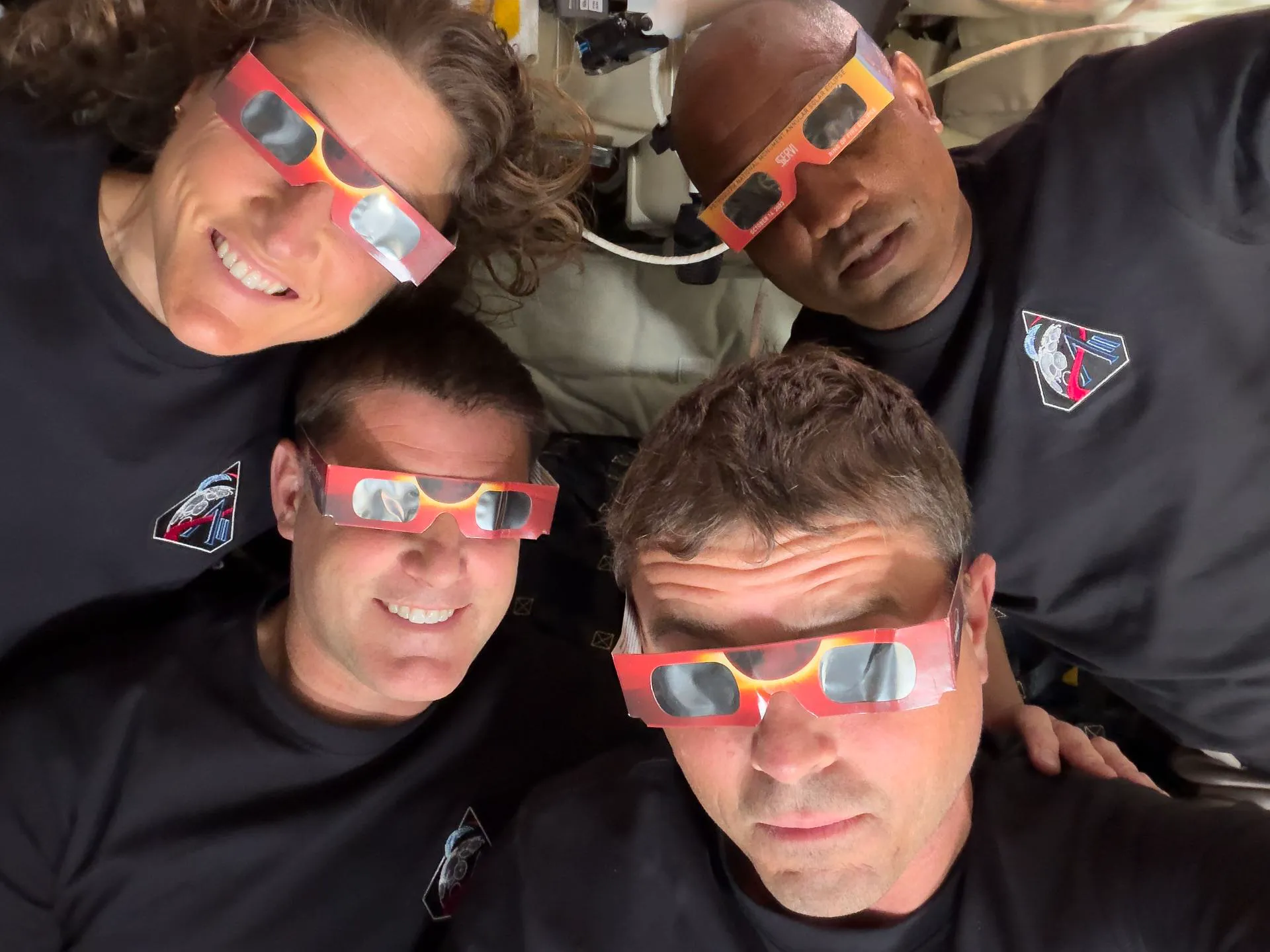
A Space Launch System rocket lifts off from pad 39B at Kennedy Space Center, the same pad Apollo and the Shuttle used, carrying Reid Wiseman, Victor Glover, Christina Koch and Jeremy Hansen in the Orion spacecraft.
Four days of coasting on a free-return trajectory. The crew tests the things a crew has to be able to test: manual flying, the life support system, and how well a spacecraft designed on the ground actually works with people inside it.
Seven hours, taking turns at the windows on the far side. The four of them shot photographs and described what they were looking at to the science team on the ground - which is the point of sending people rather than a camera on a mast.
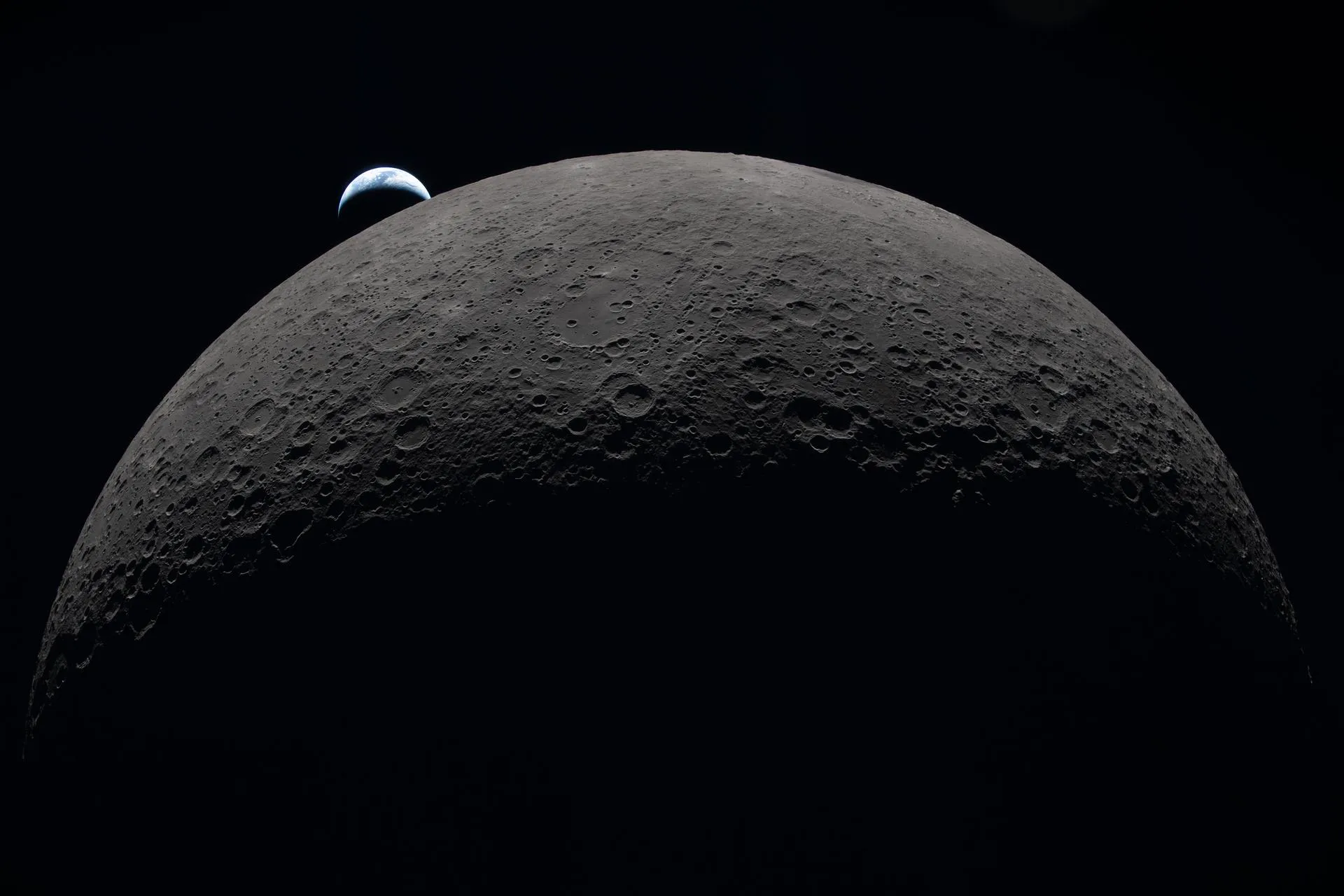
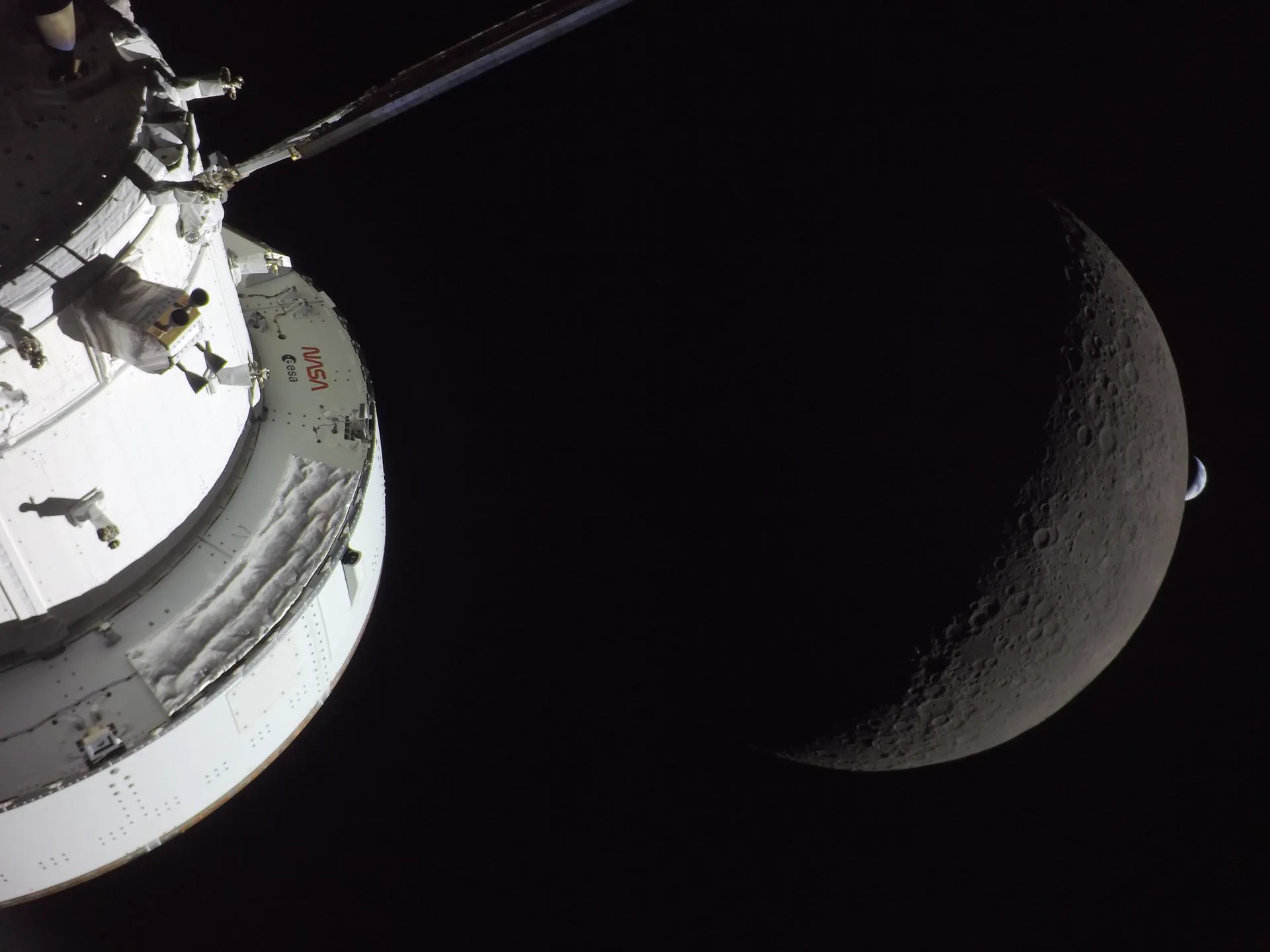
Earth passes behind the Moon's limb, photographed on the way down. On the day side of the crescent, the clouds over Australia and Oceania are still resolvable from a quarter of a million miles away.
6,545 km above the far side. Apollo flew ten times closer, but Apollo was aiming to stop. A flyby that is not braking into orbit passes high and fast.
406,771 km from Earth, past the 400,171 km Apollo 13 reached in April 1970 on a loop nobody planned. The record stood for fifty-six years.
Orion comes down in the Pacific off San Diego, nine days and ninety-two minutes after leaving Florida.
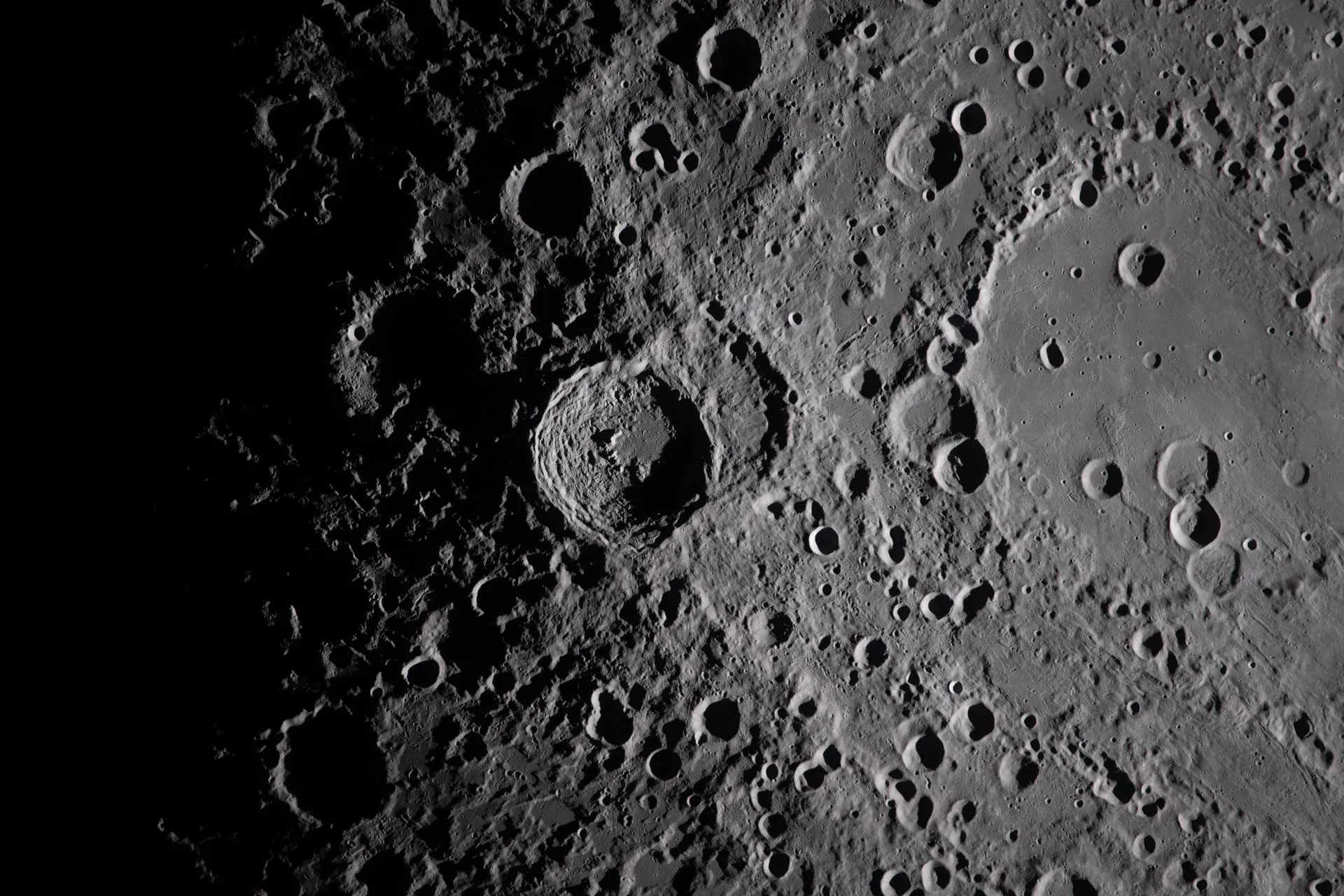
The Moon is locked to us, so half of it has never been visible from the ground. Robots have mapped it since 1959. What no instrument does is look at it and say which part is worth a second frame - and on 6 April the crew flew over the terminator and reported that the boundary between lunar day and night was "anything but a straight line".
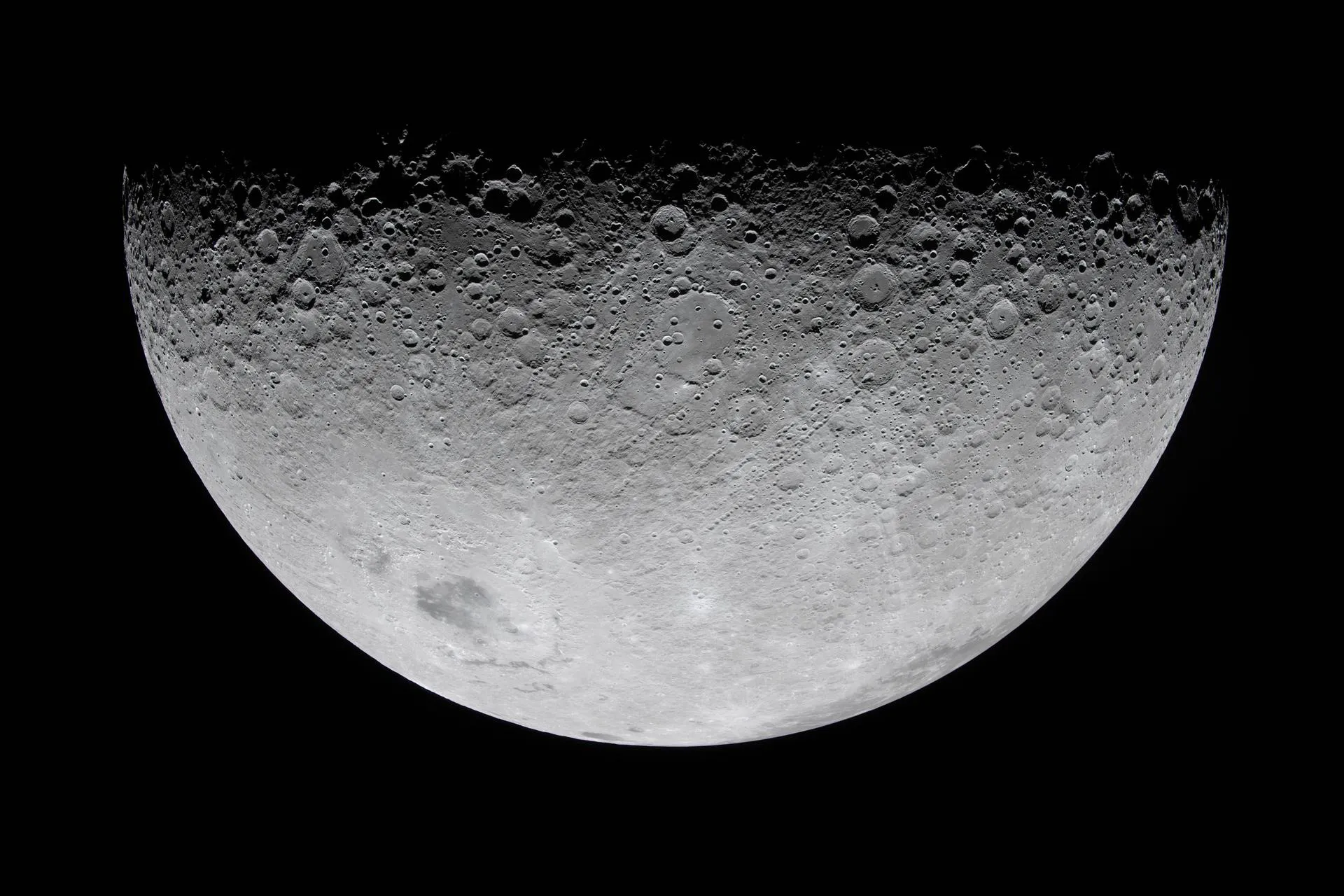
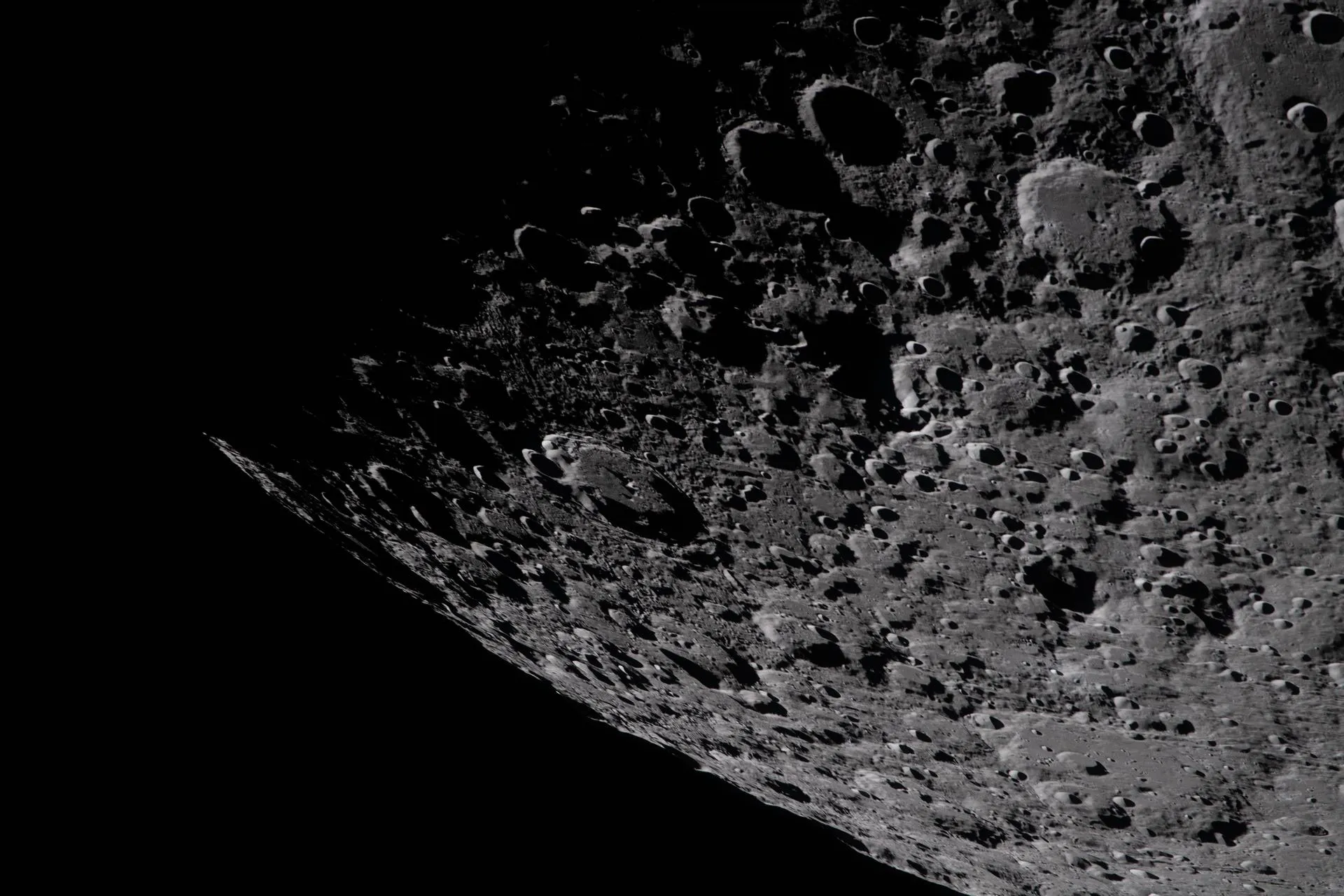
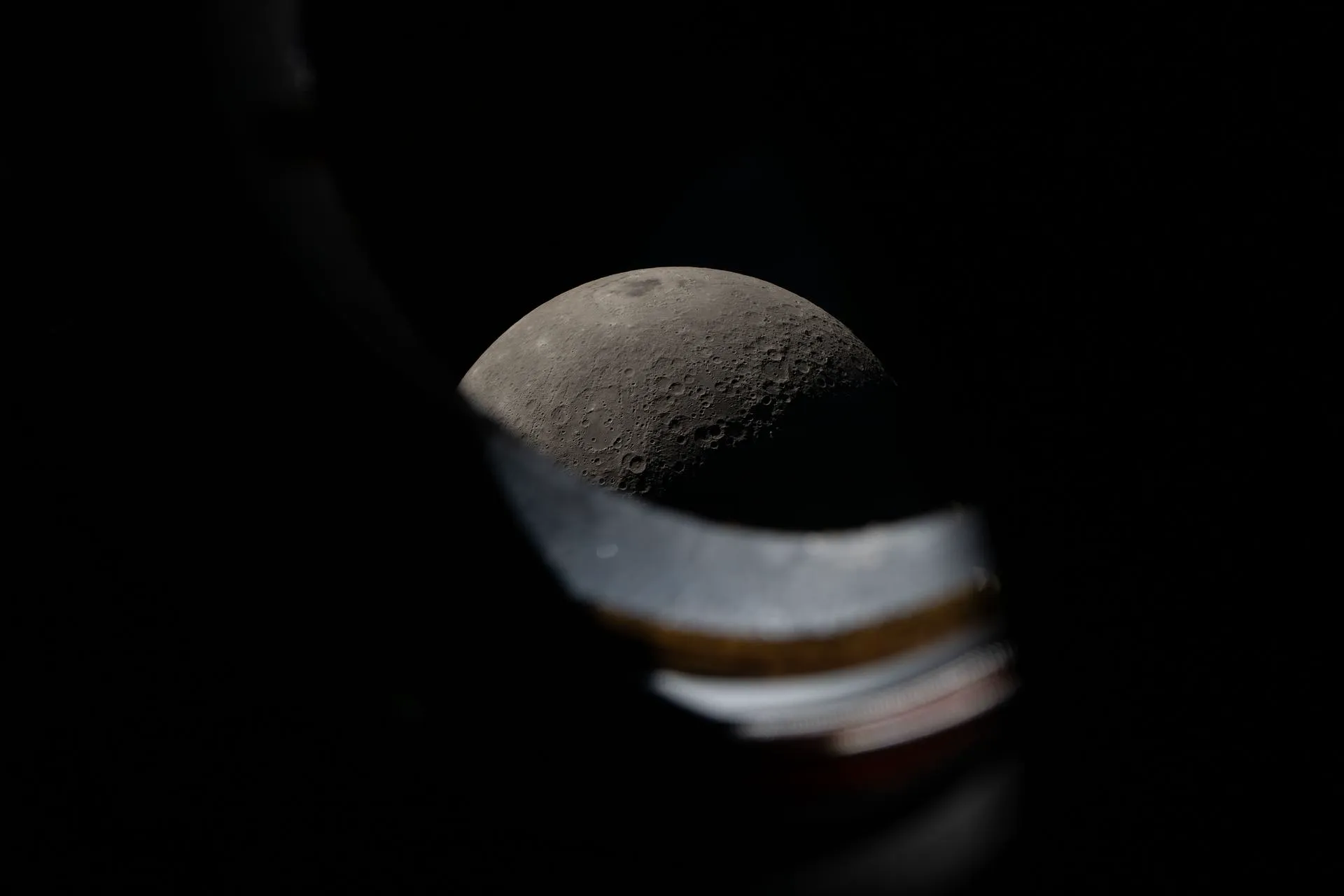
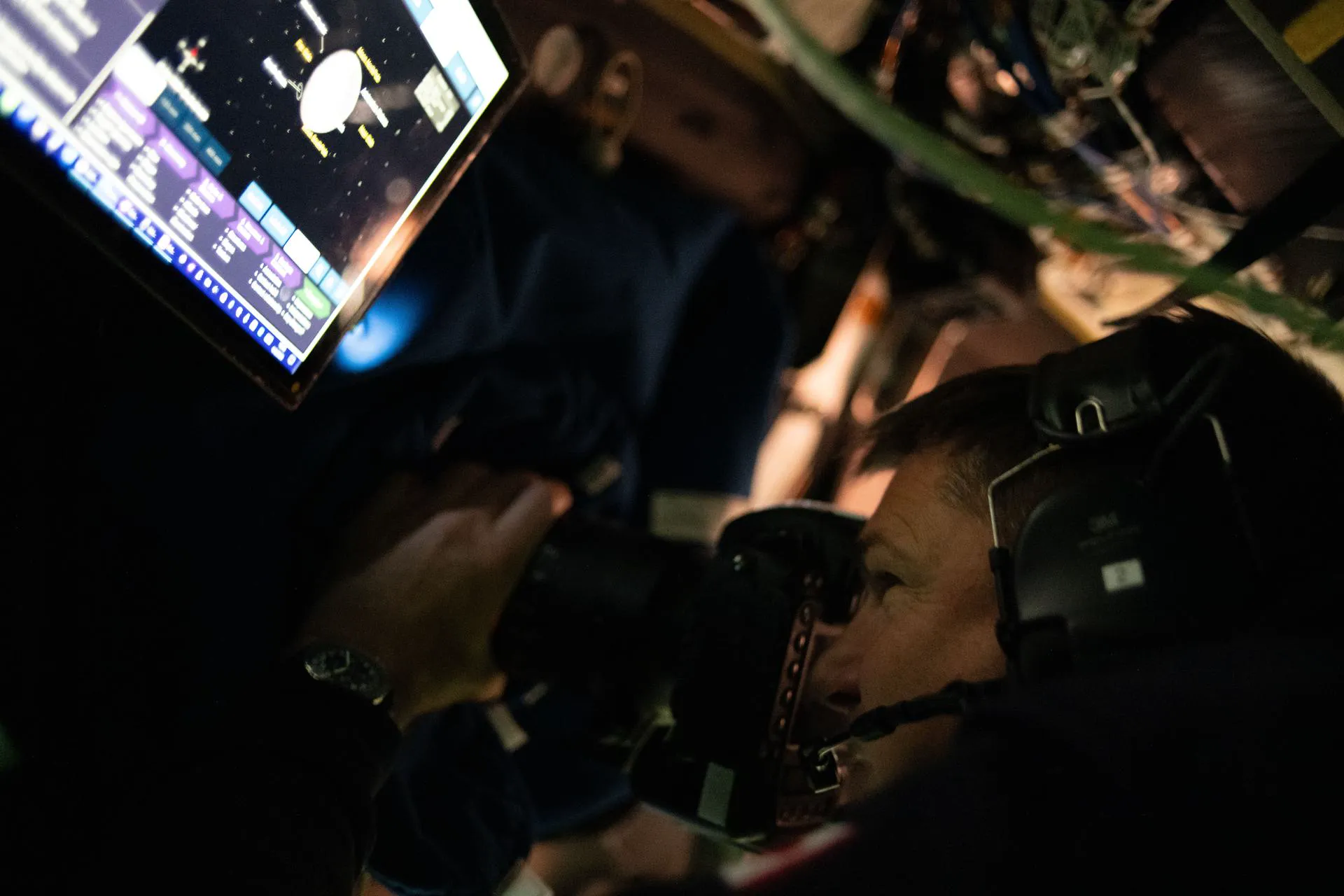
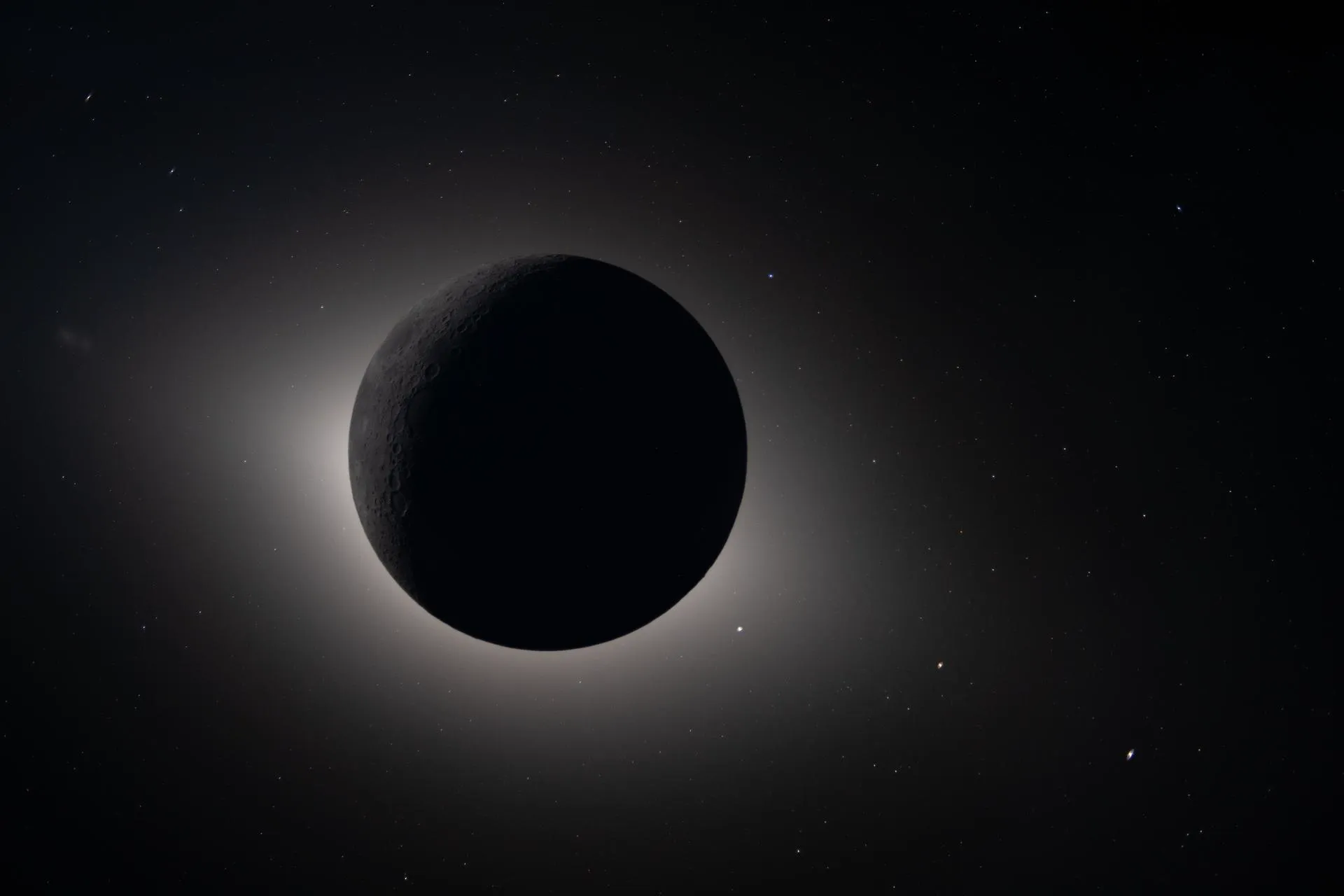
A total solar eclipse on Earth lasts a few minutes because the Moon barely covers the Sun and the shadow is moving. Stand 6,545 km off the far side instead and the Moon is enormous. The crew got nearly 54 minutes of totality.
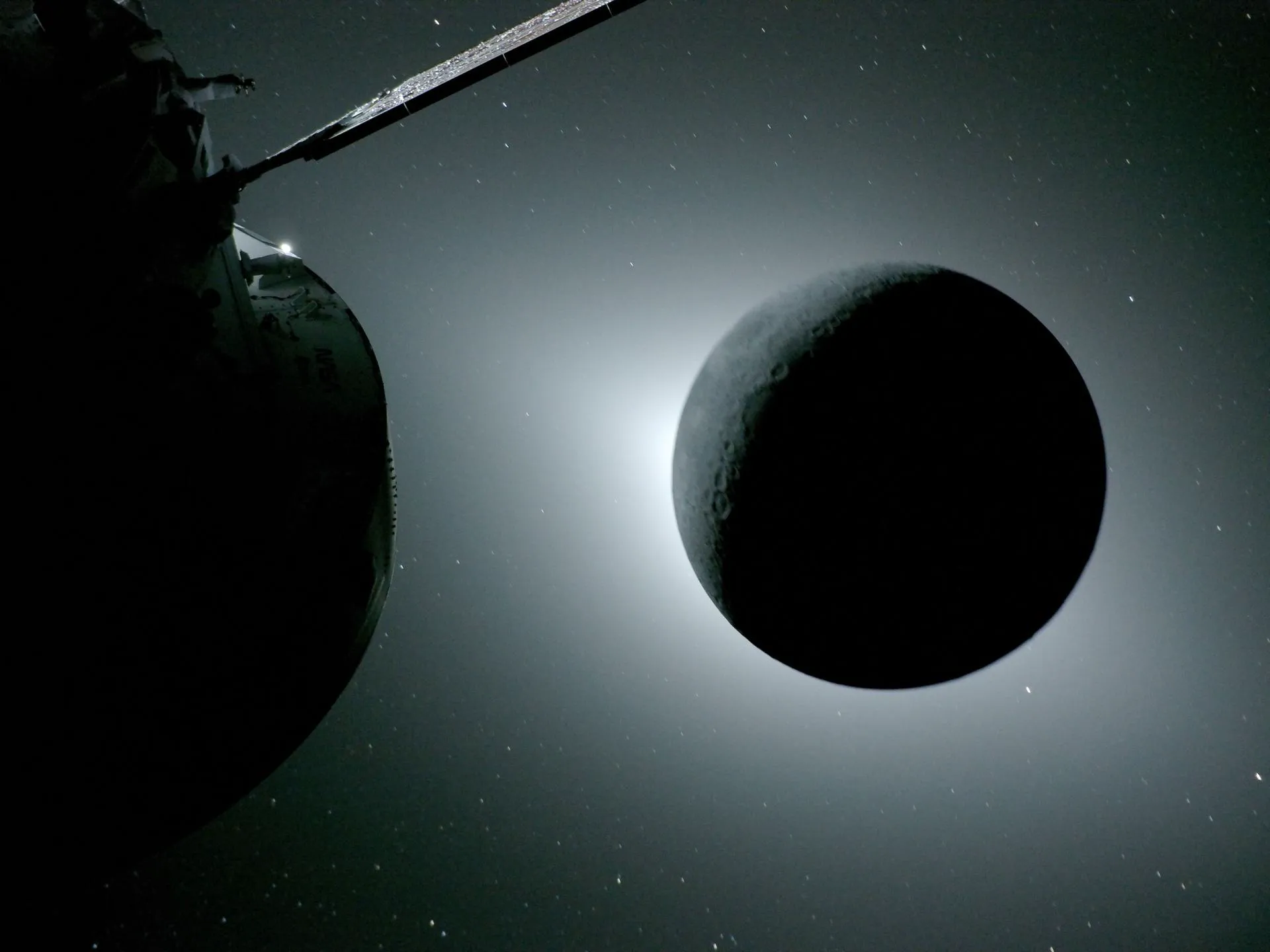
This frame came off a camera mounted on one of Orion's solar array wings, so the spacecraft is in it: the dark shape at the left, with the array running across the top. The Moon is the black disc, lit only by a halo.
What the halo is has not been settled. It is either the Sun's corona, or zodiacal light - sunlight scattered off dust in the plane of the solar system - or both at once, and the science community is still working out the split.
With the Sun blocked and the Moon in darkness, the exposure that shows the halo also shows stars, which normally wash out completely next to a lit Moon. Two planets are in the same frame: Saturn just below the Moon's lower right edge, Mars at the right of the image. Venus turns up in the wider frames.
art002e009573 - solar array wing camera, 6 April 2026
Drawn to scale, the whole flight is a thin line between two small dots, and the 6,545 km closest approach is almost exactly one Earth radius. Both distance records sit past the Moon, because the way you get farther from Earth is to swing around the back of it.
One pixel is 549 km, so Earth is 12 px across the radius and the Moon is 3. Every mark is placed from that one number - the 6,545 km flyby altitude, both records, and the 6,600 km by which Artemis II beat Apollo 13. That last gap is small on purpose: it is drawn at the same scale as everything else rather than blown up to make a point.
Distance from Earth is not only about how high you fly past the Moon. It is mostly about where the Moon is. Subtract the 6,545 km flyby altitude and the Moon's own radius from 406,771 km and roughly 398,000 km is left - which is how far away the Moon was that week, well beyond its 384,400 km average.
Apollo 13 got its record the same way, on a loop nobody had planned, and kept it for fifty-six years.
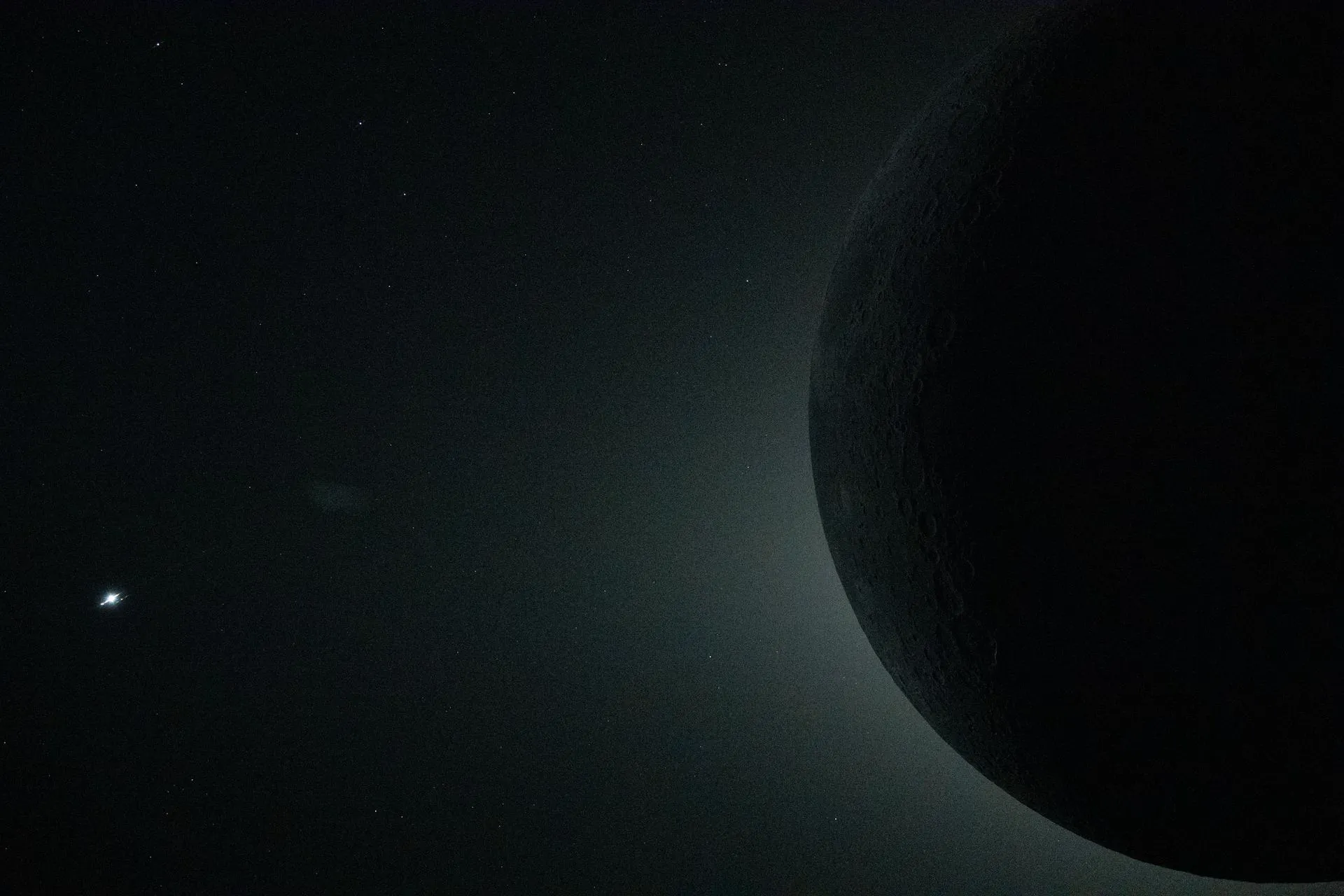
art002e009567 - Orion at 18:42 EDT on 6 April, with the Moon behind it and Earth the small crescent about to slip behind the lunar edge on the right. The spacecraft was already on its way home when this was taken: a free-return trajectory does not need an engine to turn around.
Artemis III is the landing, and it is aimed at the south pole rather than the equatorial sites Apollo used, because there is water ice in the craters down there that never see the Sun.