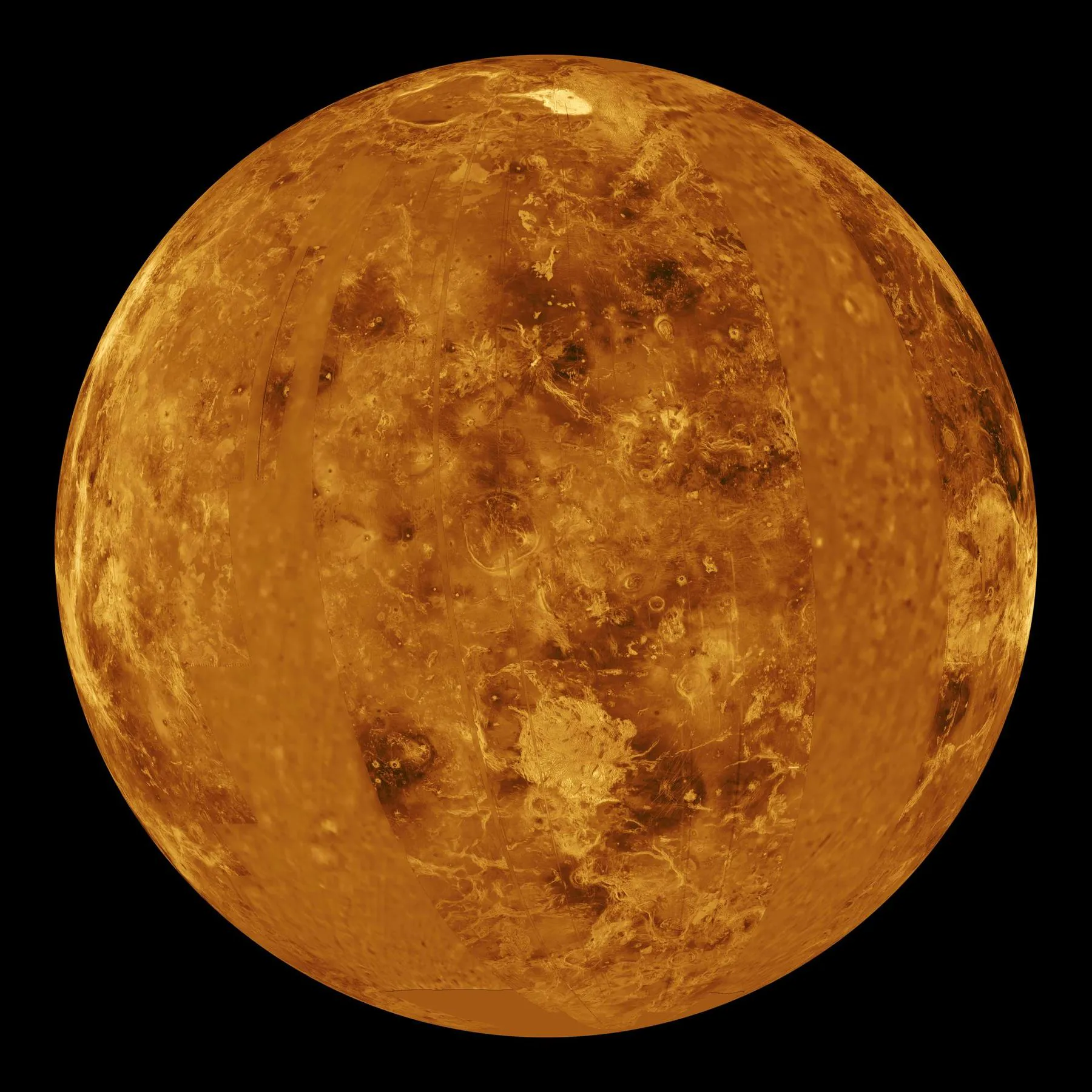
 S3V
NO
S3V
NO
S3V
NO
S3V
NO
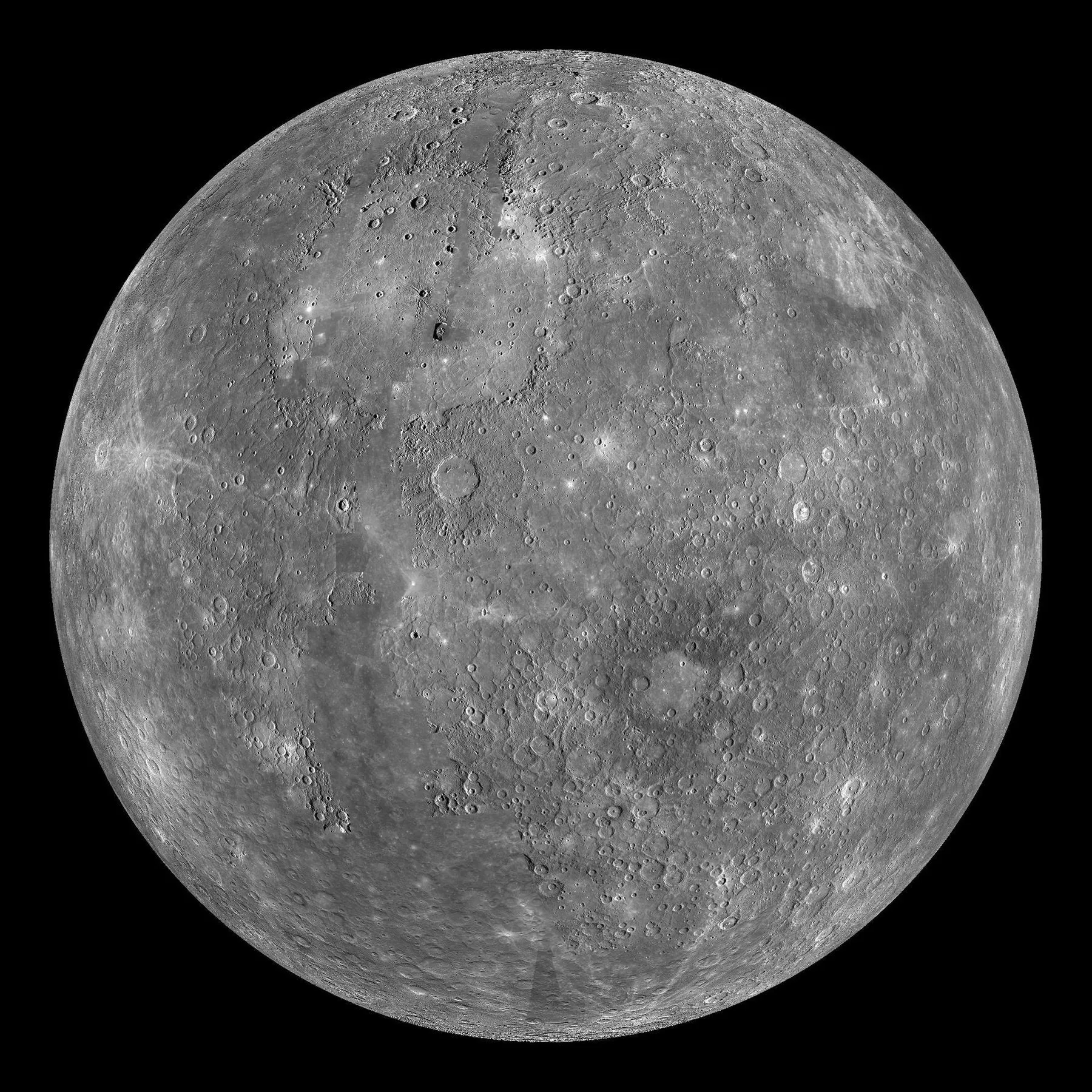
Smaller than two of Jupiter's moons, close enough to the Sun to melt lead at noon, and cold enough at midnight to keep water ice in craters that have never seen daylight.
Mercury has almost no atmosphere, so there is nothing to carry heat from the lit side to the dark side. The two hemispheres are not really the same planet.
Mercury turns exactly three times for every two trips around the Sun. Nothing else in the Solar System does this.
The consequence is that a day on Mercury is longer than a year on Mercury. Sunrise to sunrise takes 176 Earth days; one orbit takes 88. Stand in the right place near perihelion and the Sun rises, stops, goes backwards for a few Earth days, then carries on - because the planet is briefly orbiting faster than it rotates.
No air, no water, no plate tectonics. Everything that has ever hit Mercury is still written on it, and the planet is slowly shrinking as its enormous iron core cools.
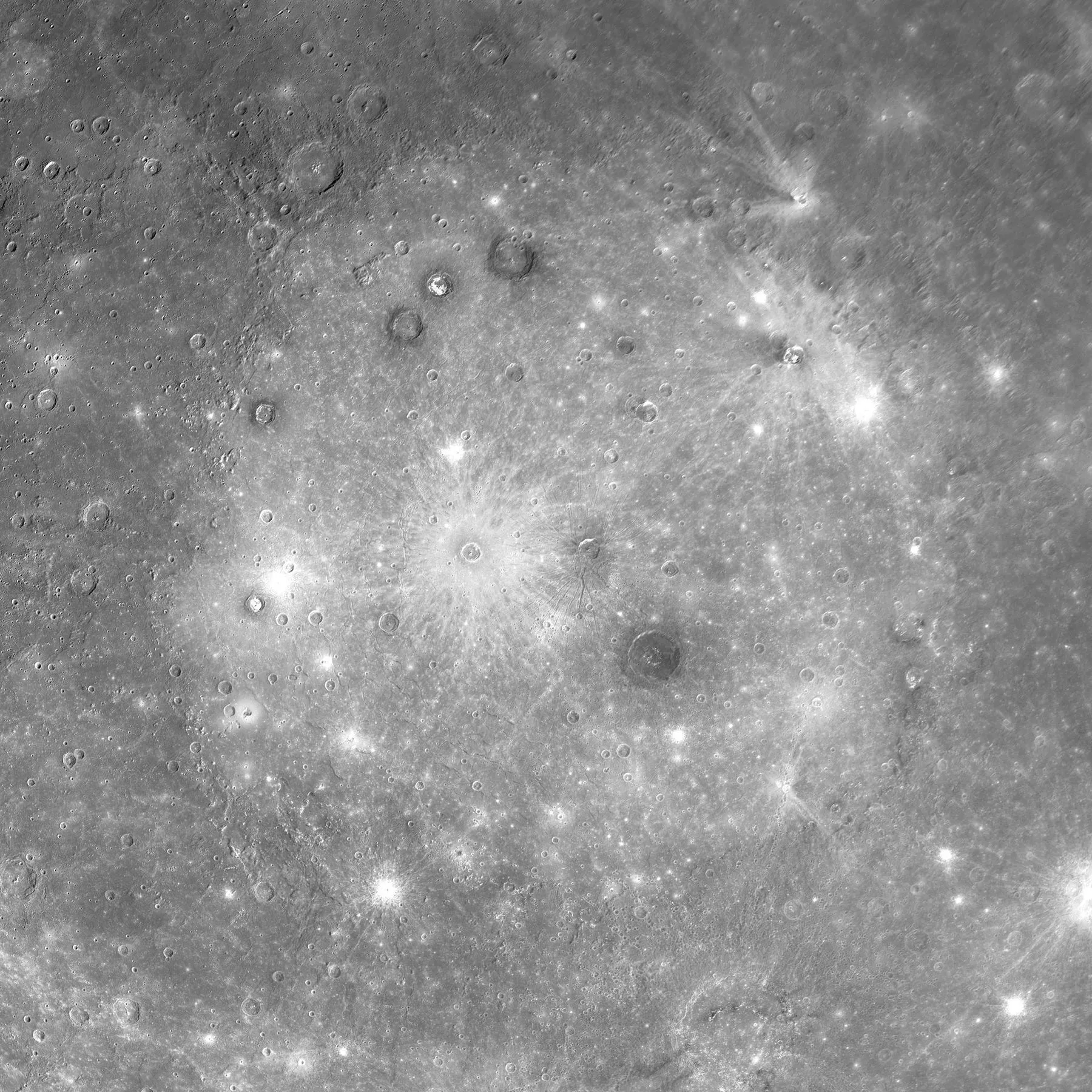
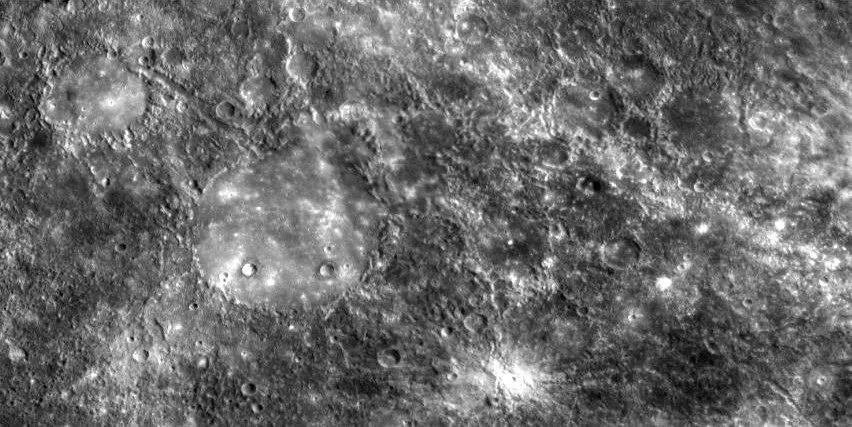
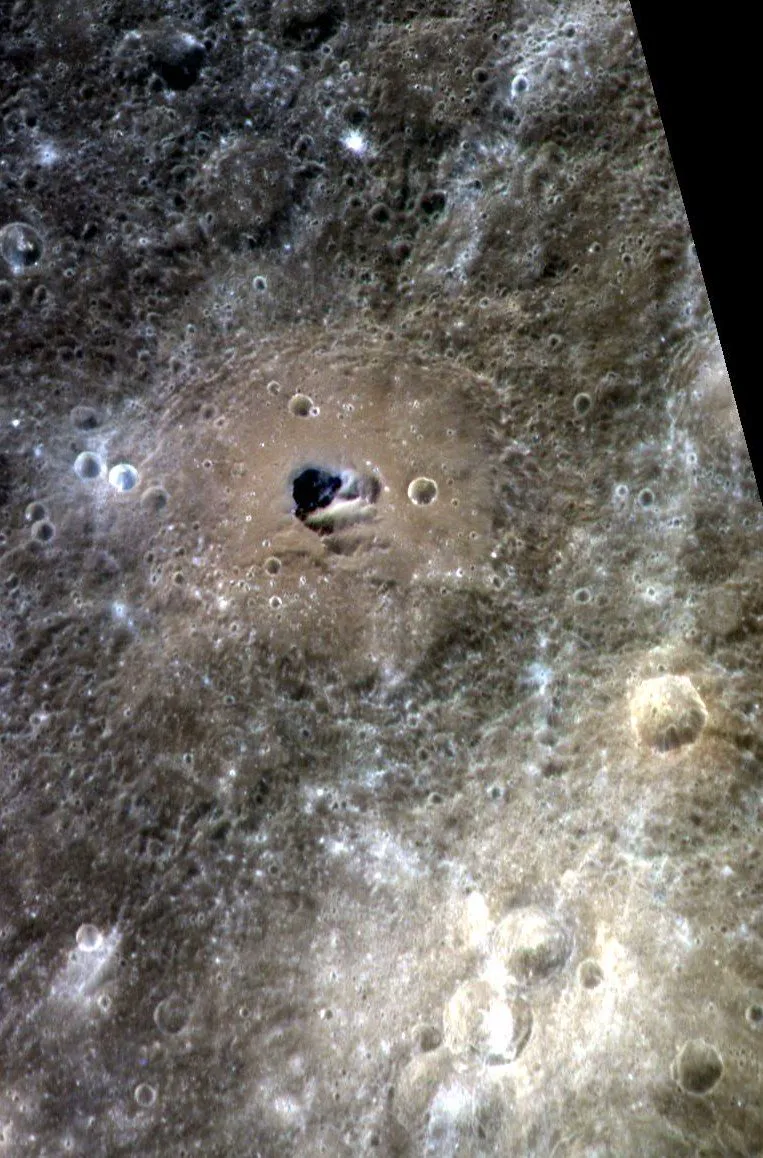
Reaching Mercury is harder than reaching Pluto. Falling toward the Sun means arriving far too fast, so a spacecraft has to spend years shedding speed against other planets before it can be caught.
Three flybys, and the first close look at any of it. The same hemisphere was lit each time, so half of Mercury stayed unmapped for the next thirty-four years.
Six and a half years and six gravity assists after launch, it finally saw the other half of the planet.
Four years of mapping from orbit, confirming the polar ice and the shrinking crust. It ran out of propellant in 2015 and was left to hit the surface, which it did at about 14,000 km/h.
A joint European and Japanese pair of orbiters that has been flying past since 2021, braking a little each time. Orbit insertion is due at the end of this year.