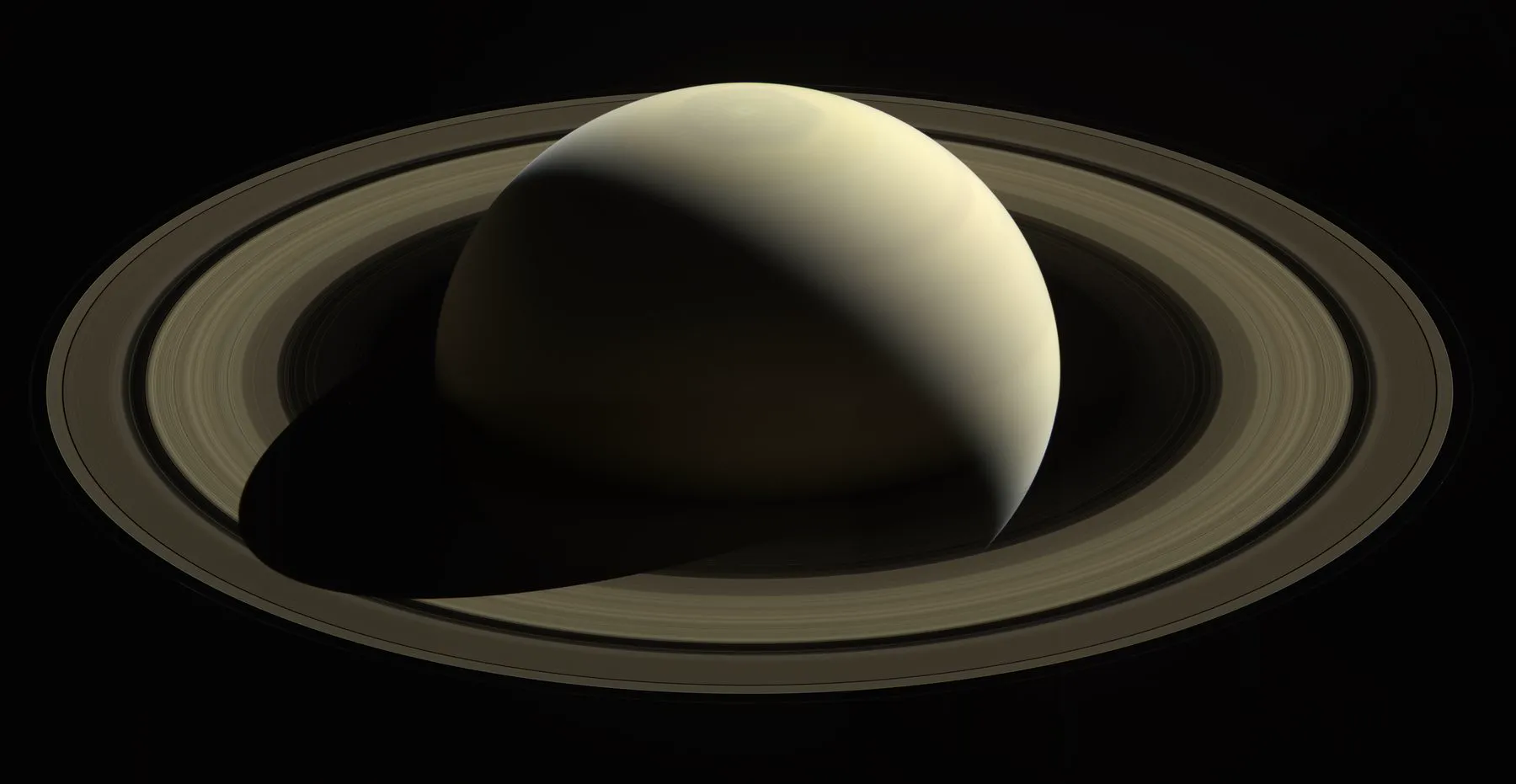
Saturn backlit by the Sun, photographed by Cassini

Saturn

Saturn is the sixth planet from the Sun and the second-largest in the Solar System. Adorned with thousands of beautiful ringlets, it is the only planet whose average density is less than water - given an ocean large enough, Saturn would float.

Scroll

AU (Astronomical Unit) - the distance from Earth to the Sun.

01

Overview

Saturn is a gas giant, mostly hydrogen and helium, with no true surface to land on. What looks like a solid disk is the top of a deep atmosphere that fades into liquid the further down you go.

The rings are not solid either. They are billions of pieces of ice and rock, most no bigger than a house, spread across a span wider than the distance from Earth to the Moon and yet in places only ten metres thick.

Saturn is named for the Roman god of agriculture and wealth, the father of Jupiter.

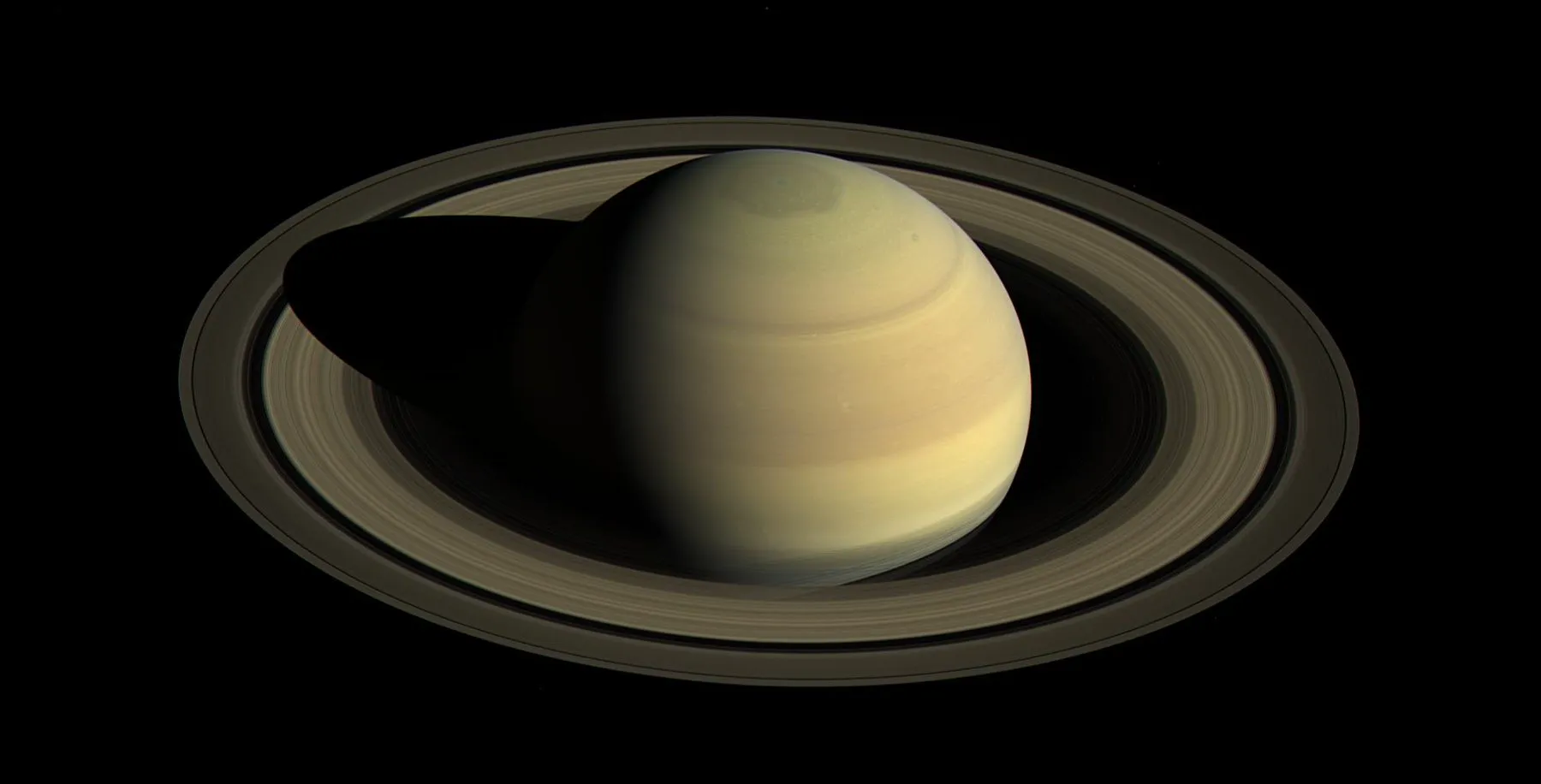
Saturn and its rings, approaching northern summer

Features

02

Saturn is the sixth planet from our Sun and the second-largest in the solar system - and the only one wearing a ring system bright enough to see through a garden telescope.

Sunlight scattering through Saturn's rings

The Rings

Seven main rings, named A to G in the order they were found rather than the order they sit in, separated by gaps that moons carve and hold open. They reach 175,000 miles out from the planet and are thought to be the debris of a moon or comet that came too close and was torn apart.

  • They span 175,000 miles yet are often only about 30 feet thick.
  • Almost pure water ice, which is why they are so bright.
  • Possibly younger than the dinosaurs - perhaps 100 million years old.
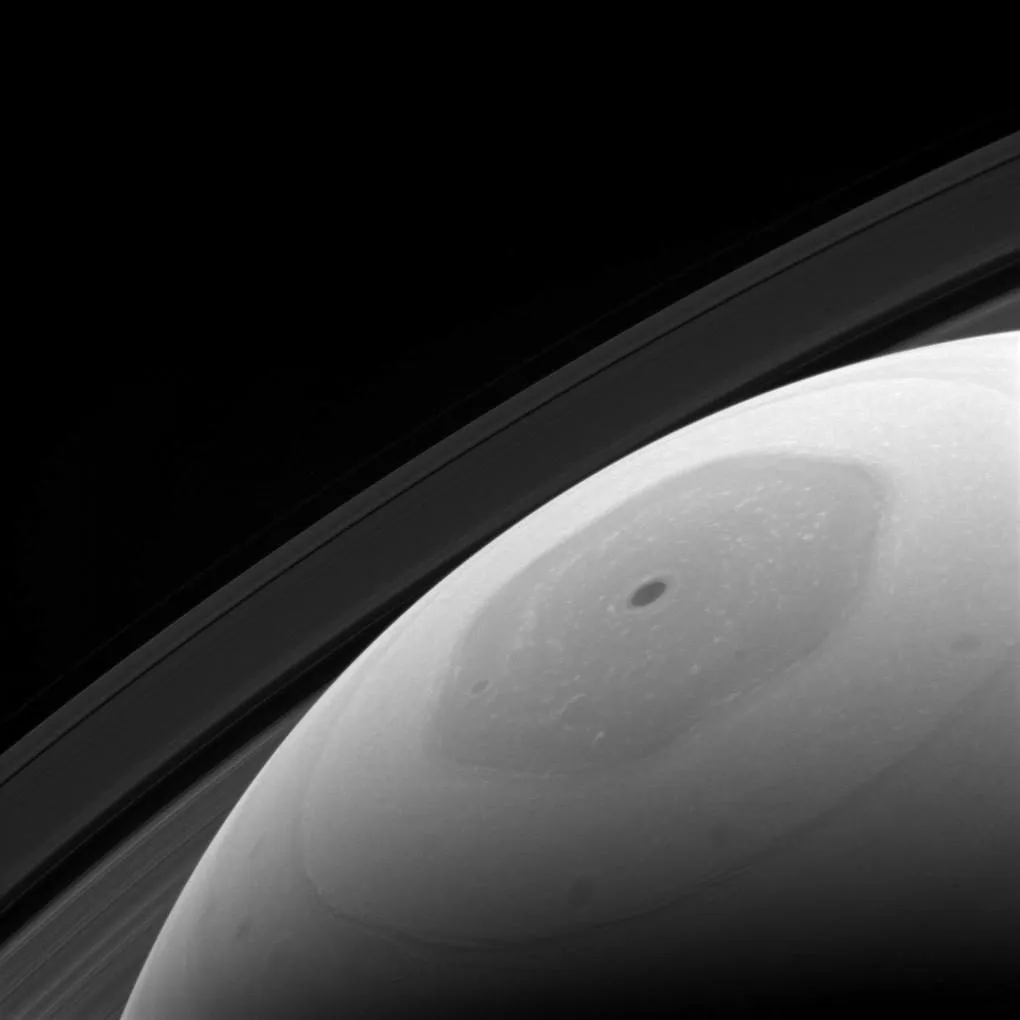
The hexagonal jet stream at Saturn's north pole

The Hexagon

A six-sided jet stream sits over Saturn's north pole, each side longer than the diameter of Earth. Voyager found it in 1980 and it was still there when Cassini arrived 25 years later, corners in the same place. Nothing like it exists anywhere else in the solar system.

  • About 18,600 miles across, wide enough to swallow four Earths.
  • Winds inside the jet run at roughly 200 miles per hour.
  • A hurricane sits at its centre, its eye 50 times larger than a hurricane eye on Earth.
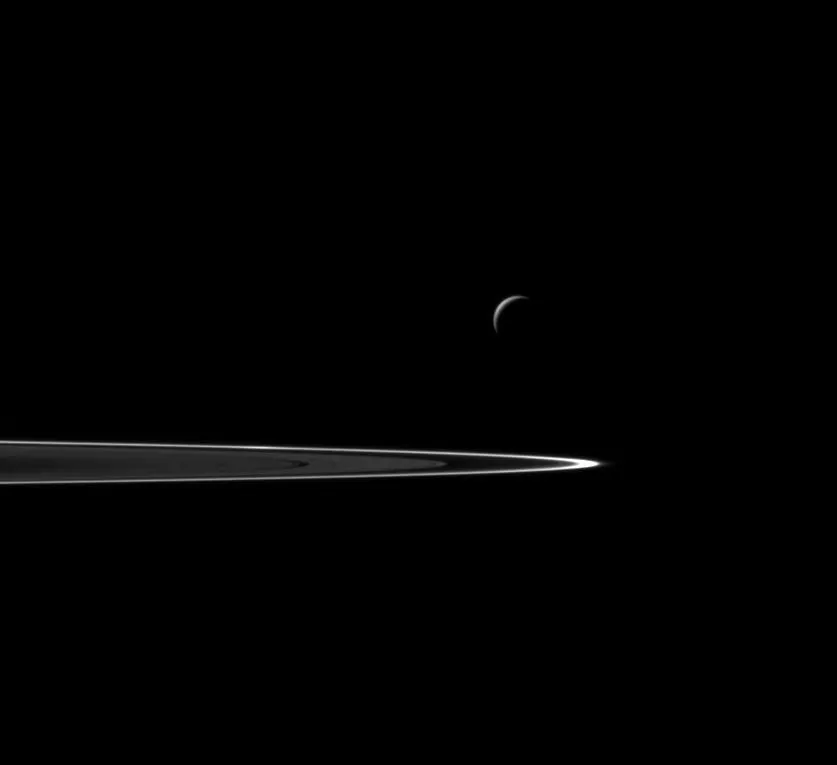
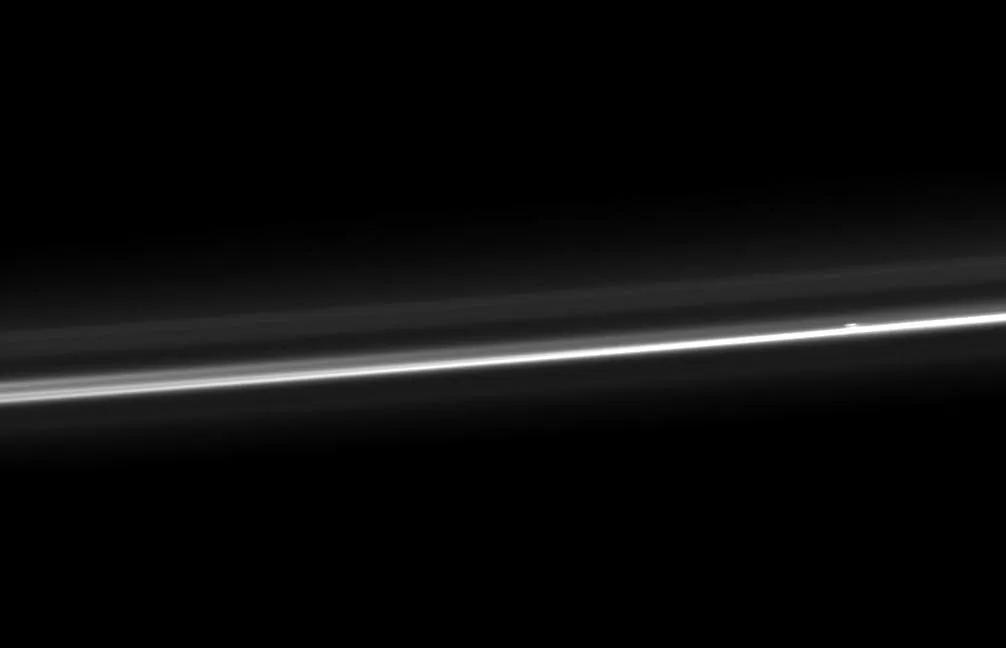
The rings seen edge-on with a moon beyond

Edge On

Twice each Saturnian year the rings turn edge-on to Earth and all but vanish - a plane tens of thousands of miles wide reduced to a hairline. It was this disappearing act that confused Galileo, who described Saturn as a planet with ears and then watched them go.

  • The ring plane is tilted 26.7 degrees, so Saturn has real seasons.
  • Shepherd moons orbit inside the gaps, keeping the edges sharp.
  • The next edge-on crossing seen from Earth is in 2038.
03

In Depth

Saturn cannot support life as we know it. But some of its moons have the conditions that might: an ocean, a source of heat, and the chemistry to work with.

Saturn's average density is 0.687 grams per cubic centimetre, less than water. It is the only planet in the solar system of which that is true. The planet is also visibly squashed: it spins so fast that it bulges at the equator and flattens at the poles by nearly ten per cent.

Below the cloud tops the temperature climbs steadily. At the core it may reach 11,700 degrees Celsius, hot enough that Saturn radiates more energy than it receives from the Sun.

0%
HydrogenHelium

Deeper still, the pressure turns hydrogen into a liquid metal that conducts electricity. The flow of that metal drives Saturn's magnetic field, which is almost perfectly aligned with the planet's rotation axis - an alignment no other planet shares, and one nobody has fully explained.

Saturn, full disk

a. Orbit and Rotation

A day on Saturn lasts 10.7 hours. A year lasts 29.4 Earth years, so a person born on Saturn would not reach their second birthday within a human lifetime.

Its axis is tilted 26.73 degrees, close to Earth's 23.5, which gives Saturn seasons - and slowly turns the rings from wide open to edge-on and back again over the course of its long year.

b. Cassini

Cassini orbited Saturn from 2004 to 2017, then was deliberately flown into the atmosphere so it could never contaminate Enceladus or Titan. Most of what is on this page came from that spacecraft.

04

Moons

Saturn has 274 confirmed moons, more than any other planet - a count that keeps climbing as surveys find smaller ones. They range from Titan, larger than the planet Mercury, down to moonlets a few hundred metres wide embedded in the rings.

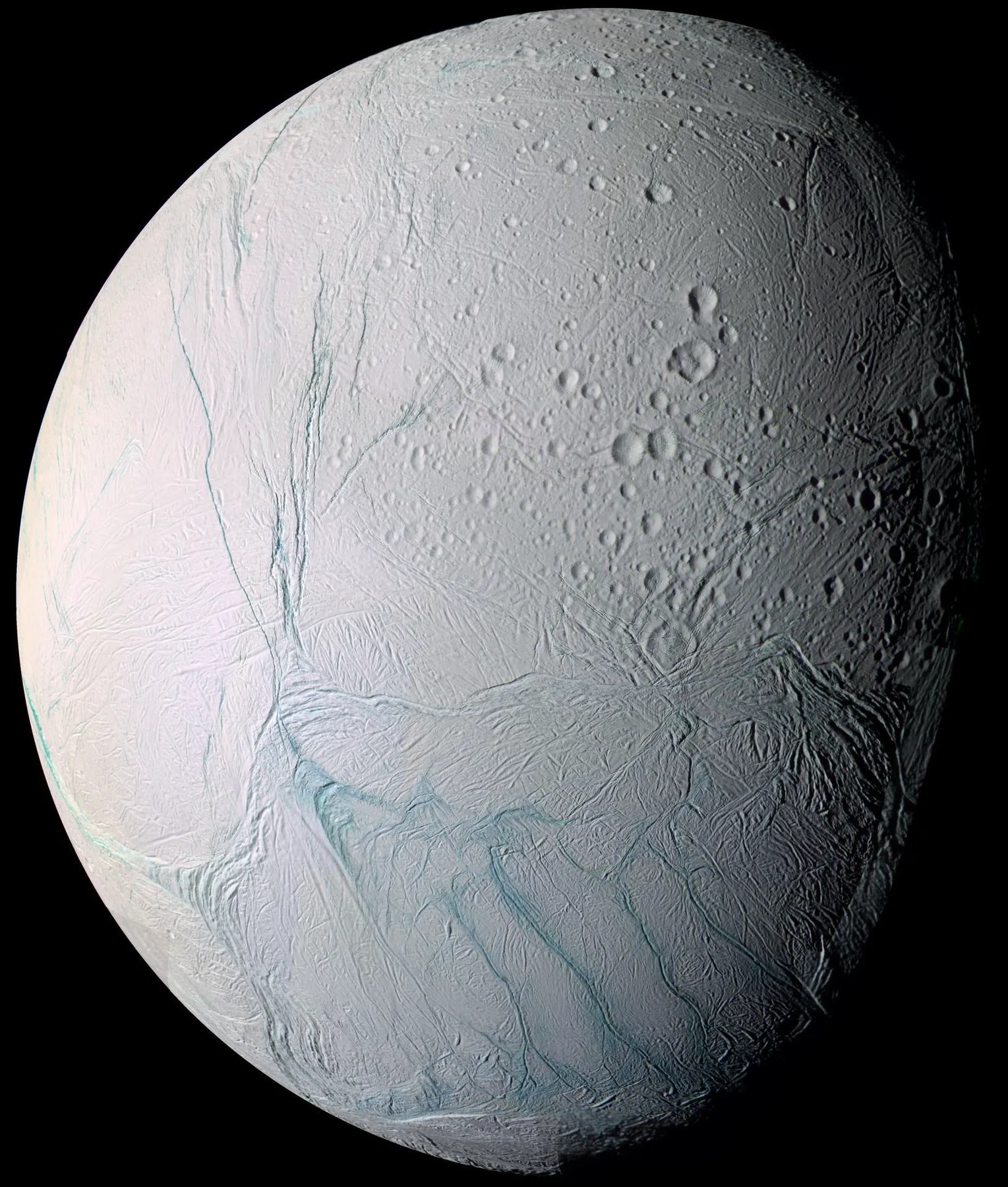
Enceladus, its plume lit from behind

Enceladus

  • Only 313 miles across, and the most reflective body in the solar system - it bounces back almost all the light that hits it.
  • More than 100 geysers erupt from cracks at the south pole, feeding Saturn's E ring with ice.
  • Cassini flew through the plume and found water, salt, silica and organic molecules - a global ocean under the ice.
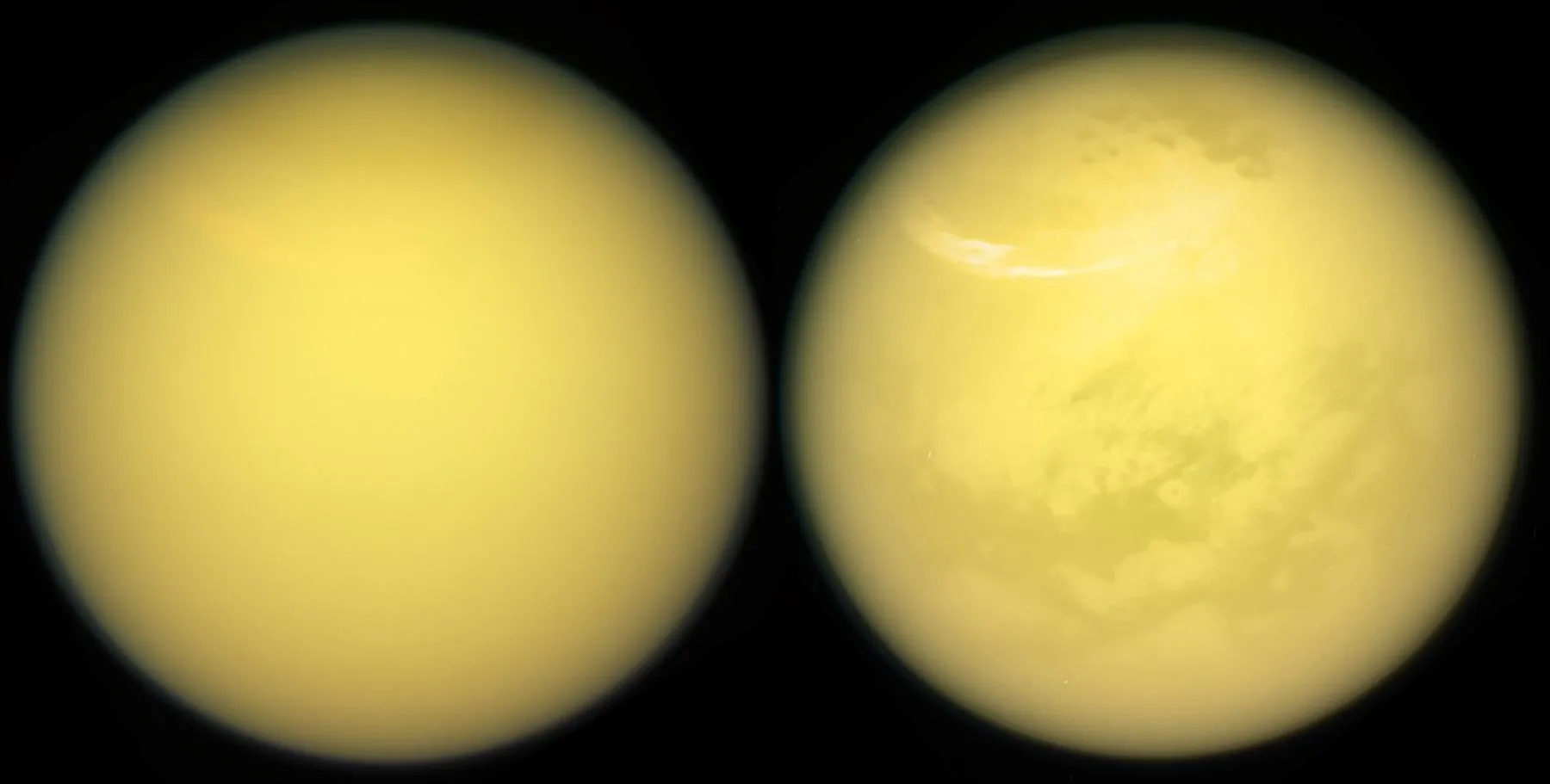
Titan, in visible light and in infrared

Titan

  • Bigger than Mercury, and the only moon with a substantial atmosphere - thicker at the surface than Earth's.
  • It rains methane. Rivers, lakes and seas of liquid methane and ethane sit near the poles.
  • The Huygens probe landed there in 2005, the most distant landing ever made.
Uranus
View next

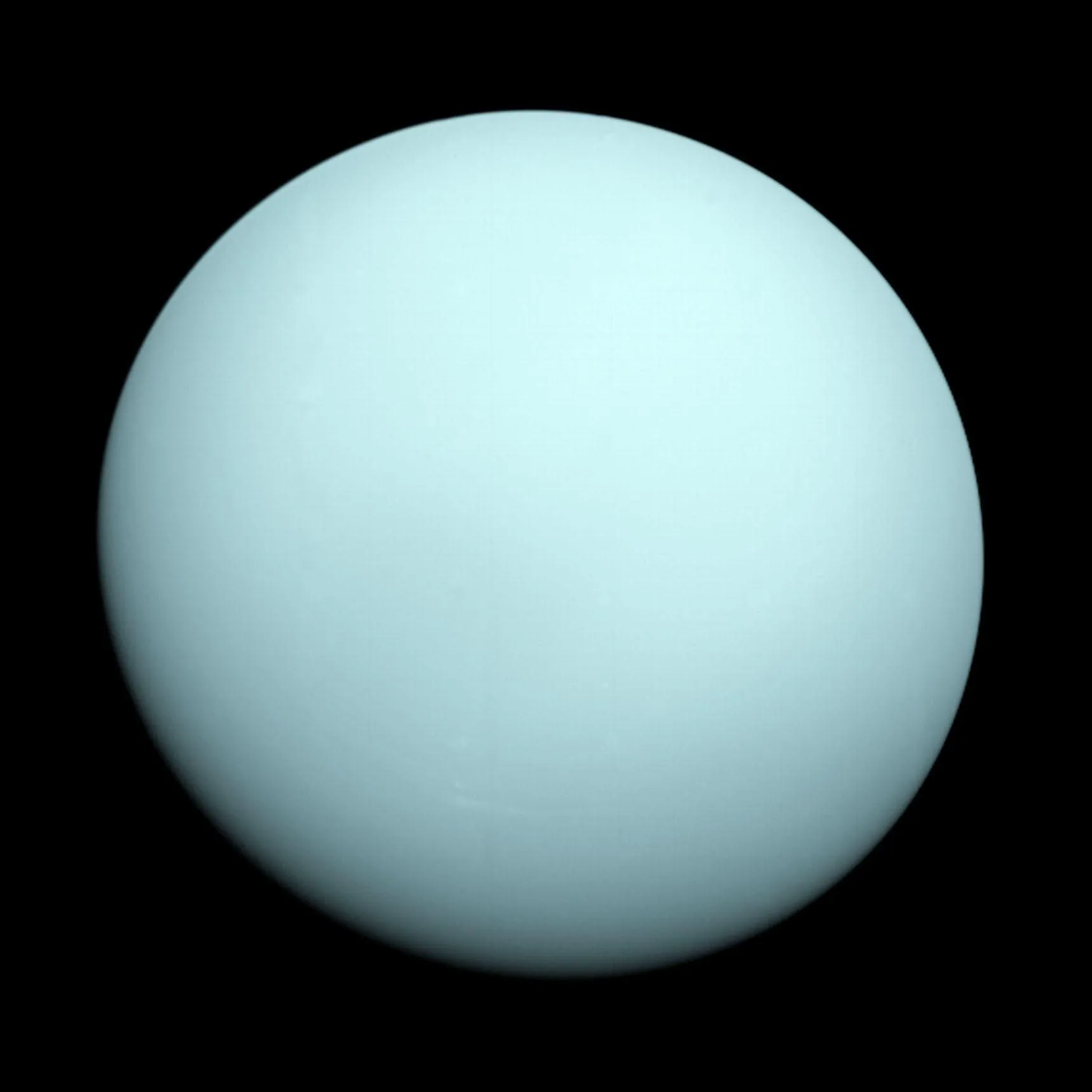
Uranus

An ice giant tipped ninety-eight degrees onto its side, so its rings stand vertically and each pole gets forty-two years of daylight. Visited exactly once, for five and a half hours, in 1986.

Explore Uranus