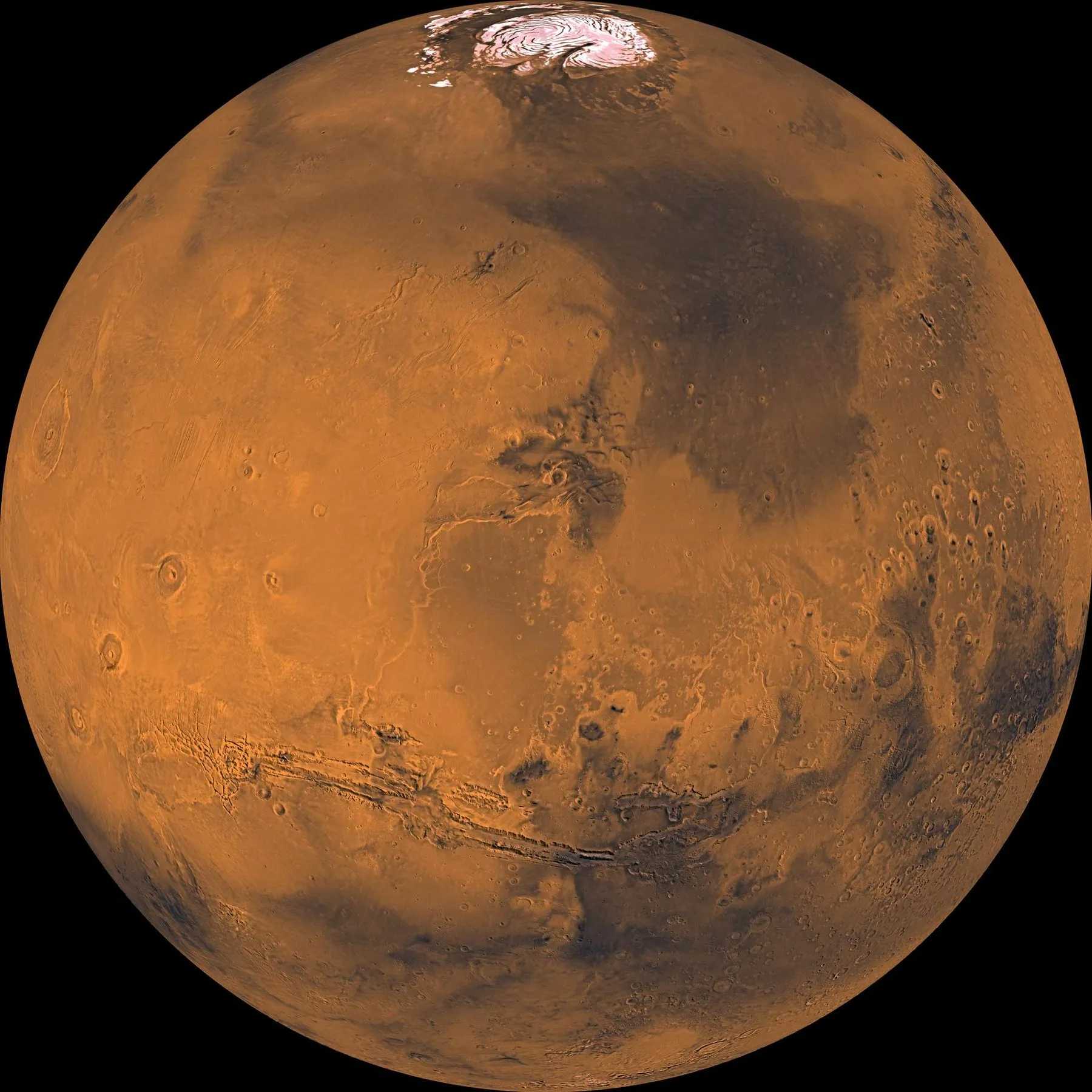
Mars, with its northern polar cap

Mars

Mars is the fourth planet from the Sun, half the size of Earth and colder than anywhere on it. It is also the only planet we know of inhabited entirely by robots - and the one world beyond ours whose surface we have walked across, wheel by wheel, for fifty years.

Scroll

AU (Astronomical Unit) - the distance from Earth to the Sun.

01

Overview

Mars is a rocky planet with a thin atmosphere - so thin that liquid water cannot survive on the surface. It boils away or freezes. What is left is dust, rock, and ice.

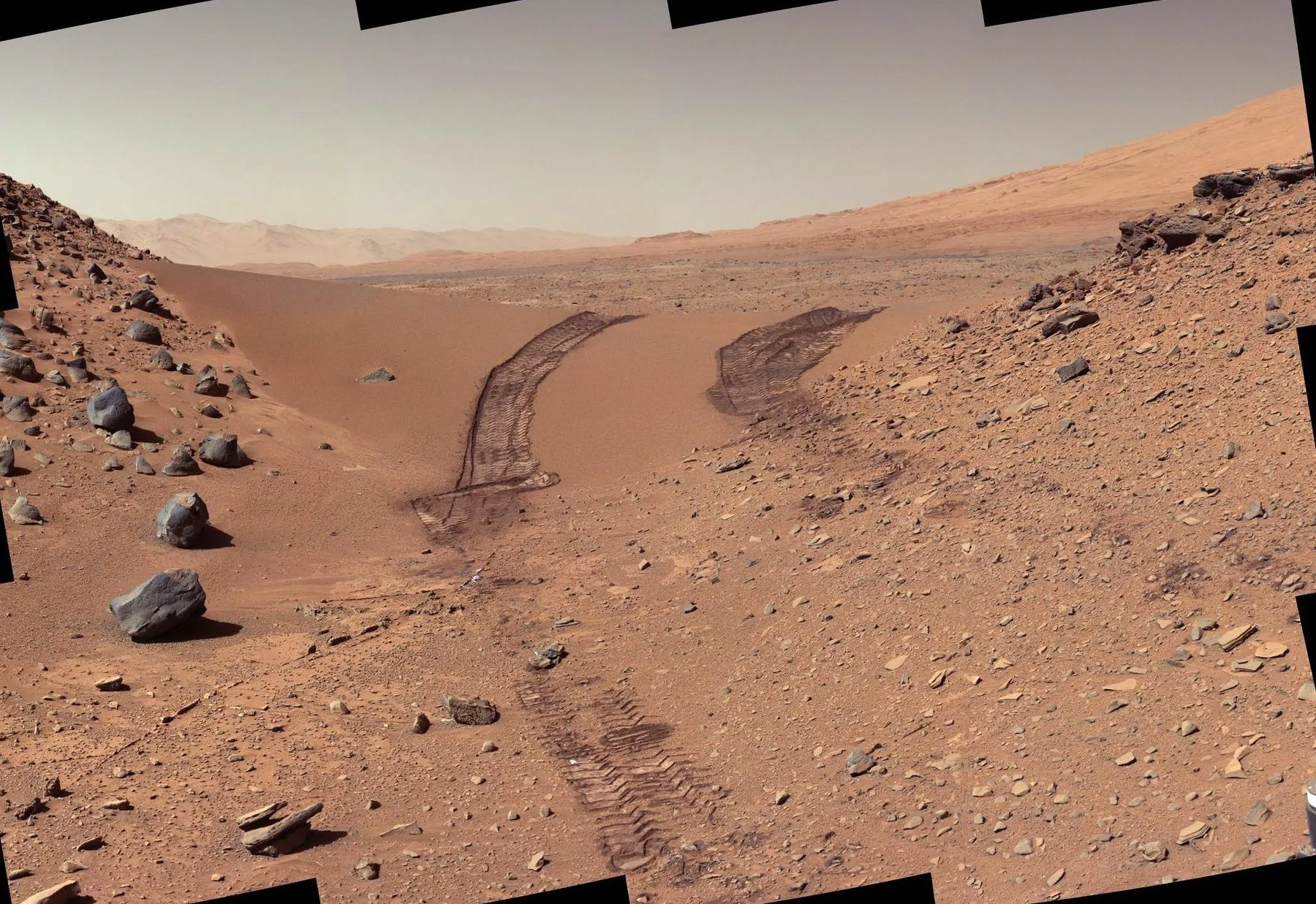
The colour comes from iron oxide. The planet is rusting, and has been for billions of years, which is why it looks red from a back garden on Earth and rust-brown from a rover's camera on the ground.

Mars is named for the Roman god of war, for the same reason.

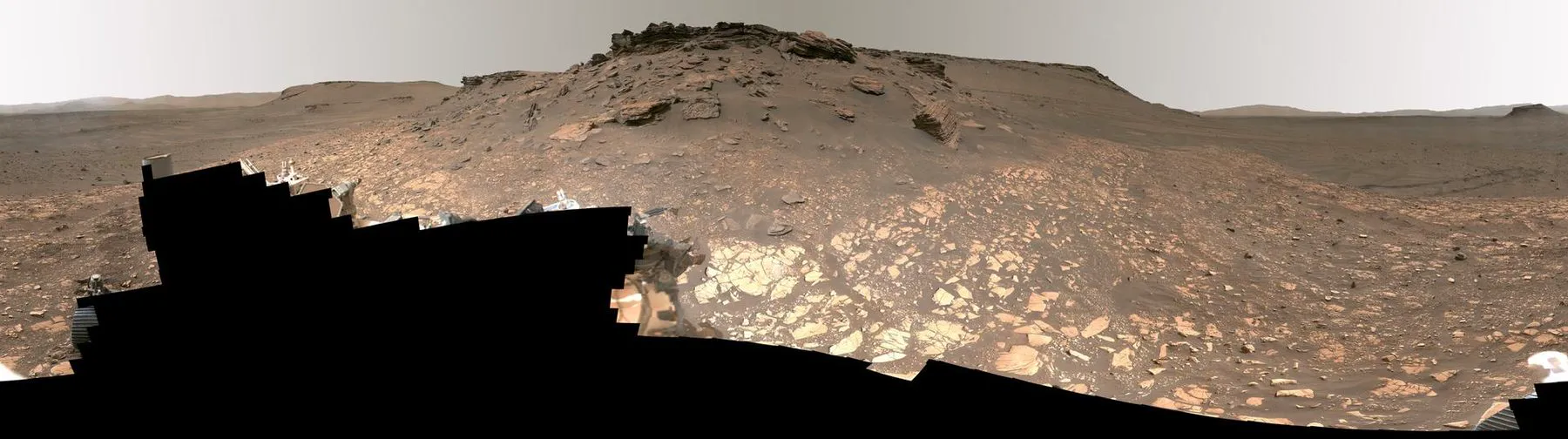
The Martian surface photographed from a rover

Features

02

Mars is half the width of Earth, but nothing on Earth is built to Martian scale. Lower gravity and a crust that never broke into moving plates let the landscape grow without limit.

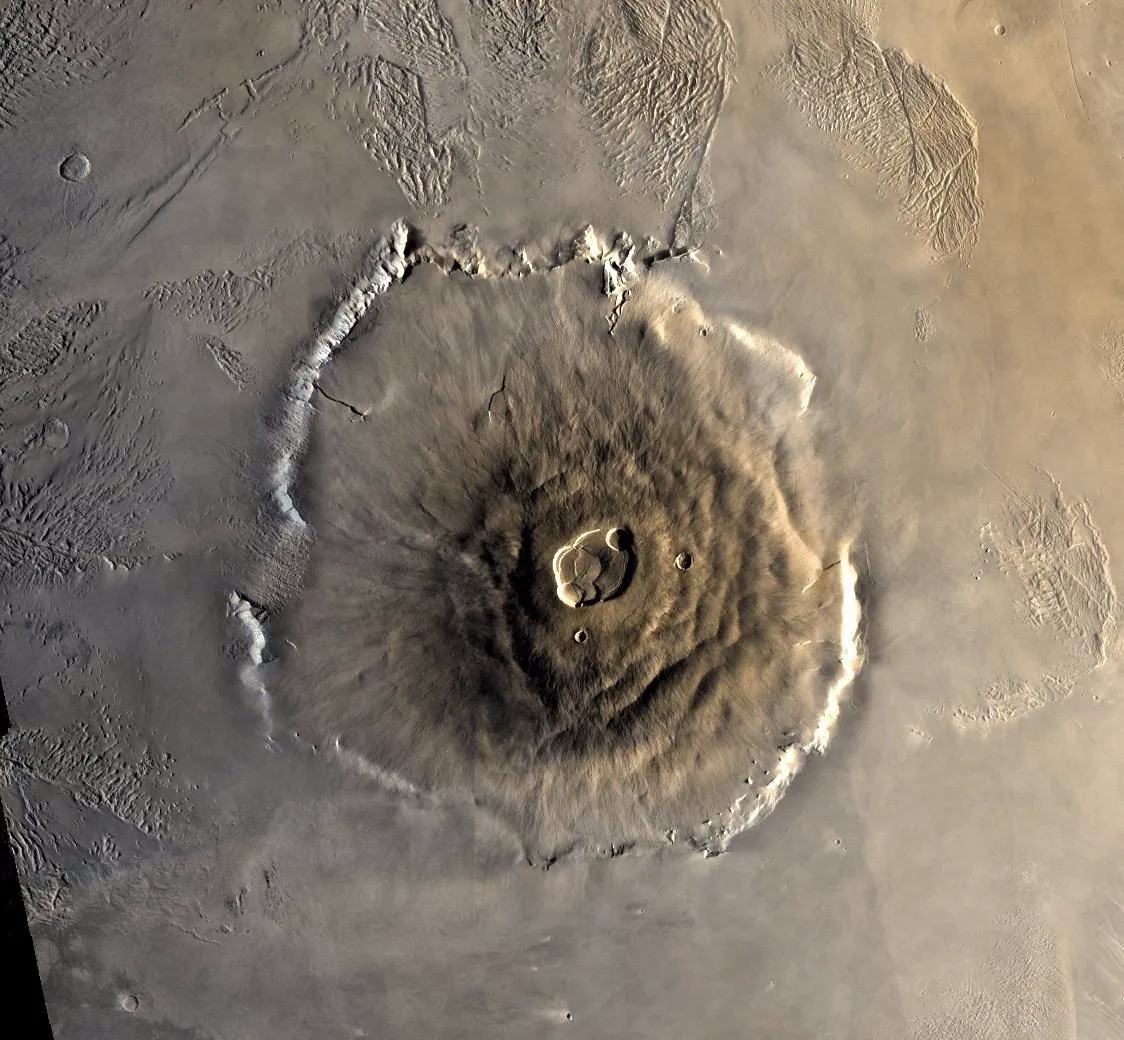
Olympus Mons from orbit

Olympus Mons

The largest volcano in the solar system: 16 miles high and 374 miles across, roughly the size of Arizona. Standing on it you would not know - the slope is so gentle and the volcano so wide that the horizon would look flat in every direction.

  • Nearly three times the height of Mount Everest.
  • The caldera at the summit is 50 miles wide.
  • It grew this large because Mars has no moving plates to carry the crust off the hotspot.
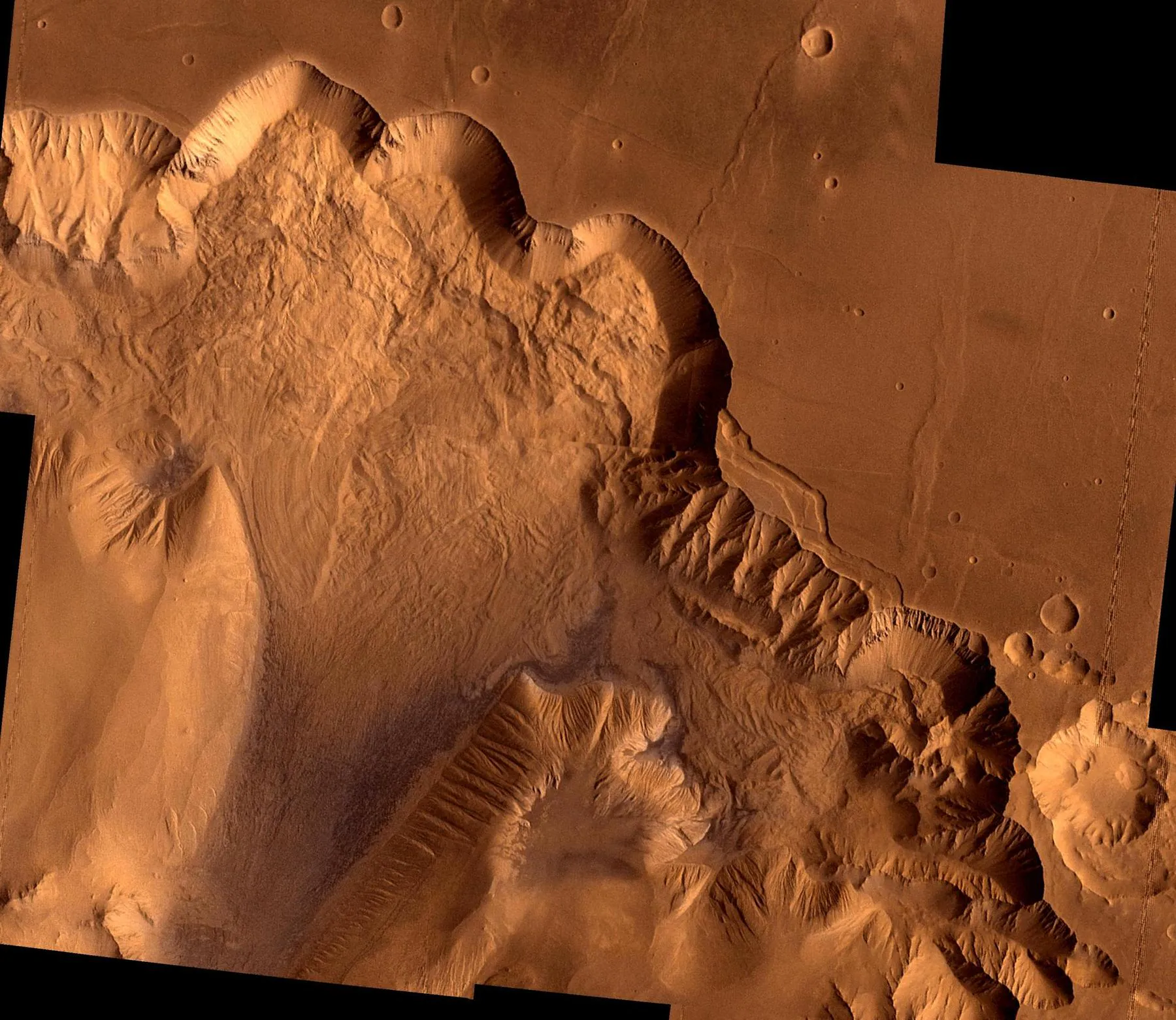
Ophir Chasma, part of Valles Marineris

Valles Marineris

A canyon system 2,500 miles long, cutting a fifth of the way around the planet. It is ten times the length of the Grand Canyon and four times as deep - not carved by water, but torn open as the crust stretched and collapsed.

  • Up to 4.3 miles deep and 124 miles wide.
  • Long enough to stretch from New York to Los Angeles.
  • Landslides on its walls have run out more than 60 miles.
The delta in Jezero Crater

Jezero

Billions of years ago a river ran into this crater and built a delta, the same way rivers do on Earth. Perseverance landed in it in February 2021 and has been caching rock samples ever since, for a mission that has not yet been built to bring home.

  • The crater held a lake roughly the size of Lake Tahoe.
  • Clay minerals in the delta are the kind that preserve organic material.
  • Ingenuity flew here 72 times - the first powered flight on another world.
03

In Depth

Mars once had a thicker atmosphere, running water and a magnetic field. It lost all three. Working out the order in which that happened is most of what the last thirty years of missions have been about.

The atmosphere is 95 per cent carbon dioxide, and so thin that the pressure at the surface is less than one per cent of Earth's at sea level - about what you would find 22 miles up over your head right now.

Temperatures run from about 20 degrees Celsius at the equator at midday to minus 153 at the poles. The average is minus 63. With no thick air to hold the heat, the ground cools the moment the Sun sets.

0%
Carbon dioxideNitrogen, argon

Mars has no global magnetic field to deflect the solar wind, so the atmosphere has been stripped away over billions of years - a process MAVEN has watched happening. Patches of magnetised crust in the southern highlands are all that is left of the field it once had.

Mars, full globe

a. Orbit and Rotation

A Martian day is 24 hours and 37 minutes, close enough to ours that mission teams on Earth live on Mars time and drift an hour later every day.

The year is 687 Earth days, and the axis is tilted 25.19 degrees - almost exactly Earth's tilt. Mars has seasons, but each one lasts about twice as long, and the orbit is elliptical enough that southern summers run hotter and shorter than northern ones.

b. Dust

Dust storms can grow to cover the entire planet and last for months, dimming the Sun enough to end a solar-powered mission. One did exactly that to Opportunity in 2018, after fourteen years of driving.

04

Moons

Mars has two moons, and neither looks like one. Phobos and Deimos are small, dark and lumpy - probably captured asteroids, or debris thrown up by an impact early in the planet's history and never fully gathered back together.

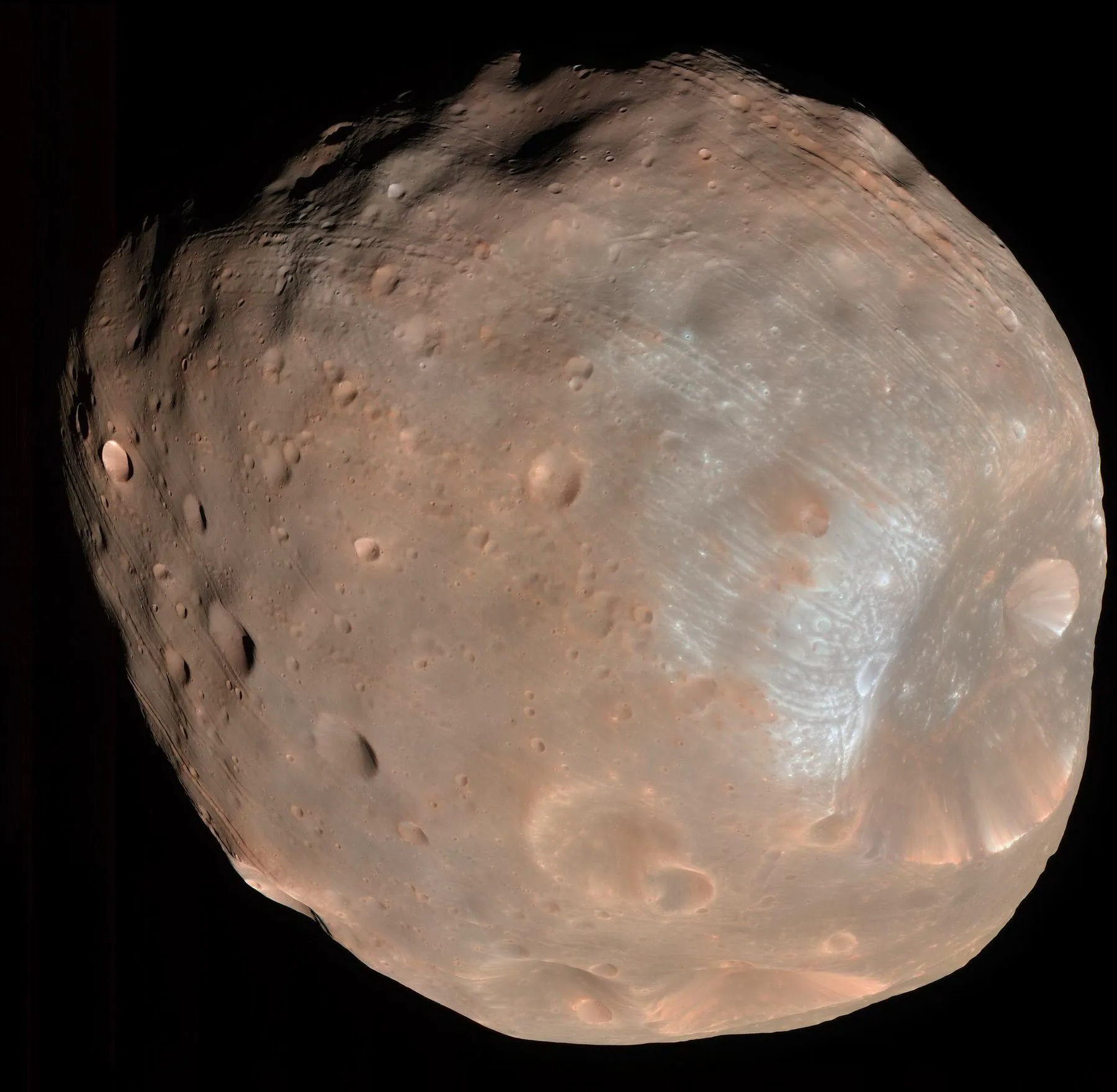
Phobos, the larger Martian moon

Phobos

  • 14 miles across, and so close to Mars that it circles the planet three times a day - it rises in the west and sets in the east.
  • It is spiralling inwards by about six feet per century.
  • In roughly 50 million years it will either strike the surface or be torn apart into a ring.
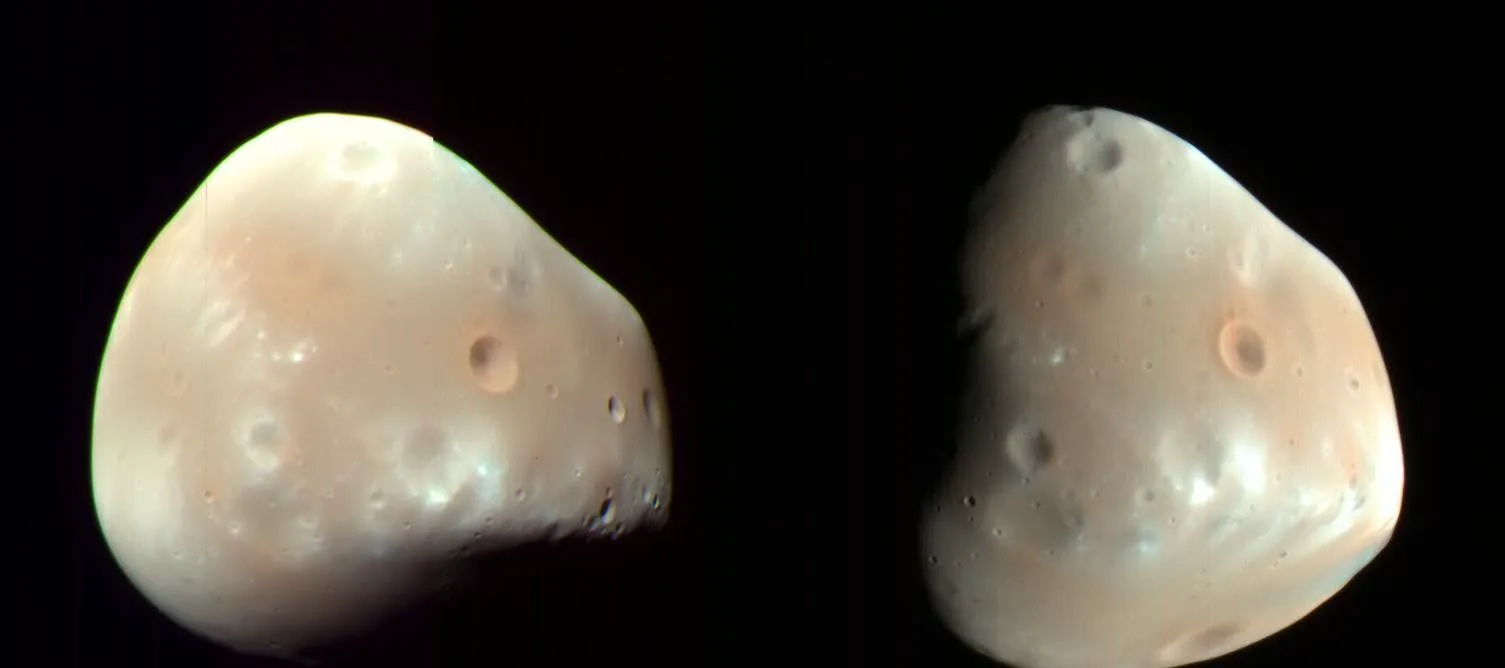
Deimos, the smaller Martian moon

Deimos

  • Only 7.7 miles across, the smaller and more distant of the two.
  • From the Martian surface it looks like a bright star, not a moon.
  • Its surface is smoother than Phobos, buried under a thick layer of dust.
Jupiter
View next

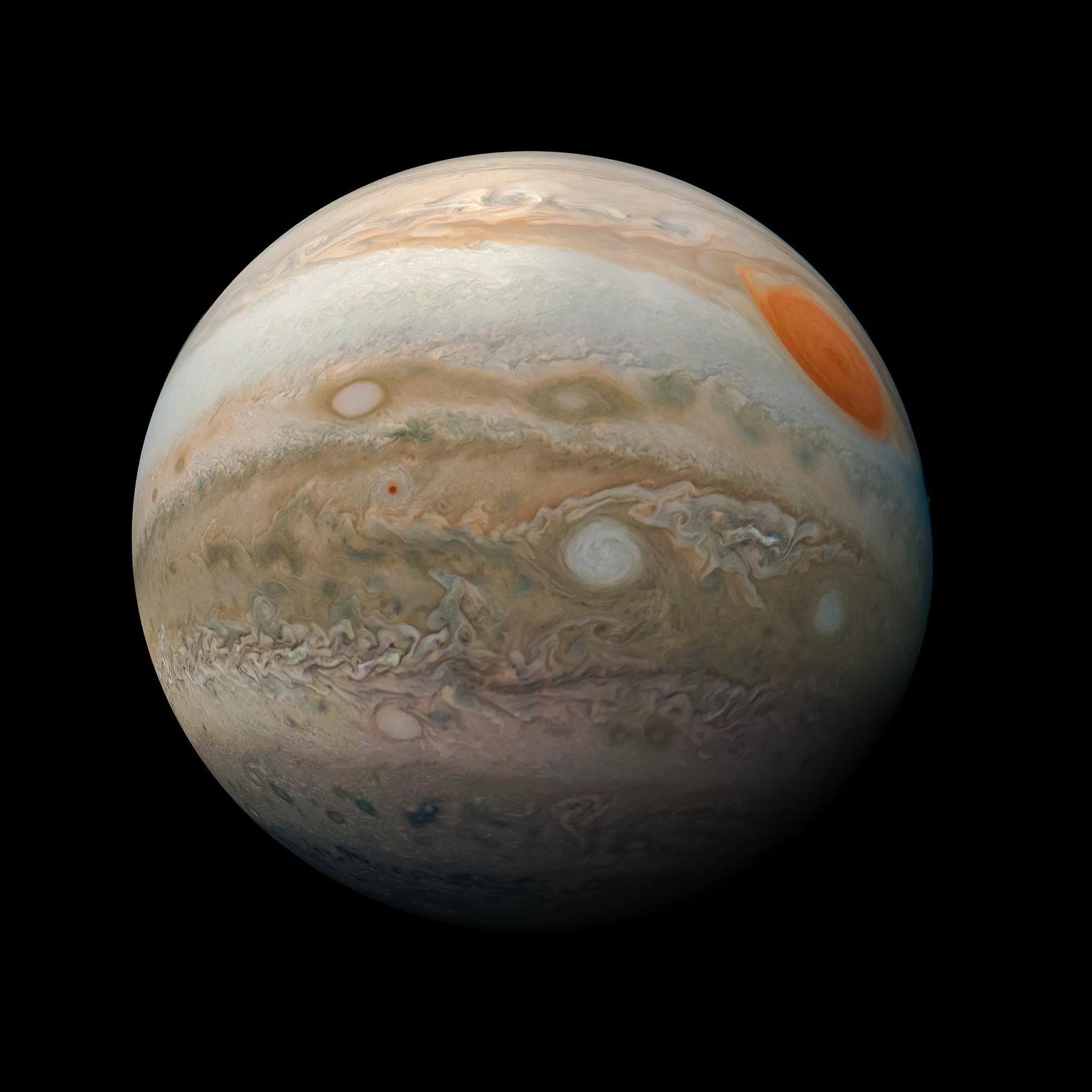
Jupiter

Two and a half times the mass of every other planet combined, and a storm wider than Earth that has been running for at least three and a half centuries.

Explore Jupiter