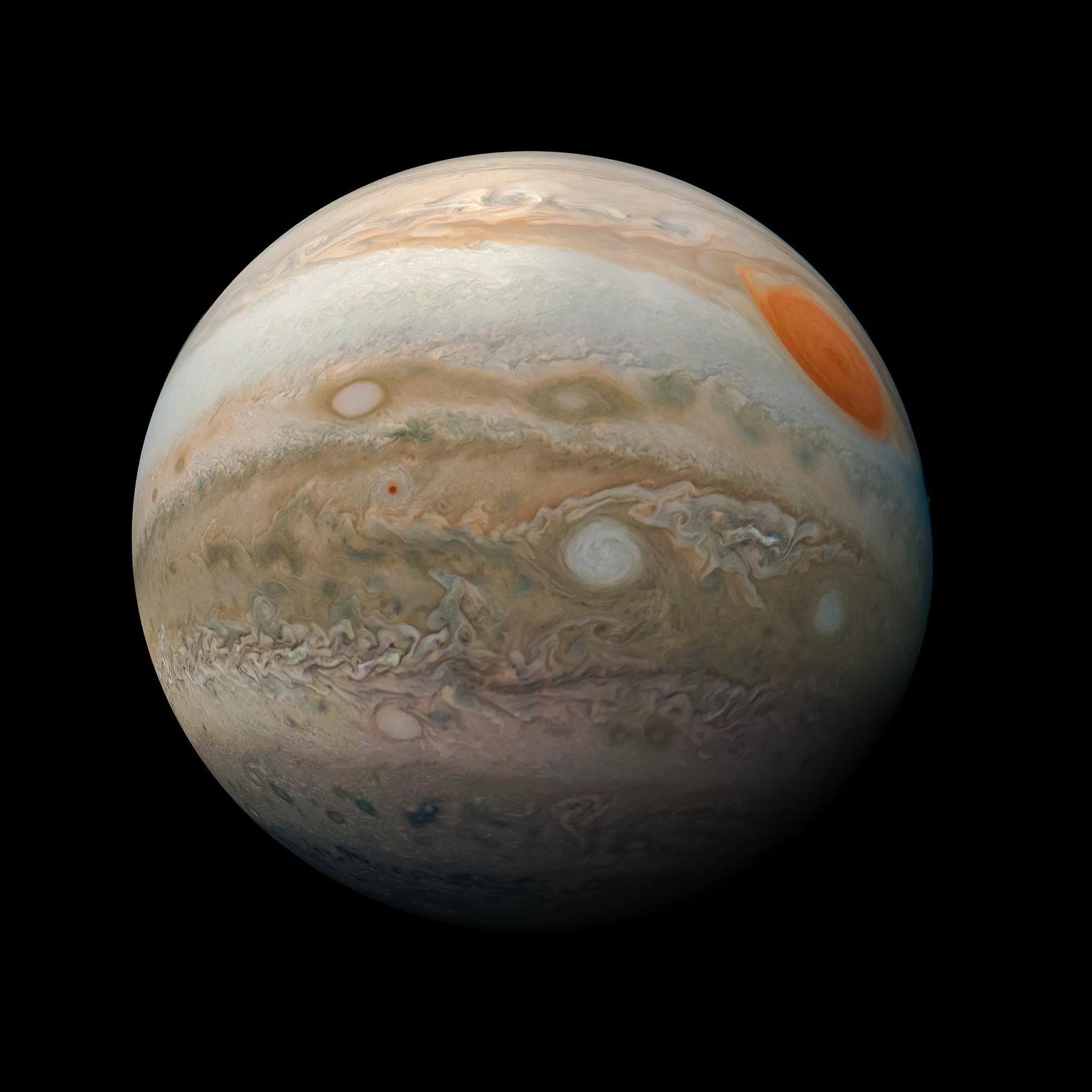
Jupiter photographed by Juno

Jupiter

Jupiter is the fifth planet from the Sun and the largest in the Solar System. It is a gas giant with a mass one-thousandth that of the Sun, but two-and-a-half times that of all the other planets in the Solar System combined.

Scroll

AU (Astronomical Unit) - the distance from Earth to the Sun.

01

Overview

Jupiter is the fifth planet from our Sun and is, by far, the largest planet in the solar system - more than twice as massive as all the other planets combined. Jupiter's stripes and swirls are actually cold, windy clouds of ammonia and water, floating in an atmosphere of hydrogen and helium.

Jupiter's iconic Great Red Spot is a giant storm bigger than Earth that has raged for hundreds of years.

Jupiter is named for the king of the ancient Roman gods.

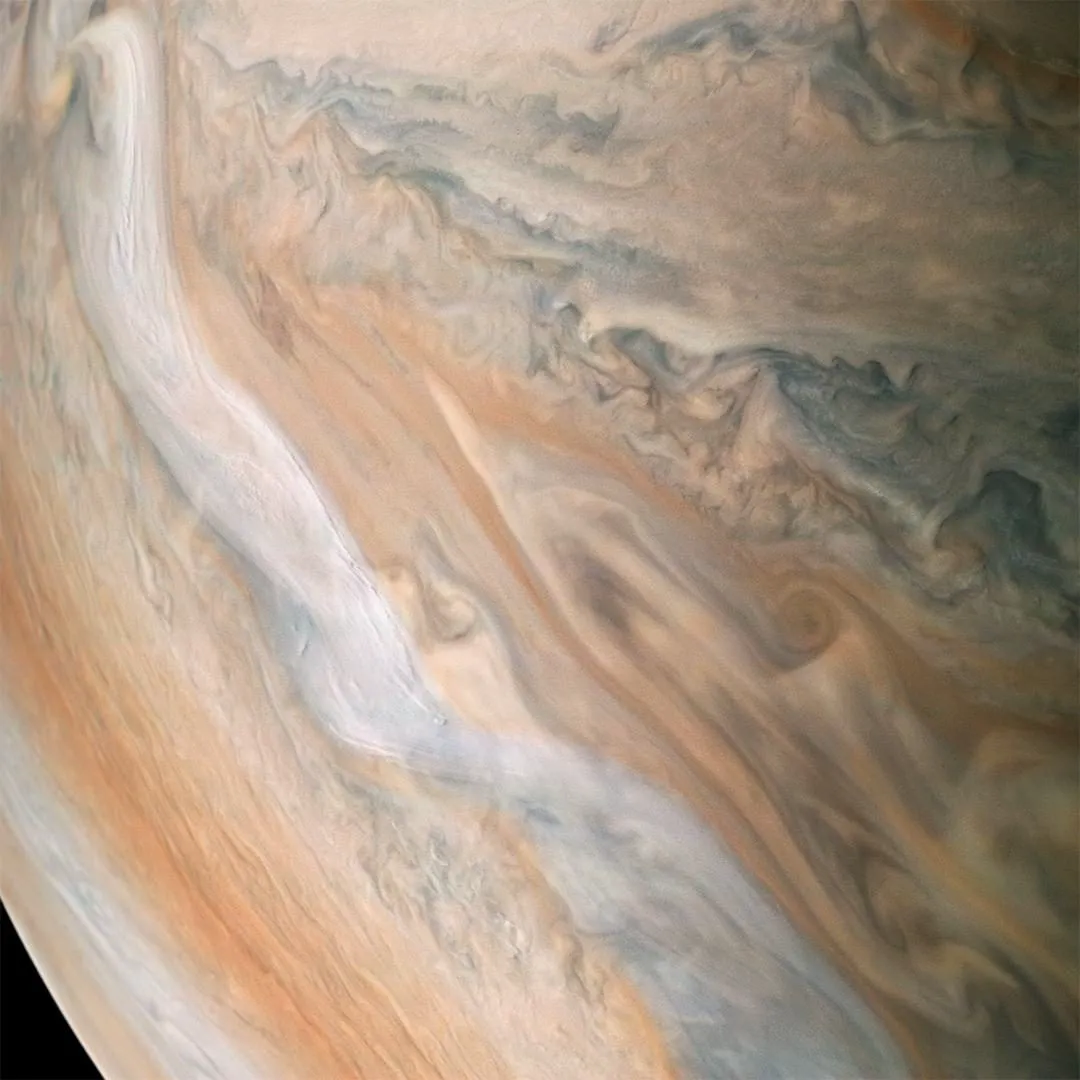
Jupiter's cloud bands from close orbit

Features

02

Jupiter is the fifth planet from our Sun and is, by far, the largest planet in the solar system - more than twice as massive as all the other planets combined.

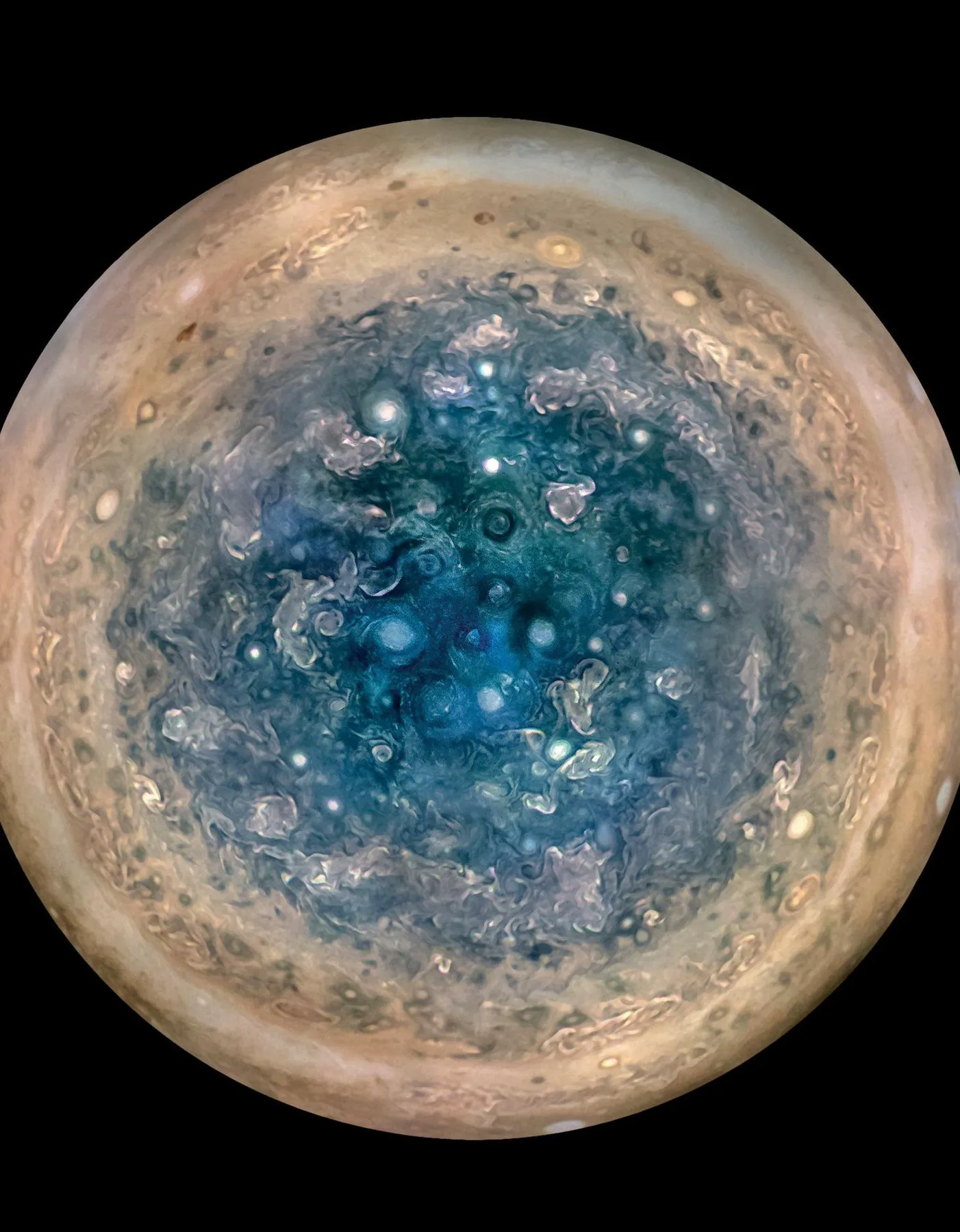
Cyclones at Jupiter's south pole

Pearls

Jupiter's so-called string of pearls: on Jupiter a series of massive counterclockwise rotating storms that appear as white ovals in the gas giant's southern hemisphere. Since 1986, these white ovals have varied in number from six to nine.

  • There are currently eight white ovals visible.
  • Massive rotating storms at 40 degrees south latitude on the gas giant planet.
  • The spatial scale of a mass of spiralling clouds is 13.86 miles per pixel, 22.3 kilometres wide.
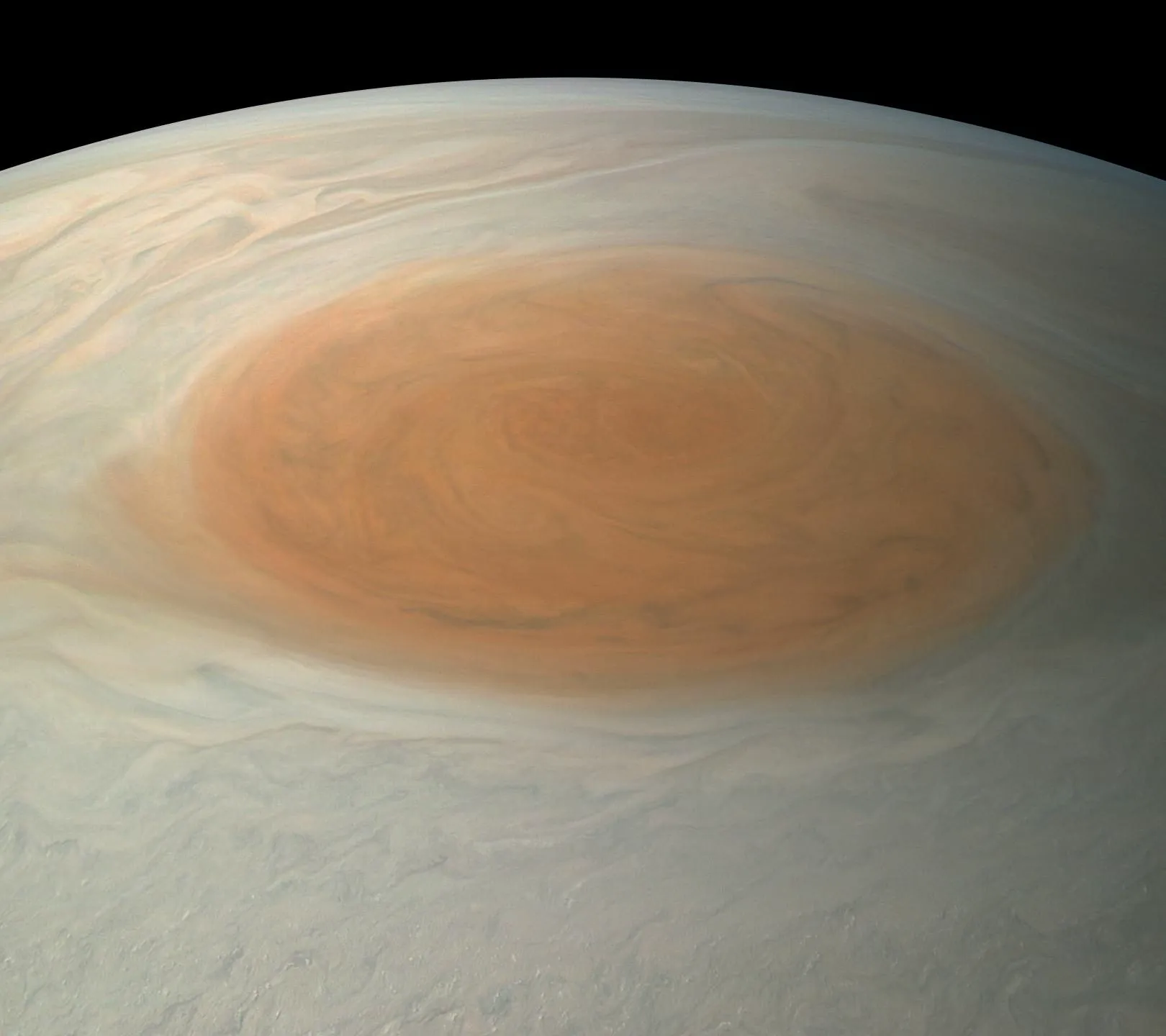
The Great Red Spot in true colour

Great Red Spot

Persistent high-pressure region in the atmosphere of Jupiter, producing an anticyclonic storm 22 degrees south of the planet's equator. It has been continuously observed for 190 years, since 1831.

  • 1.3 times as wide as Earth.
  • Tumultuous winds peaking at about 400 mph.
  • The spot has been swirling wildly over Jupiter's skies for the past 150 years or even much longer than that.
Turbulent white cloud bands

Cloud bands

Alternating light zones and dark belts, drawn out by jet streams that run east and west at up to 350 miles per hour. The pattern is the visible face of a weather system that reaches thousands of miles down.

  • Zones are cold, rising ammonia ice; belts are warmer and sinking.
  • Jet streams stay stable for decades, unlike anything on Earth.
  • Juno found the winds run at least 1,900 miles deep.
03

In Depth

Jupiter's environment is probably not conducive to life as we know it. The temperatures, pressures and materials that characterise this planet are most likely too extreme and volatile for organisms to adapt to.

While planet Jupiter is an unlikely place for living things to take hold, the same is not true of some of its many moons. Europa is one of the likeliest places to find life elsewhere in our solar system. There is evidence of a vast ocean just beneath its icy crust, where life could possibly be supported.

The temperature in the clouds of Jupiter is about minus 145 degrees Celsius (minus 234 degrees Fahrenheit). The core temperature may be about 24,000 degrees Celsius (43,000 degrees Fahrenheit). That is hotter than the surface of the Sun.

0%
HydrogenHelium

Jupiter's atmosphere is made up mostly of hydrogen (H2) and helium (He). Deeper down, the pressure squeezes hydrogen into a liquid, and deeper still into a liquid metal that conducts electricity - the source of the strongest magnetic field of any planet in the solar system.

Jupiter, full disk

a. Orbit and Rotation

Jupiter has the shortest day in the solar system. One day on Jupiter takes about 10 hours, the time it takes to rotate or spin around once. Jupiter makes a complete orbit around the Sun in about 12 Earth years.

Its equator is tilted with respect to its orbital path around the Sun by just 3 degrees. That means Jupiter spins nearly upright and does not have seasons as extreme as other planets do.

b. Structure

Jupiter is composed primarily of gaseous and liquid matter. It is the largest of the gas giants, and like the other giant planets, it does not have a well defined solid surface.

04

Moons

Jupiter has 95 named moons. Scientists have discovered 14 more. But those 14 moons do not have official names. Scientists now think Jupiter has a total of 4 rings. The most recent moons were discovered in 2011. The planet's four largest moons are Ganymede, Callisto, Io and Europa - first spotted by Galileo Galilei in 1610.

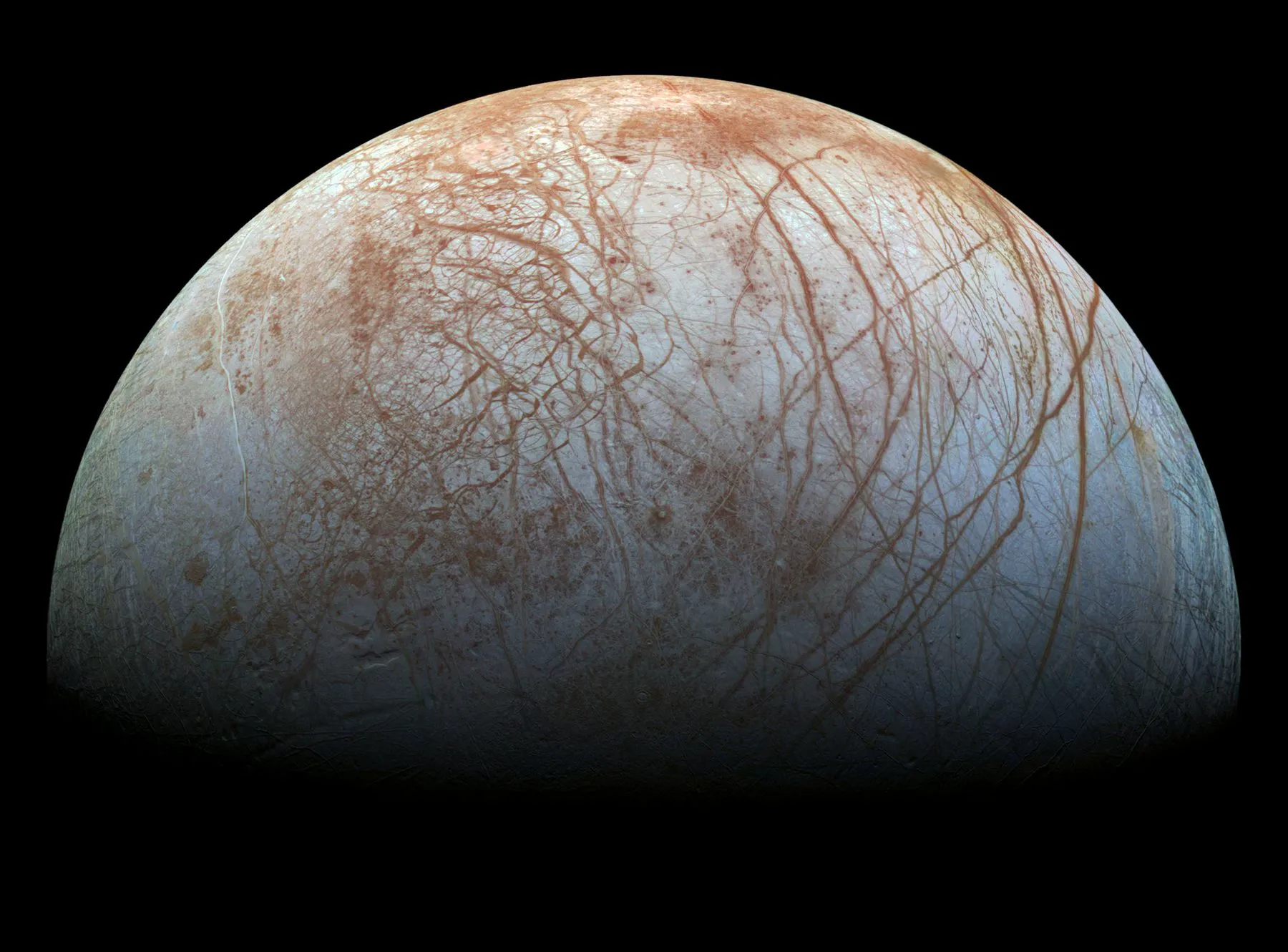
Europa, an icy moon of Jupiter

Europa

  • The smoothest known object in the Solar System, lacking large-scale features such as mountains and craters.
  • Has water of dark streaks crisscrossing the entire globe, called lineae.
  • Europa is slightly smaller than the Moon. At just over 3,100 kilometres (1,900 miles) in diameter.
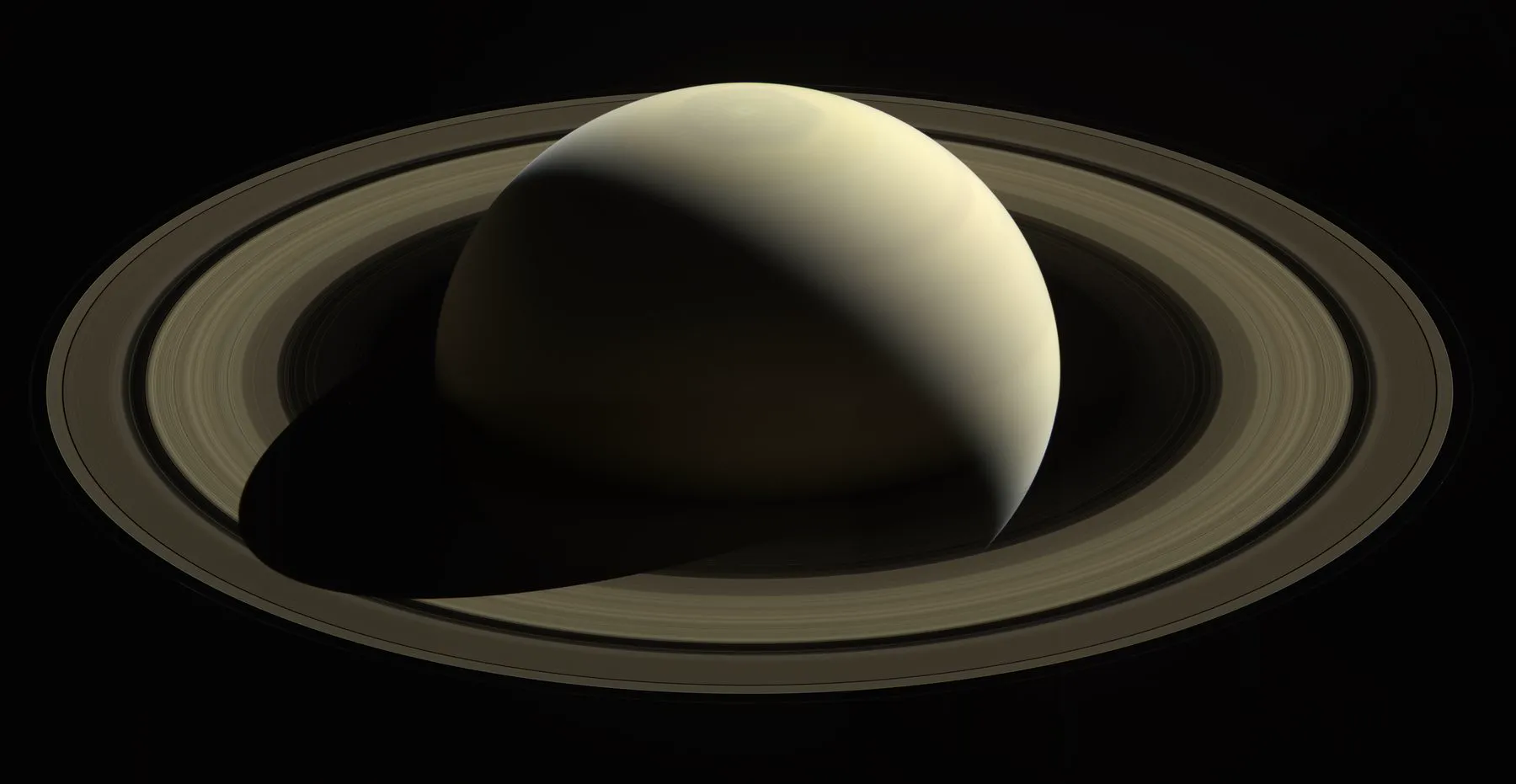
Saturn, backlit by the Sun
View next

Saturn

Saturn is the sixth planet from the Sun and the second-largest in our solar system. Adorned with thousands of beautiful ringlets, Saturn is unique among the planets. It is not the only planet to have rings made of chunks of ice and rock, but none are as spectacular or as complicated as Saturn's. Like fellow gas giant Jupiter, Saturn is a massive ball made mostly of hydrogen and helium.

Explore Saturn