 S3V
NO
S3V
NO
S3V
NO
S3V
NO
Nobody discovered Neptune by looking. Two mathematicians worked out where it had to be from the way Uranus was misbehaving, and an astronomer pointed a telescope at the coordinates and found it the same night.
This is the only planet whose position was calculated before it was observed. It is still the best advertisement Newtonian gravity ever had.
Alexis Bouvard publishes tables for the orbit of Uranus and they do not work. The planet keeps drifting off the predicted path. He suggests, without being able to prove it, that something further out is pulling on it.
John Couch Adams, still a student at Cambridge, computes where the unseen body would have to be. He hands the result to the Astronomer Royal, who does not act on it with any urgency.
Urbain Le Verrier, working independently in Paris, gets essentially the same result and cannot get any French observatory interested either. So he writes to Berlin.
Johann Galle receives the letter, goes to the telescope that evening, and finds the planet within one degree of the predicted position, in under an hour of searching. The credit fight between Britain and France ran for years afterwards.
Neptune completed its first full orbit since discovery. Everyone who has ever known it exists has known it for less than two of its years.
Neptune gets about a thousandth of the sunlight Earth does, which should mean almost no energy to drive weather. It has the fastest winds ever measured anywhere, and nobody is certain where the energy comes from.
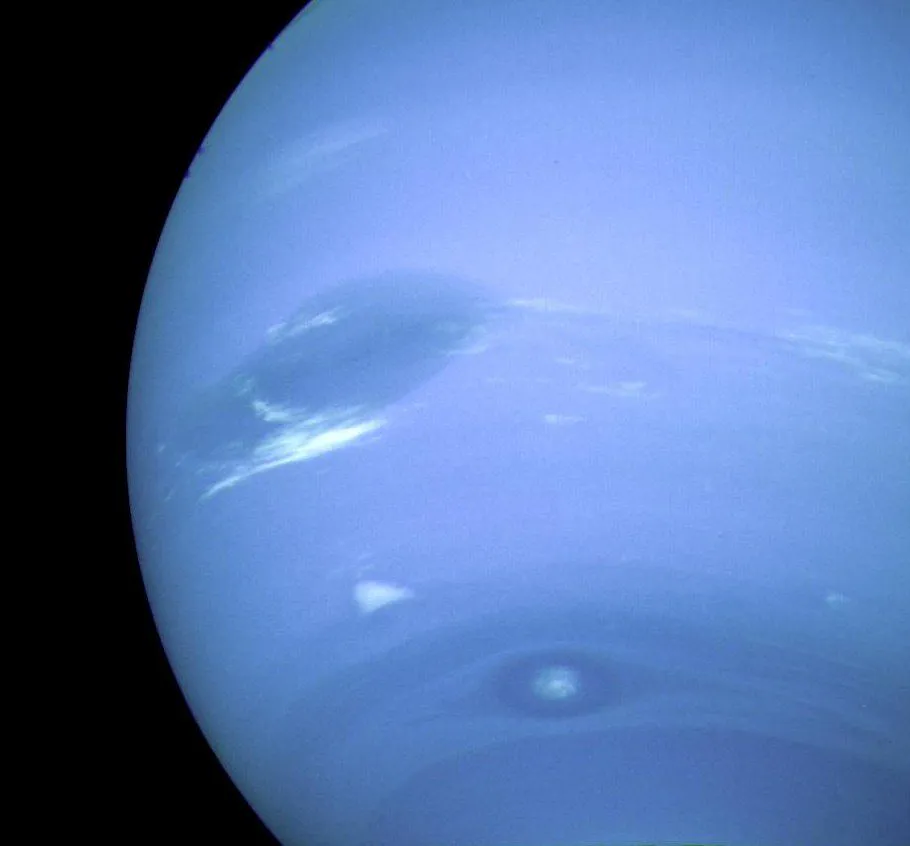
Voyager 2 photographed a storm the width of Earth in 1989, with a small bright cloud racing around it fast enough that the team nicknamed it the Scooter.
When Hubble looked in 1994, the storm was gone. Not weaker, not moved - gone. Other dark spots have appeared and vanished since. On a gas giant with no surface there is nothing for a storm to anchor to, so the whole system reorganises on a timescale of years rather than centuries. Jupiter's Great Red Spot, which has lasted at least 350 years, is the strange one.
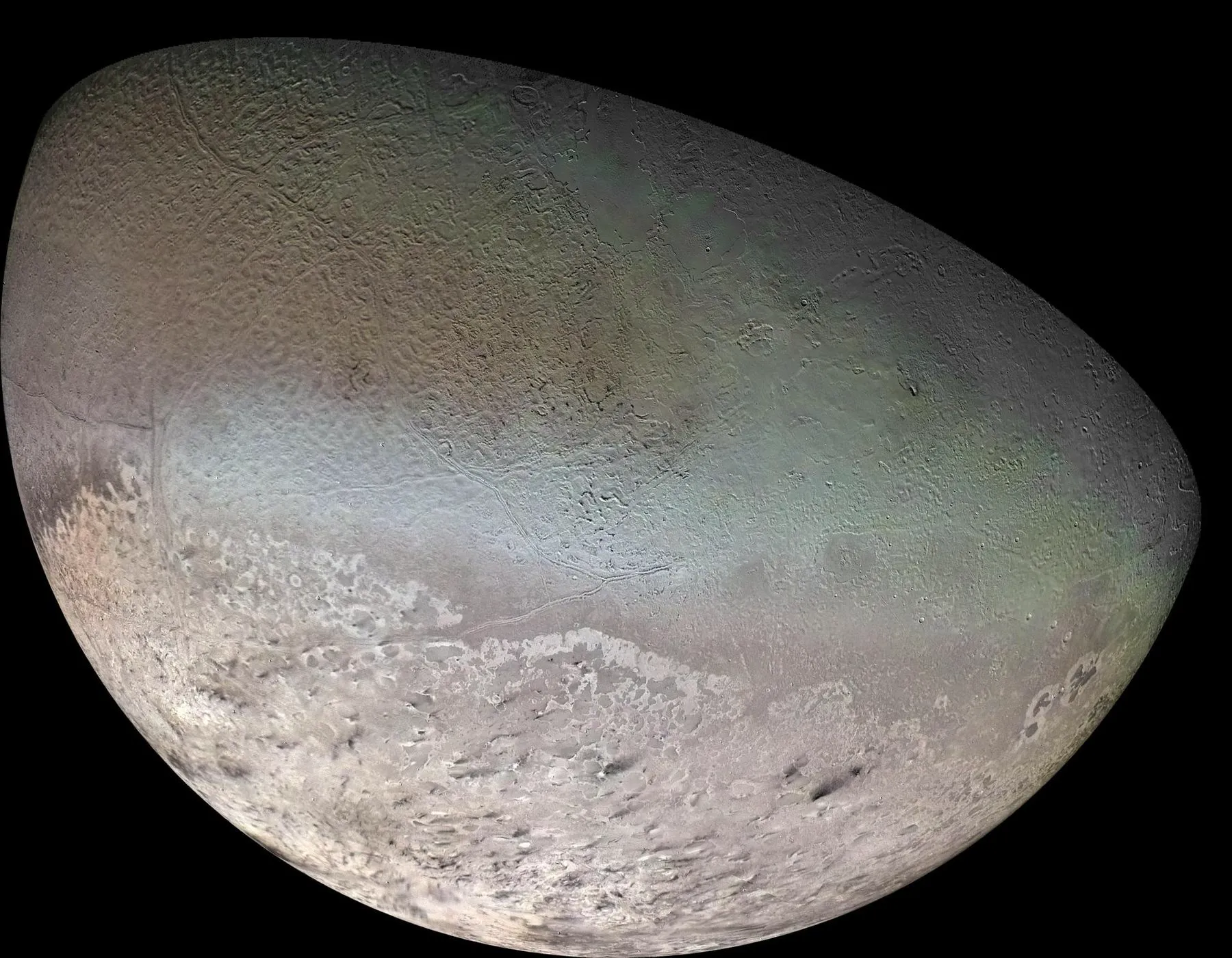
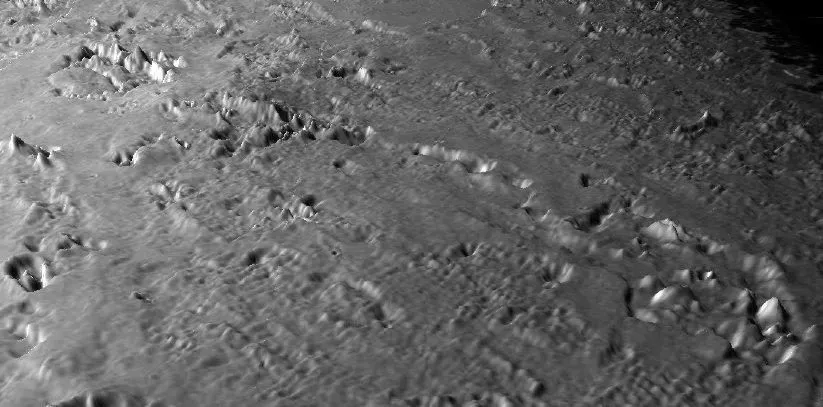
Neptune's big moon orbits backwards, which means it did not form there. It was captured - a Kuiper Belt object that came too close and never left.
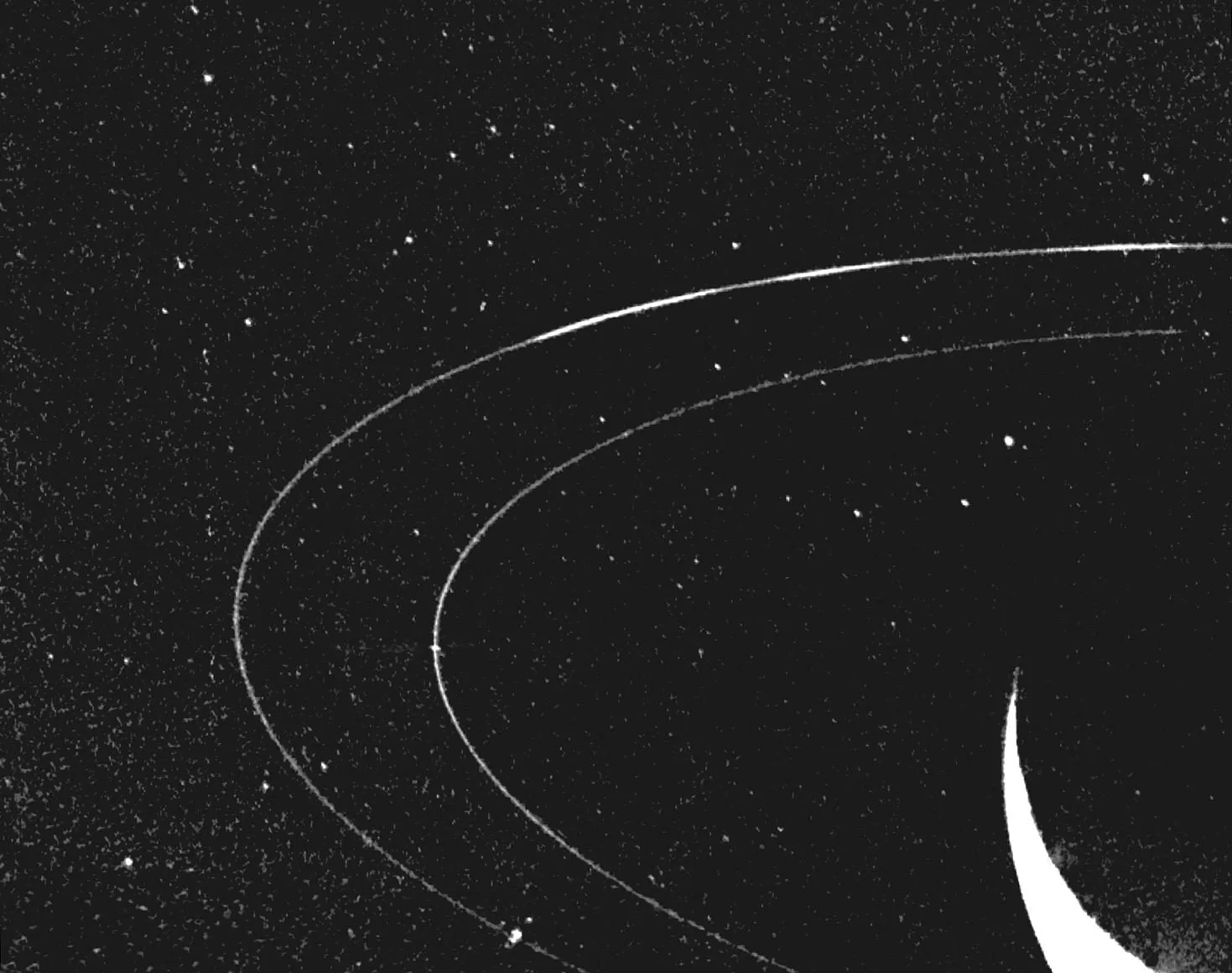
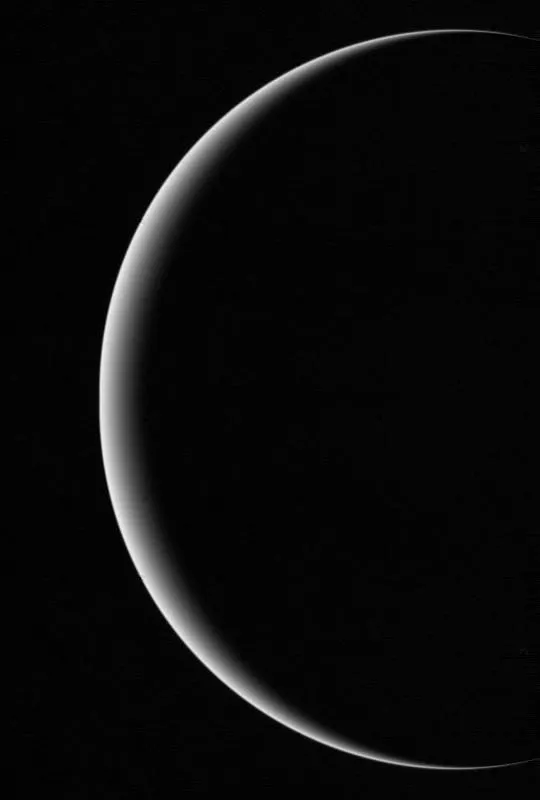
Neptune is the last planet, and the far end of everything in this catalogue.