 S3V
NO
S3V
NO
S3V
NO
S3V
NO
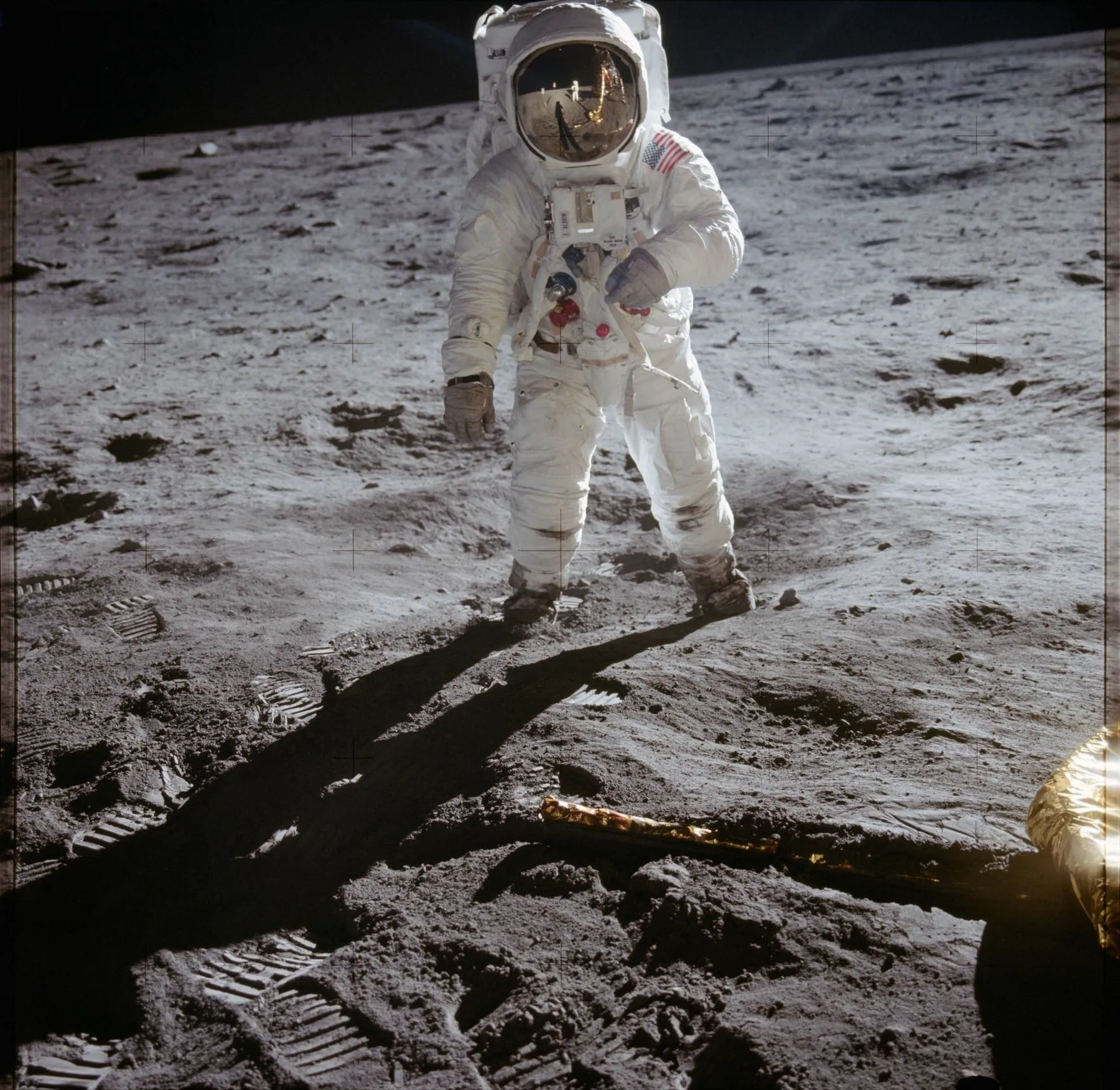
Three days out, a quarter of a million miles, and back. Twelve people have stood on it. Nobody has been there since December 1972 - until now.
AS11-40-5903 - Buzz Aldrin, 21 July 1969. The photographer, Neil Armstrong, is the white shape in the visor.
Six crews landed between 1969 and 1972. Each one stayed longer than the last, drove further, and came home heavier.
| Mission | Landed | Site | On the surface | EVA time | Samples |
|---|---|---|---|---|---|
| Apollo 11 | 20 Jul 1969 | Mare Tranquillitatis | Armstrong, Aldrin | 2h 31m | 21.5 kg |
| Apollo 12 | 19 Nov 1969 | Oceanus Procellarum | Conrad, Bean | 7h 45m | 34.4 kg |
| Apollo 14 | 5 Feb 1971 | Fra Mauro | Shepard, Mitchell | 9h 23m | 42.3 kg |
| Apollo 15 | 30 Jul 1971 | Hadley-Apennine | Scott, Irwin | 19h 08m | 77.3 kg |
| Apollo 16 | 21 Apr 1972 | Descartes Highlands | Young, Duke | 20h 14m | 95.7 kg |
| Apollo 17 | 11 Dec 1972 | Taurus-Littrow | Cernan, Schmitt | 22h 04m | 110.5 kg |
Swipe the table sideways for EVA time and sample mass.
Every piece of Apollo hardware was designed for the job. Except one. The Omega Speedmaster was bought off a shelf in Houston, and it is the only thing NASA qualified for flight that you can still buy in a shop.
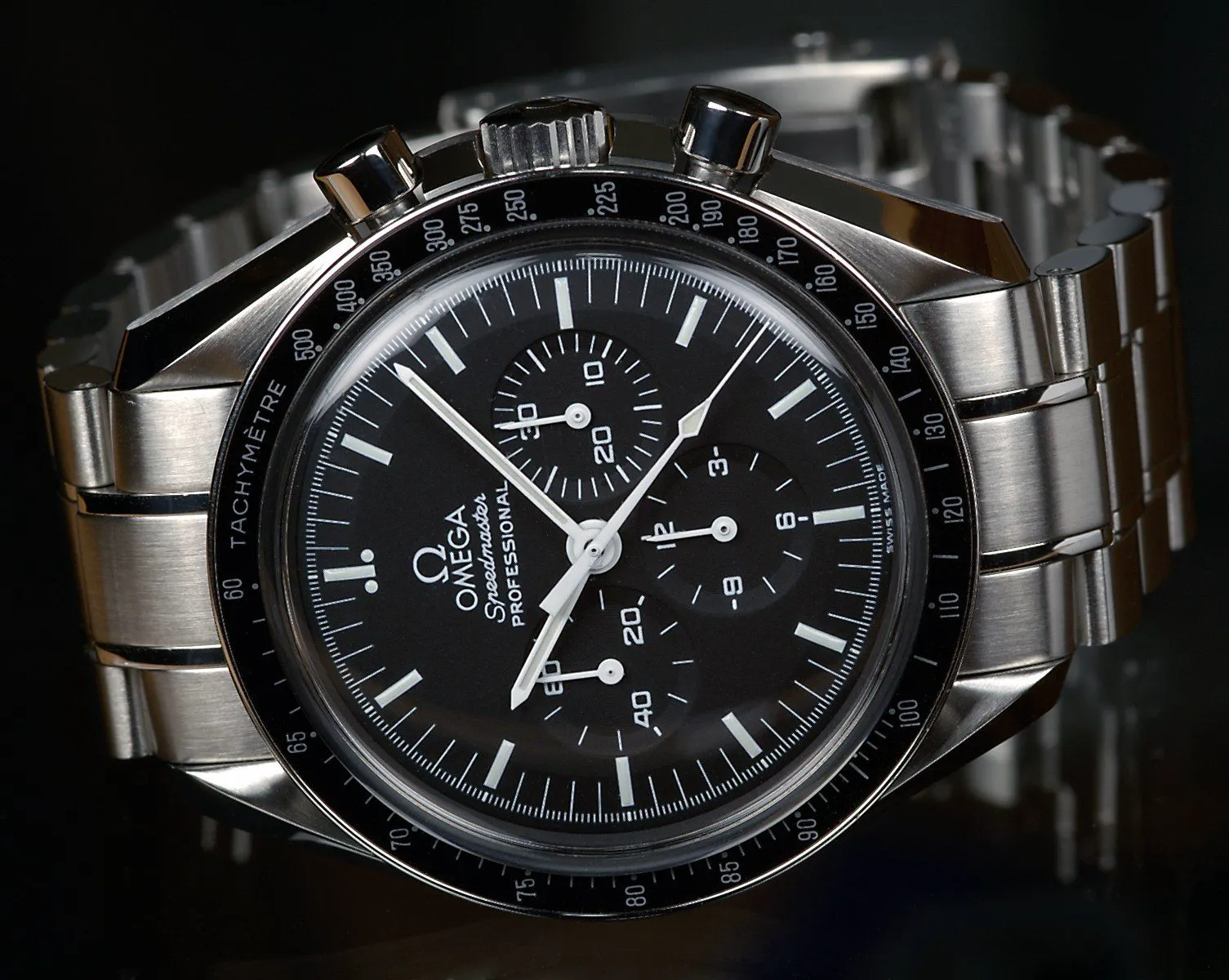
The Omega Speedmaster Professional. Same case, same hand-wound movement layout, same tachymeter bezel as the reference that went to the surface in 1969, and it has never lost the NASA flight qualification it earned in 1965.
Deke Slayton asks for a wrist chronograph the crews can actually use: readable in a helmet, wound by a gloved hand, and reliable enough to time an engine burn. Engineer James Ragan buys the candidates anonymously from a Houston jeweller so no manufacturer can prepare a special sample.
Eleven tests, run until things broke. Minus 18 to plus 93 degrees. Ninety-three percent humidity. Vacuum. Forty g of shock in six directions. A hundred and thirty decibels of acoustic noise. A pure-oxygen atmosphere at high pressure. Two of the three candidates stopped, warped or fogged. One finished still running.
The Omega Speedmaster is certified for all manned space missions. It has never lost that certification, which is why it is still the watch on the wrist in NASA photographs sixty years later.
Aldrin wears his on the Moon. Armstrong leaves his inside the Lunar Module: the LM's electronic timer had failed, and the crew wanted a working clock on board more than they wanted a watch outside.
With the guidance computer shut down to save power, the crew times a fourteen-second engine burn by hand off the chronograph. It is the burn that puts them on a trajectory home. NASA gives the manufacturer its Silver Snoopy Award for it.
The reference that went to the surface was the ST105.012, calibre 321. No battery, no quartz, no radio sync. It keeps time because a spring unwinds at a rate somebody worked out by hand.
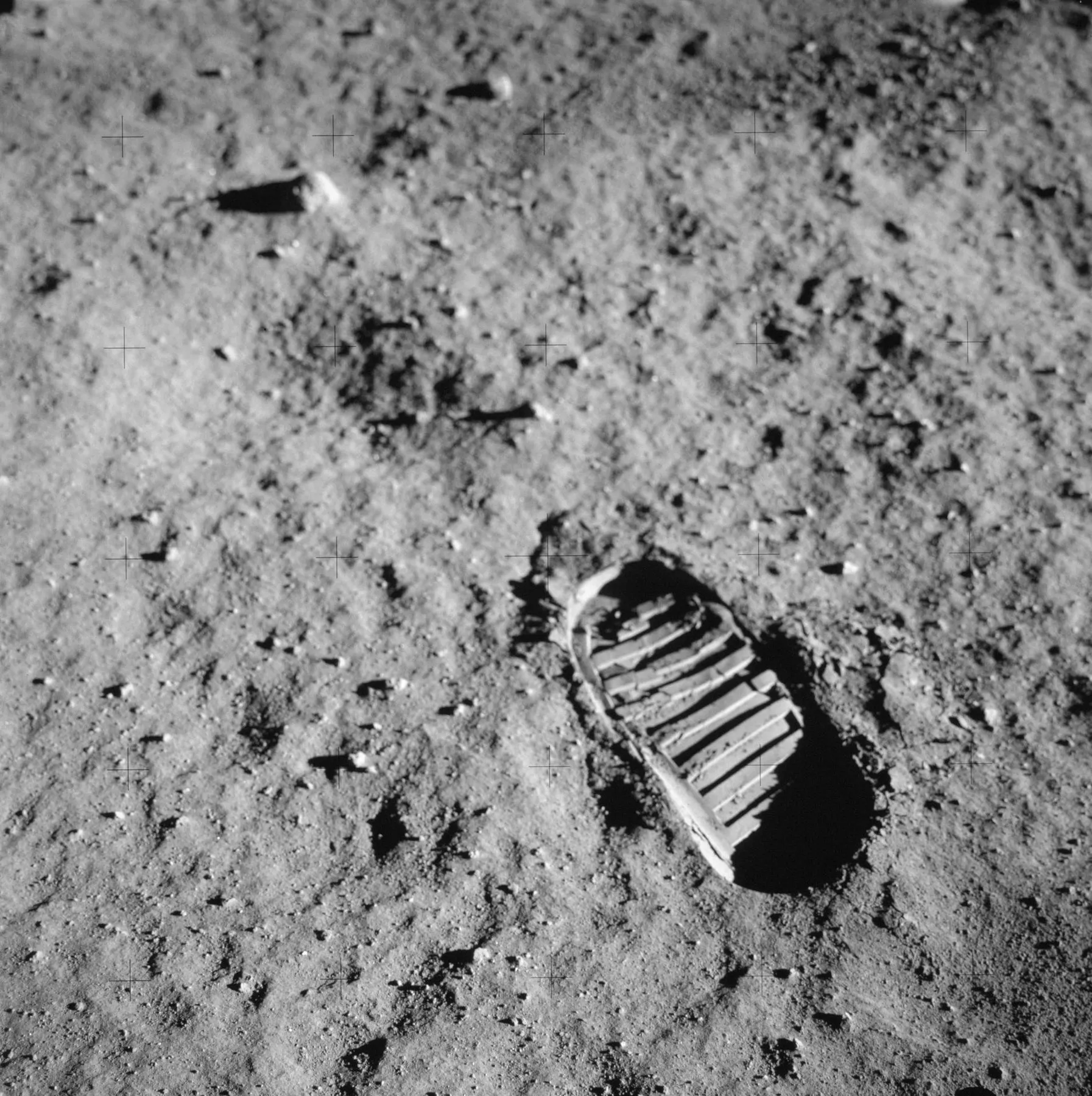
There is no weather on the Moon and almost no erosion. Every footprint from 1969 is still exactly where it was left.
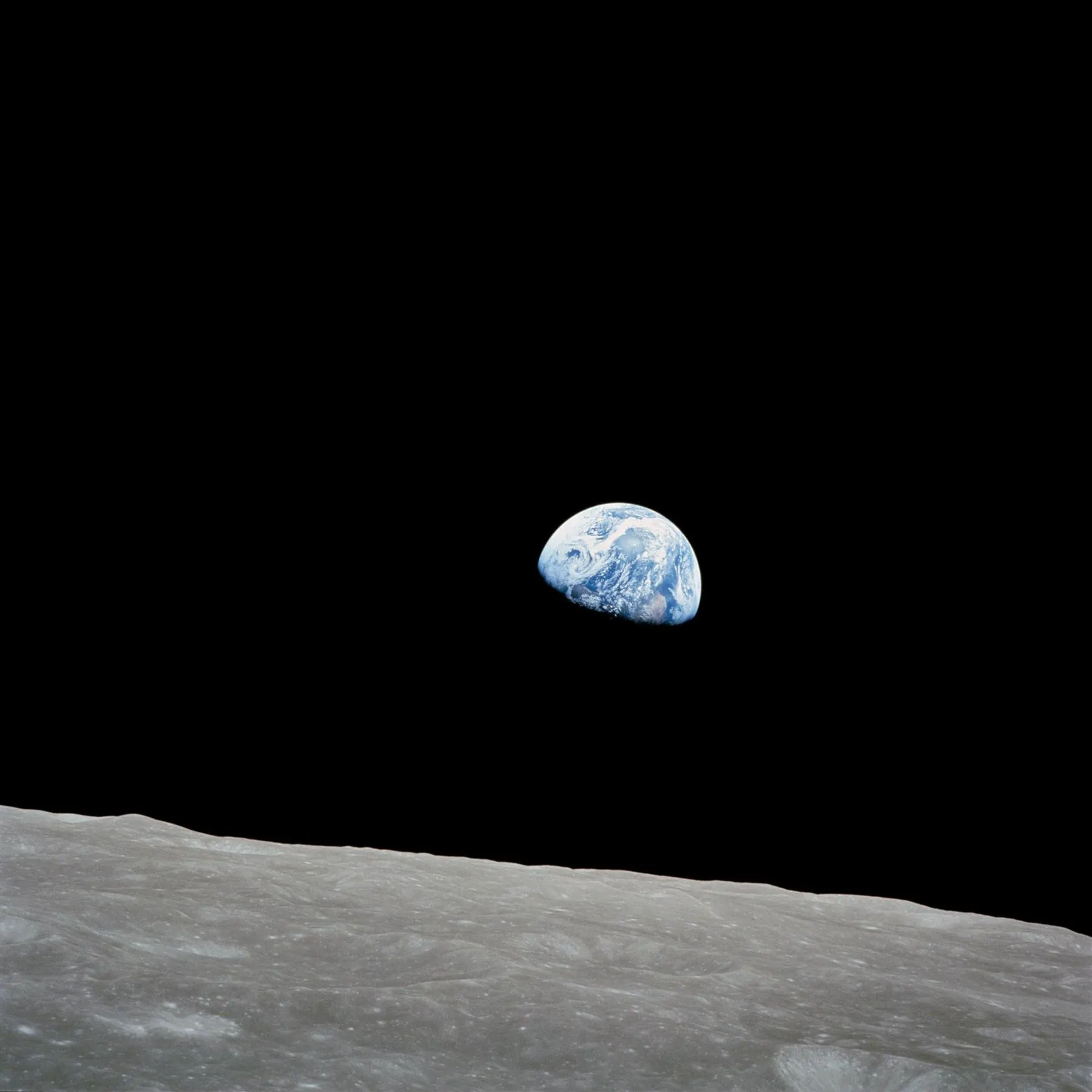
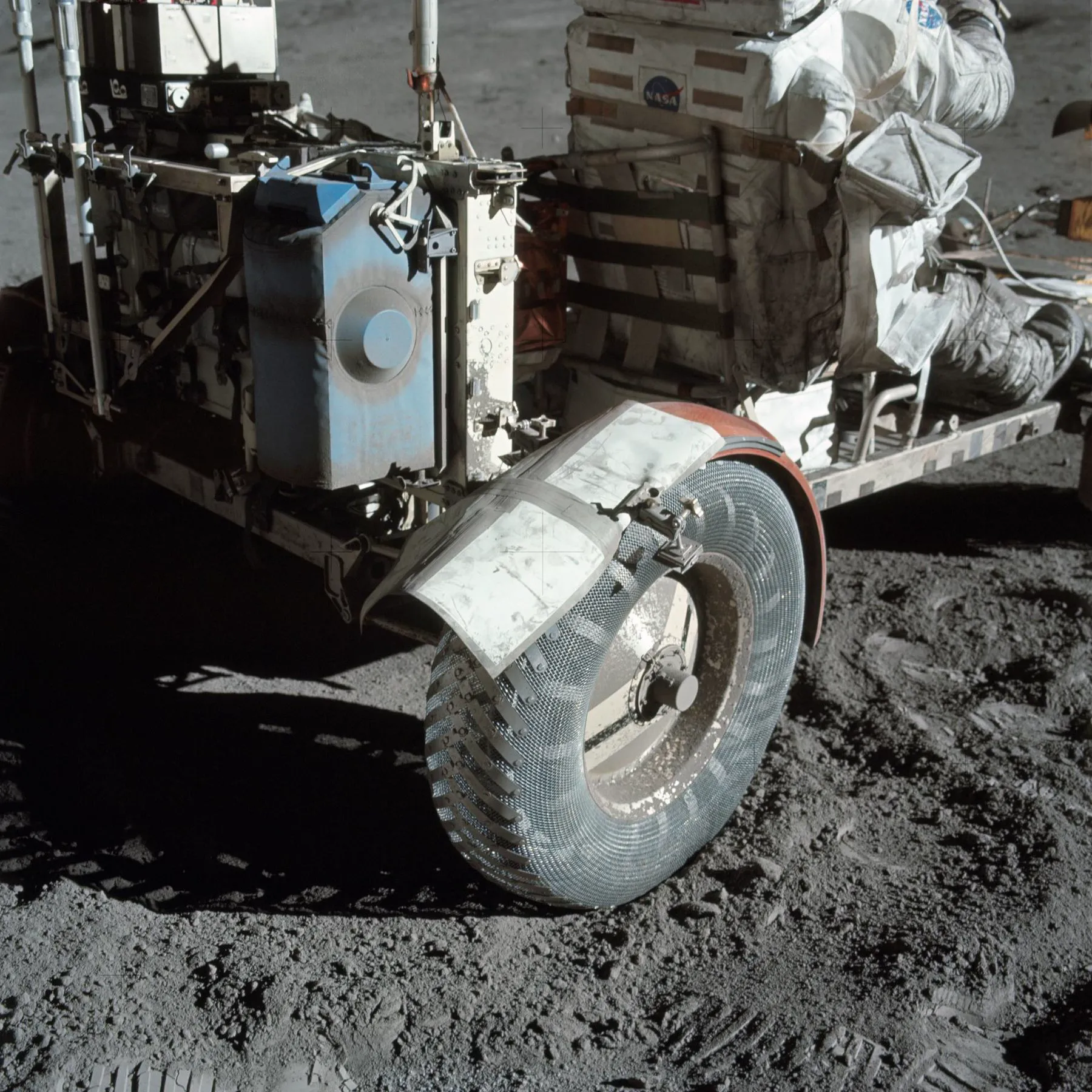
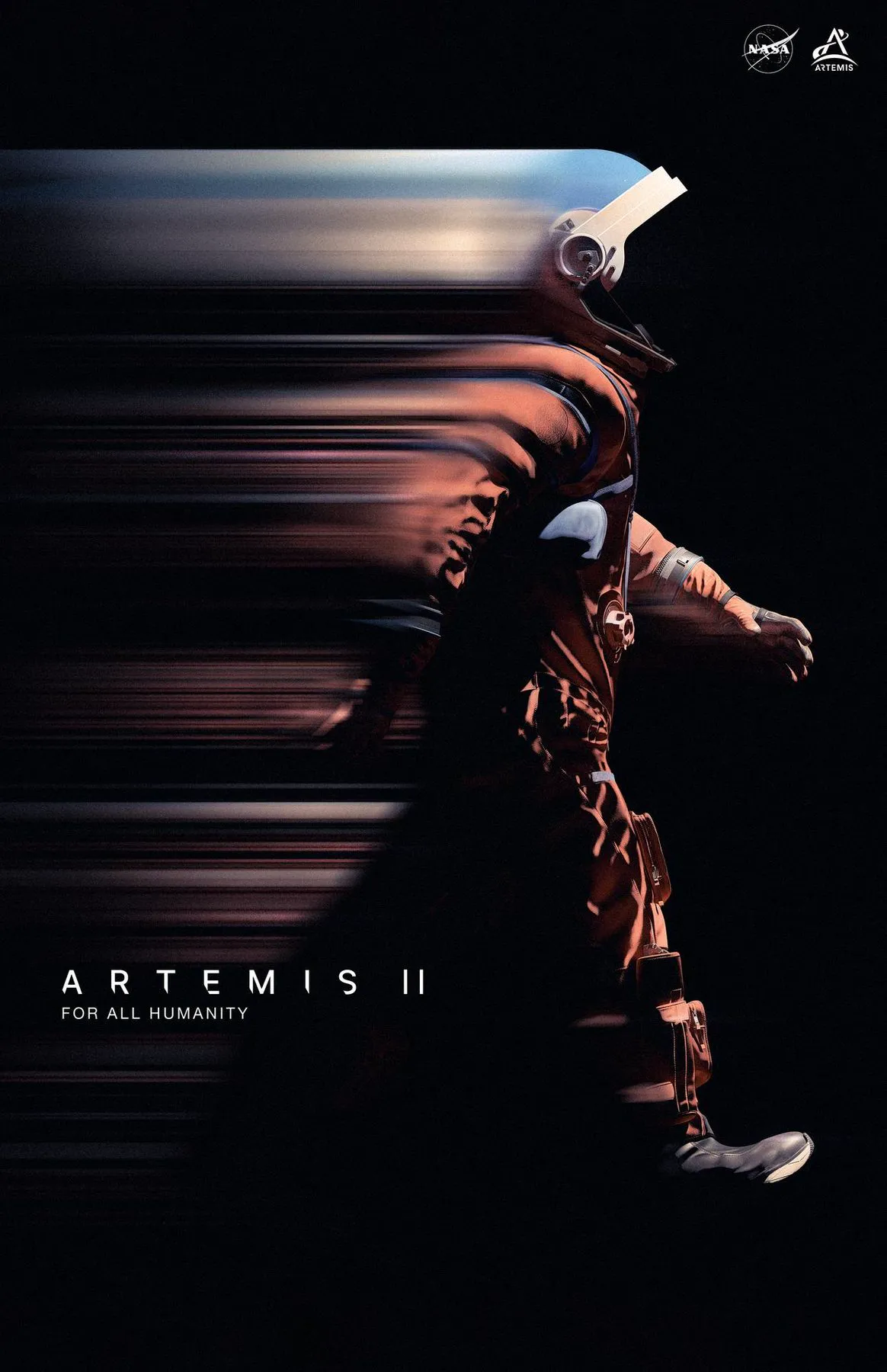
Artemis II carried Reid Wiseman, Victor Glover, Christina Koch and Jeremy Hansen around the Moon and back - the first crewed lunar flight since Apollo 17 came home in December 1972. Fifty-three years between one crew leaving and the next arriving.
Artemis III is the landing, and it is aimed at the lunar south pole rather than the equatorial sites Apollo used. There is water ice in the permanently shadowed craters down there, and water is propellant, drinking water and breathable oxygen. That is the difference between visiting and staying.
NASA mission poster - Artemis II, "For all humanity"